Corporate Governance Report
Corporate Governance Report
Ferrovial endorses the importance of good corporate governance in line with national and international best practices. Strong governance through accountability and transparency strengthens a relationship of trust with Ferrovial’s stakeholders that is key for creating sustainable long-term value.
This Corporate Governance chapter sets out Ferrovial’s overall corporate governance structure, including Ferrovial’s compliance with the best practice provisions of the Dutch Corporate Governance Code (the “Dutch Corporate Governance Code”). Information Ferrovial is required to disclose pursuant to the Decree on the content of the management report (Besluit inhoud bestuursverslag) (the “Decree Management Report”) is included in this Annual Report, including Ferrovial’s corporate governance statement in Section 9.
Ferrovial SE (“Ferrovial” and together with its subsidiaries, the “Ferrovial Group”) is a company existing under the laws of the Netherlands. Its legal form is a European public limited liability company (Societas Europaea). The corporate seat of Ferrovial is in Amsterdam, the Netherlands. Ferrovial is registered in the Dutch Commercial Register of the Chamber of Commerce (Handelsregister van de Kamer van Koophandel) under number 73422134.
Ferrovial was originally organized as a public limited company under the laws of England and Wales and converted to a European public limited liability company under the laws of England and Wales on December 13, 2018. On March 26, 2019, Ferrovial transferred its registered office to the Netherlands. Ferrovial became the parent company of the Ferrovial Group as a result of the reverse cross-border merger (the “Merger”) between the former parent company of the Ferrovial Group, Ferrovial, S.A. (as absorbed company) and Ferrovial International SE (as absorbing company, renamed Ferrovial SE upon effectiveness of the Merger on June 16, 2023).
The shares of Ferrovial are listed and traded on Euronext in Amsterdam, the Netherlands, a regulated market of Euronext Amsterdam N.V., on the Madrid, Barcelona, Bilbao and Valencia Stock Exchanges in Spain, regulated markets of Bolsas y Mercados Españoles, Sociedad Holding de Mercados y Sistemas Financieros, S.A., and on the National Association of Securities Dealers Automated Quotations (NASDAQ) Global Select Market in the United States. Ferrovial is a member of Spain’s IBEX 35 index and the NASDAQ 100 index and is included in globally recognized sustainability indices such as the Dow Jones Best-in-Class Index (former Dow Jones Sustainability Index).
By virtue of its listing on NASDAQ, Ferrovial is subject to the Nasdaq Listing Rules, SEC rules and the relevant provisions of the Sarbanes-Oxley Act (“SOX”). As the parent company of a group of entities operating in different jurisdictions, Ferrovial is also subject to, and operates under, the laws of each country in which the Ferrovial Group conducts business.
1. GOVERNANCE STRUCTURE
Pursuant to Ferrovial’s articles of association (statuten) (the “Articles of Association”), Ferrovial has a one-tier board (bestuur) structure consisting of executive directors (uitvoerend bestuurders) (the “Executive Directors”) and non-executive directors (niet-uitvoerend bestuurders) (the “Non-Executive Directors”), who together constitute the Board of Directors (the “Board” and each member of the Board a “Director”).
The Board has constituted, from among its members, an Executive Committee, an Audit and Control Committee and a Nomination and Remuneration Committee (the “Committees”).
The Executive Committee consists of Directors who are appointed to this committee by the Board. The Executive Committee , which consists of Executive and Non-Executive Directors as determined by the Board, is governed by the written rules of procedure of the Board (the “Board Rules”), available at Ferrovial website (www.ferrovial.com). The Executive Committee is authorized to adopt any resolution the Board may adopt, subject to the restrictions set out by applicable law, the Articles of Association and the Board Rules.
The Audit and Control Committee and the Nomination and Remuneration Committee have a preparatory and advisory role to the Board. Each of these Committees has a charter on its role, responsibilities and functioning, available at Ferrovial website (www.ferrovial.com). They consist of Non-Executive Directors appointed by the Board. Both Committees report their deliberations and findings to the Board, which is ultimately responsible for all decision- making.
2. BOARD
2.1. INTRODUCTION AND RESPONSIBILITIES, INCLUDING WITH RESPECT TO STRATEGY
The Board is charged with the management of Ferrovial and the Ferrovial Group. The Board’s responsibilities include determining the Ferrovial’s strategy aimed at sustainable long-term value creation, enhancing its performance, identifying, analyzing and managing the risks associated with its strategy and activities, and establishing and implementing internal procedures to ensure that all relevant information is available to the Board in a timely manner. In fulfilling their responsibilities, the Directors are required to be guided by the interests of Ferrovial and its affiliated enterprise, taking into consideration the interests of Ferrovial’s stakeholders (which include but are not limited to, its shareholders, its creditors and its employees).
The Board typically, as was the case in 2025, includes strategy in its agenda as a dedicated topic in at least three board meetings annually. One of these meetings is typically a dedicated two-day offsite board meeting focused on strategy, in which senior management of all business units and corporate departments present to the Board. In the next Board meeting, a strategy update is provided and the Board resolves to determine Ferrovial’s strategy, aimed at sustainable long-term value creation. Finally, a further strategy update is discussed by the Board approximately 6 months later. This allows the Board to spend the appropriate time and attention setting and reviewing Ferrovial’s strategy, which is described in more detail in the section “Global Strategy and Business Units”. In short, with respect to Ferrovial’s strategy aimed at sustainable long-term value creation, Ferrovial aims to shape the future through the management and development of significant projects, while being present in the entire lifecycle of a project, from conceptualization to design, funding, construction, and operation of critical infrastructure such as highways and airport. Through this integrated approach, Ferrovial aims to be a reliable partner in delivering sophisticated, large-scale infrastructure projects that aim to create sustainable long-term value, based on Ferrovial’s purpose and core values, which guide Ferrovial’s actions and define its identity as a forward-thinking and responsible organization: respect, excellence, integrity, collaboration and innovation.
In implementing Ferrovial’s strategy, the Board takes into account the impact Ferrovial has on people and the environment and to that end weighs the stakeholder interests that are relevant in this context. The Board is also responsible for stimulating openness and accountability within the Board and between different corporate bodies within Ferrovial, while creating a culture aimed at sustainable long-term value creation for Ferrovial and its affiliated enterprise (for more information please check the Statement of Consolidated non-financial and sustainability information. G1-1: Corporate Culture and Business Conduct Policies).
The Board has adopted the Board Rules, regulating internal matters concerning its organization, decision-making, the duties and organization of Committees and other internal matters concerning the Board, the Executive Directors, the Non-Executive Directors, and the Committees. The Board may allocate its duties among the Directors by means of the Board Rules or otherwise in writing, subject to any limitations provided for by law or in the Articles of Association. Directors may validly adopt resolutions on matters that fall within the scope of such Directors’ duties.
The Board as a whole, as well as each Executive Director acting individually, may represent Ferrovial. In addition, the Board may authorize people, whether or not employed by Ferrovial, to represent Ferrovial on a continuing or ad hoc basis.
2.2. COMPOSITION OF THE BOARD
Pursuant to the Articles of Association, the Board consists of one or more Executive Directors and two or more Non-Executive Directors, where the majority of the Board must consist of Non-Executive Directors. The Board itself determines the exact number of Directors, as well as the number of Executive and Non-Executive Directors, where the number of Directors must be at least three and no more than twelve.
During 2025, the Board was composed of 12 members, of which ten Non-Executive Directors which facilitates an effective and participatory functioning of the Board – Ms. Alicia Reyes resigned as Non-Executive Director effective as of 19 January 2026, since then the Board is composed of 11 members (two Executive Directors -the Chairman and the CEO- and nine Non-Executive Directors).
The Executive Directors are primarily responsible for the day-to-day management of Ferrovial and the Ferrovial Group. The Executive Directors must provide the Non-Executive Directors with the information they need to perform their duties in a timely manner.
The Non-Executive Directors supervise the Executive Directors’ management and performance of duties and Ferrovial’s general affairs and its business. The Non-Executive Directors also render advice to the Executive Directors. The Non-Executive Directors also perform any duties allocated to them under, or pursuant to, applicable law, the Articles of Association or the Board Rules.
The Board designated one of the Executive Directors as Chairman, one of its Non-Executive Directors as Vice-Chairman, one CEO, and one of the Directors who qualifies as independent under applicable laws and regulations (such Director, an “Independent Director”) as Lead Director.
The Chairman has the ultimate responsibility for the effective operation of the Board. The Chairman’s duties include preparing and submitting to the Board a schedule of meeting dates and agendas, calling meetings of the Board, setting the agenda for the meetings, leading the deliberations while ensuring that sufficient time is given to discussion of strategic questions, organizing the periodic evaluation of the Board, and arranging relevant trainings for Directors when circumstances so advise. He also acts as the main contact for the Directors and shareholders regarding the functioning of the Board.
The Vice-Chairman stands in for the Chairman in the latter’s unavoidable absence or inability to act, and acts as a contact for Directors regarding the functioning of the Chairman or the Lead Director.
The Lead Director, amongst other duties, is specifically empowered to request the convening of the Board and to include new items on the agenda of a Board meeting already convened, to coordinate and convene the Non-Executive Directors and lead, if applicable, the periodic evaluation of the Chairman. Similarly, the Lead Director chairs meetings of the Board in the absence of the Chairman and Vice-Chairmen and gives voice to any concerns of the Non-Executive Directors. Alongside the Chairman, the Lead Director acts as the main contact for the Directors and shareholders regarding the functioning of the Board. The Lead Director also has, together with the Chairman, the duties set out in article 17.3 of the Board Rules, including ensuring the proper function on the Board, that the Board has proper contact with the General Meeting and that effective communication with shareholders is assured.
With respect to the Chairman being an Executive Director, Ferrovial’s governance has been structured to provide such checks, balances and counterweights that allow the Board to operate with the appropriate independence from the management team and to preserve its independent supervisory role. These measures include:
- Ferrovial has separate roles for the Chairman and the CEO to ensure that the executive responsibilities are not concentrated in the Chairman but are subject to a functional division. The Chairman focuses mainly on responsibilities more closely linked to strategic decisions and institutional representation of Ferrovial, while the CEO, Mr. Ignacio Madridejos, oversees the day-to-day management of the business and chairs Ferrovial group’s management committee, comprising the senior managers of the corporate areas and the heads of the different business divisions
- In order to provide a counterbalance to the role of the Chairman as an Executive Director, the Board has created two important positions to share the functions that are typically performed by a non-executive chairman: the Lead Director and the Vice-Chairman, with the powers and responsibilities as set out above.
- The Board has a high degree of independence: during 2025, 9 out 12 Directors and 9 out of 10 Non-Executive Directors qualified as Independent Directors under Dutch and U.S. rules, representing 75% of the total Directors and 90% of the Non-Executive Directors – (since the resignation of Ms. Reyes in January 2026, 73% and 89%, respectively). In addition, the Audit and Control Committee and Nomination and Remuneration Committee consist of 100% Independent Directors.
2.3. BIOGRAPHIES OF THE DIRECTORS

Rafael del Pino
- Civil Engineer (Polytechnic University of Madrid, 1981); MBA (Sloan School of Management, MIT, 1986).
- Executive Chairman of Ferrovial SE since 2023 (and of Ferrovial, S.A. since 2000) and CEO from 1992 until 2000. Chairman of Cintra from 1998 to 2009.
- Member of the MIT Corporation, MIT Energy Initiative’s External Advisory Board and the MIT Sloan European Advisory Board. He is also a member of the IESE International Advisory Board and the Spanish Royal Academy of Engineering.
- He has been Director of Zurich Insurance Group, Banesto and Uralita. Also, he was a member of the Harvard Business School European Advisory Board.
Other information:
Mr. Rafael del Pino has a controlling interest in the shareholder Rijn Capital SARL.

Óscar Fanjul
- Degree in Economics (Universidad Complutense de Madrid).
- Director of Ferrovial SE since 2023 (and of Ferrovial, S.A. since 2015).
- Non-Executive Chairman of Cellnex Telecom and HWK. Trustee of the Center for Monetary and Financial Studies (Bank of Spain), of the Aspen Institute (Spain) and of the Norman Foster Foundation.
- Former founding Chairman and CEO of Repsol; Chairman of Hidroeléctrica del Cantábrico; Non-Executive Chairman of NH Hoteles and Deoleo; Non-Executive Vice-Chairman of Holcim; Director of Marsh & McLennan Companies, Acerinox, Unilever, BBVA, London Stock Exchange and Areva.
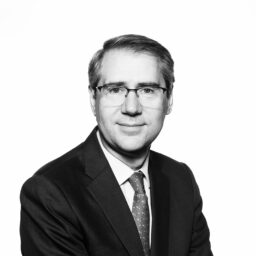
Ignacio Madridejos
- Civil Engineer (Polytechnic University of Madrid); MBA (Stanford University).
- CEO of Ferrovial SE since 2023 (and of Ferrovial, S.A. since 2019).
- Former Regional President of CEMEX USA; Regional President of CEMEX Northern Europe; global responsible of CEMEX Energy, Health & Safety, and Sustainability areas; President of CEMEX Spain; and CEO of CEMEX Egypt. He previously worked at McKinsey and Agroman. He was also President of OFICEMEN (Spanish Association of Cement Manufacturers), IECA (Spanish Institute of Cement and its Applications), and CEMBUREAU (European Cement Association).

María del Pino
- Degree in Economics and Business Administration (Universidad Complutense de Madrid); Management Development Program (IESE).
- Director of Ferrovial SE since 2023 (and of Ferrovial, S.A. since 2006).
- Chairperson of the Fundación Rafael del Pino. Legal representative of Menosmares, S.L. that holds the positions of rotating Chairperson / Vice-Chairperson of the Board of Directors of Casa Grande de Cartagena, S.A.U. and Vice-Chairperson of the Board of Directors of Pactio Gestión, SGIIC, S.A.U. Member of the Board of Trustees of the Princess of Asturias.
Other information:
Ms. María del Pino is majority shareholder, as well as Chairperson and CEO, of the shareholder Menosmares, S.L.
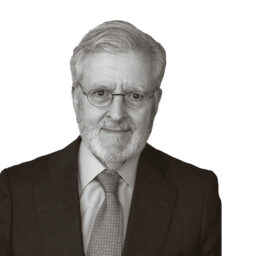
José Fernando Sánchez-Junco
- Degree in Industrial Engineering (Polytechnic University of Catalonia, Barcelona); ISMP Graduate (Harvard Business School) and member of the State Corps of Industrial Engineers (on leave since 1990).
- Director of Ferrovial SE since 2023 (and of Ferrovial, S.A. since 2009). Director of Cintra from 2004 to 2009.
- Chairman of Villabuena Inversiones S.L. since 2007. Honorary Chairman of MaxamCorp Holding.
- Former Executive Chairman of Maxam Group; Managing Director of Iron and Steel and Naval Industries and Managing Director of Industry at the Ministry of Industry and Energy; Director of Dinamia and Uralita.
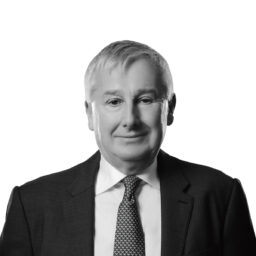
Philip Bowman
- Degree with honors in Natural Science (University of Cambridge); Master in Natural Science (University of Cambridge).
- Director of Ferrovial SE since 2023 (and of Ferrovial, S.A. since 2016).
- Non-Executive Chairman of Tegel Group Holdings. Limited. Sky Network Television Limited and Tom Tom Holdings Inc; and Non-Executive Director of KMD Brands Limited.
- Former Chairman of Potrero Distilling Holdings, Coral Eurobet Limited and Liberty plc; Non-Executive Chairman of The Munroe Group (UK) Limited and Majid Al Futtaim Properties LLC; Non-Executive Director of the affiliates Majid Al Futtaim Holding LLC and Majid al Futtaim Capital LLC; CEO of Smiths Group plc, Scottish Power plc and Allied Domecq plc; and Director of Burberry Group plc, Berry & Rudd Limited, Scottish & Newcastle Group plc, Bass plc, British Sky Broadcasting Group plc, Coles Myer Limited and Better Capital PCC.

Hanne Sørensen
- MsC. in Economics and Management from the University of Aarhus (Denmark).
- Director of Ferrovial SE since 2023 (and of Ferrovial, S.A. since 2017).
- Non-Executive Director of Tata Consulting Services, Jaguar Land Rover Automotive Plc and its subsidiaries Jaguar Land Rover Ltd and Jaguar Land Rover Holdings Ltd.
- Former Vice-Chairperson of Holcim; Non-Executive Director of Tata Motors; CEO of Damco and Maersk Tankers; Chief Commercial Officer at Maersk Line; and CFO for the Asia Region at Maersk Line (A.P. Moller-Maersk Group). She has also been Chairperson of ITOPF, Vice-Chairperson of Hoegh Autoliners and Director of Delhivery, Axcel and INTTRA.

Bruno Di Leo
- Degree in Business Administration from Ricardo Palma University and postgraduate degree from Escuela Superior de Administracion de Negocios, both in Lima (Perú).
- Director of Ferrovial SE since 2023 (and of Ferrovial, S.A. since 2018).
- Non-Executive Director of Cummins; member of the IESE’s International Advisory Board in Spain and of the Deming Center Advisory Board of Columbia Business School.
- Former Non-Executive Director of Taiger. He has developed his professional career at the multinational group IBM. He served as Senior Vice-President of IBM Corporation; Senior Vice-President of Global Markets; General Manager of the Growth Markets Unit; General Manager for Global Technology Services in Southwest Europe and General Manager for Northeast Europe; General Manager for IBM Latin America and General Manager of IBM Brazil.

Juan Hoyos
- Degree in Economics (Universidad Complutense de Madrid); Master in Business Administration in Finance and Accounting (Columbia Business School).
- Director of Ferrovial SE since 2023 (and of Ferrovial, S.A. since 2019).
- Director of Inmoglaciar and Gescobro.
- Former Chairman, Senior Partner of McKinsey & Company Iberia and member of the McKinsey & Company Shareholder Council worldwide; Strategy, Brand & Marketing Executive Vice-President of Banco Santander Brazil; Executive Chairman of Haya Real Estate and Director of Banco Santander Chile and Banco Santander Mexico.

Gonzalo Urquijo
- Degree in Economic and Political Sciences (Yale University). Executive MBA (Instituto de Empresa, Madrid).
- Director of Ferrovial SE since 2023 (and of Ferrovial, S.A. since 2019).
- Chairman of the Hesperia Foundation; member of the Board of Trustees of the Princess of Asturias Foundation.
- Former CEO of Talgo; Chairman of Abengoa and ArcelorMittal Spain; member of the General Management of ArcelorMittal and head of the sectors of Long Products, Stainless Steel, Tubes, Emerging Markets; CFO and head of the Distribution sector of Arcelor; CFO of Aceralia Corporación Siderúrgica. He previously worked at Citibank and Crédit Agricole.He was also Chairman of the ArcelorMittal Foundation and of UNESID (the Spanish union of steel companies); Director of Gestamp Automoción, Aceralia, Atlantica Yield, Aperam, Vocento and other companies.
Hildegard Wortmann
- Degree in Business Administration (University of Münster, Germany); MBA from the University of London.
- Director of Ferrovial SE since 2023 (and of Ferrovial, S.A. since 2021).
- Independent Director of Bombardier Recreational Products.
- Former member of the Board of Management of the Volkswagen Group, Member of the Extended Executive Committee of Volkswagen Group; member of the Board of Management of Audi AG as Head of Sales and Marketing; Non-Executive Director of Volkswagen FS AG and of the Supervisory Board of Porsche Holding, Porsche Austria and Porsche Retail. Non-Executive Director of the Supervisory Board of Cariad. Senior Vice-President for Product Management, Senior Vice-President for the Brand and CEO for the Asia-Pacific region (based in Singapore) of the BMW Group. Several global executive roles at Unilever in Germany and United Kingdom.

Alicia Reyes*
- Degree in Law, Economics and Business Administration (Madrid Universidad Pontificia de Comillas, ICADE); PhD (summa cum laude) in quantitative methods and financial markets from the same university.
- Member (Independent Director) of the General and Supervisory Board of EDP; Independent Director of KBC Group and Director of its affiliates KBC Bank and KBC Global Services, and Independent Director and Chair of the Board of Ardonagh Europe.
- Former Independent Director of Banco Sabadell; CEO of Momentus Securities and CEO for the EMEA region of Wells Fargo Securities International Limited; Director of TSB Bank; Global Head of structuring in the investment banking division and Global Head of insurance solutions and strategic equity derivatives of Barclays Capital; Country Manager for Spain and Portugal of Bearn Stearns; Chief Investment Officer of the Abengoa group’s venture capital fund specialized in technology (Telecom Ventures). She previously worked for Deutsche Bank and was a guest professor at the Institute of Finance and Technology in the School of Engineering at University College London (UCL).
*Alicia Reyes resigned from Ferrovial’s Board of Directors as of 19 January 2026. Any information included is up to date only up to the moment of her resignation.
Geerte Hesen
- PhD in Economics and Law from the University of Maastricht, with visiting scholarships at the Scandinavian Consortium for Organisational Research (SCANCOR) Stanford University, UC Berkeley School of Law, and Columbia Law She holds master degrees in both International Economics and Law from Maastricht University.
- Chief Legal and Compliance Officer and Secretary of the Board of Directors of Ferrovial SE since 2024.
- She is currently a member of the Supervisory Board and Audit Committee of CARE Netherlands.
- She previously held the position of General Counsel at Lumicks, Deputy General Counsel at ASML, and Head of Legal at Philips Personal Health, and was a senior associate at the law firm of De Brauw Blackstone Westbroek. She also served as chair of the Board of the Dutch Association of In-House Counsel (NGB).
Independence Statement
The following Non-Executive Directors are considered independent within the meaning of the Dutch Governance Code and the Nasdaq listing rules:
- Mr. Óscar Fanjul.
- Mr. José Fernando Sánchez-Junco.
- Mr. Philip Bowman.
- Ms. Hanne Sørensen.
- Mr. Bruno Di Leo.
- Mr. Juan Manuel Hoyos.
- Mr. Gonzalo Urquijo.
- Ms. Hildegard Wortmann.
- Ms. Alicia Reyes*.
Non-Executive Director Ms. María del Pino is not considered independent within the meaning of the Dutch Governance Code and the Nasdaq listing rules, since she is the sister of the Executive Director Mr. Rafael del Pino.
Additionally, the independence requirements under the Dutch Governance Code and the Nasdaq listing rules do not apply to Mr. Rafael del Pino and Mr. Ignacio Madridejos as Executive Directors of Ferrovial.
*Alicia Reyes resigned from Ferrovial’s Board of Directors as of 19 January 2026. Any information included is up to date only up to the moment of her resignation.
2.4. APPOINTMENT AND DISMISSAL OF DIRECTORS
The General Meeting appoints the Directors, pursuant to a nomination thereto by the Board. The nomination for appointment of a Director sets out whether such Director is nominated for appointment as Executive Director or Non-Executive Director. The nomination must be included in the notice of the General Meeting at which the nomination is to be considered.
A Director is appointed for a term as set out in the nomination for appointment. The term of a Director lapses ultimately at the end of the first General Meeting held in the third calendar year following the year of appointment. A Director may be re-appointed with due observance of the Articles of Association and applicable law. The Board has drawn up a rotation schedule for the Non-Executive Directors, available on Ferrovial’s website. The Board also approved a Board profile, available on Ferrovial’s website. The Board Profile sets out: (i) the desired expertise and background of the Non-Executive Directors; (ii) the desired diverse composition of the Non-Executive Directors in accordance with Ferrovial’s Belonging & Inclusion Policy; (iii) the number of Non-Executive Directors; and (iv) the independence of the Non-Executive Directors as set out in the Dutch Corporate Governance Code and the listing rules of the relevant stock exchanges where the Ferrovial’s securities are listed.
The General Meeting may suspend or dismiss a Director, whose suspension may, at any time, be discontinued by the General Meeting. The Board may, at any time, suspend an Executive Director. A suspension by the Board may, at any time, be discontinued by the Board or by the General Meeting. A suspension may be extended one or more times, but the total duration of the suspension may not exceed three months. If at the end of that period, no decision has been made on termination of the suspension or on dismissal, the suspension ends.
2.5. BOARD RULES, DECISION MAKING, MEETINGS AND ATTENDANCE
2.5.1. Board Rules and decision making
The Articles of Association and the Board Rules regulate internal matters of the Board. The Board Rules are available on Ferrovial’s website.
Unless applicable law, the Articles of Association or the Board Rules provide otherwise, resolutions of the Board are adopted both at and outside a meeting by a majority of the votes cast. In the event of a tied vote, the Chairman has a casting vote, provided at least two other Directors entitled to vote are in office. Nevertheless, the Board aims to adopt resolutions by unanimous vote.
At a Board meeting, resolutions may only be validly adopted if the majority of the Directors entitled to vote attends the meeting, in person or represented.
Directors may, when attendance at the meeting in person is not possible, grant a proxy to another Director for each session by any written means (including email), with the appropriate instructions. A Director may only be represented at a Board meeting by another Director who is entitled to vote. Non-Executive Directors may only grant a proxy to another Non-Executive Director.
The approval of the General Meeting is required for resolutions of the Board regarding an important change in the identity or character of Ferrovial or its business. The absence of approval of the General Meeting does not affect the authority of the Board or the Executive Directors to represent Ferrovial.
2.5.2. Meetings
Pursuant to the Board Rules, the Board meets at least once every three months. The Board shall also meet whenever the Chairman, the Lead Director or at least three Directors have requested a meeting.
Directors are expected, to the extent possible, to attend in person the meetings of the Board, the Committees of which they are members and the General Meeting. In 2025, six Board meetings were held.
2.5.3. Topics dealt with by the Board
At the Chairman’s proposal, the Board draws up annually a work plan including the matters to be discussed and resolved at each of the meetings scheduled for the following year, without prejudice to other matters that may arise. The main topics dealt with by the Board in 2025 include:
- Strategy of Ferrovial Group. Specifically, as is customary each year, the Board received comprehensive presentations detailing the strategies of the Ferrovial Group’s business divisions and other corporate departments. The Board discussed the reported strategies and results extensively.
- Evolution of Ferrovial’s listing on NASDAQ and its US liquidity.
- Report on matters discussed at Committee meetings.
- Periodic financial information.
- Appointment of the Ferrovial’s new external auditor.
- Cash availability.
- Risk management and control system, including the main risks of the Ferrovial Group and the new statement on risk management (the “VOR”)
- Implementation of a SOX compliant internal control system for financial information.
- Preparation of the annual General Meeting.
- Reports from business divisions and corporate areas.
- Reports from the CEO.
- Approval of amendments to corporate policies.
- Training on various topics including artificial intelligence and sustainability.
- Annual budget and forecasts of the budget.
- Health, safety and wellbeing.
- Tax policies followed during the previous year.
- General operations of the Ferrovial Group.
- Guarantees provided by the Ferrovial Group’s parent companies.
- Effectiveness of the compliance program and the ethics channel.
- Cybersecurity.
- Innovation and digitalization.
- Sustainability.
- Annual oversight of the climate strategy, including the emissions reduction plan, and submission to the Annual General Meeting.
- Social action and human rights.
- Shareholder analysis and market perception.
- Dividends, share buyback programs and share cancellations.
- Annual evaluation.
- Board composition and independence, including succession planning.
- Internal Audit annual plan.
- Directors’ Remuneration Policy and remuneration of Directors, as well as performance share plans.
In addition, in 2025 the main topics discussed by the Non-Executive Directors include:
- Supervision of Ferrovial’s policies, management and the general affairs, including the relations with shareholders.
- Supervision of the effectiveness of Ferrovial’s internal risk management and control systems and the integrity and quality of the financial reporting.
- Supervision of the implementation of Ferrovial’s strategy for sustainable long-term value creation by the Executive Directors and the principal risks associated with it, and the performance of the Executive Directors’ duties more generally.
- The remuneration of individual Executive Directors.
- The evaluation of the Board, the Committees, the Executive Directors, and the Non-Executive Directors.
2.5.4. Individual attendance
The table below details, the individual attendance of Directors at the meetings of the Board and Committees in 2025, as well as shareholding, appointment date, current term in office, age, nationality, and other listed companies in which they are Directors.
| RAFAEL DEL PINO | ÓSCAR FANJUL | IGNACIO MADRIDEJOS | MARÍA DEL PINO | JOSÉ FERNANDO SÁNCHEZ-JUNCO | PHILIP BOWMAN | HANNE SØRENSEN | BRUNO DI LEO | JUAN HOYOS | GONZALO URQUIJO | HILDEGARD WORTMANN | ALICIA REYES* | ||
| Position | Chair-man | Vice-Chairman | CEO | Member | Member | Member | Member | Member | Lead Director | Member | Member | Member | |
| Category | Executive Director | ✓ | ✓ | ||||||||||
| Non-Executive Director | ✓ | ✓ | ✓ | ✓ | ✓ | ✓ | ✓ | ✓ | ✓ | ✓ | |||
| Independent | ✓ | ✓ | ✓ | ✓ | ✓ | ✓ | ✓ | ✓ | |||||
| Board | Board | (6/6) | (6/6) | (6/6) | (6/6) | (6/6) | (6/6) | (5/6) | (6/6) | (6/6) | (6/6) | (6/6) | (6/6) |
| Executive Committee | C (5/5) | (5/5) | (5/5) | (5/5) | (5/5) | (5/5) | |||||||
| Audit and Control Committee | C (5/5) | (5/5) | (5/5) | (5/5) | |||||||||
| Remuneration Committee | (4/4) | (4/4) | C (3/4) | (4/4) | ( 3/3)*** | ||||||||
| Shareholding | Number of shares | 157,986,603 | 48,243 | 179,195 | 63,430,056 | 190,011 | 34,312 | 242 | 335- | 6,487 | 572 | 324 | 338 |
| % direct and indirect capital | 21.53 | <1 | <1 | 8.64 | <1 | <1 | <1 | <1 | <1 | <1 | <1 | <1 | |
| Other data | Date of first appointment** | 01/09/1992 | 07/31/2015 | 09/30/2019 | 09/29/2006 | 12/03/2009 | 07/29/2016 | 04/05/2017 | 09/25/2018 | 10/02/2019 | 12/19/2019 | 05/06/2021 | 05/06/2021 |
| Term*** | 2028 | 2028 | 2026 | 2028 | 2028 | 2026 | 2026 | 2028 | 2026 | 2026 | 2028 | 2028 | |
| Nationality | Spanish | Spanish | Spanish | Spanish | Spanish | Australian | Danish | U.S. & Italian | Spanish | Spanish | German | Spanish | |
| Positions as directors at other listed companies | 0 | 1 | 0 | 0 | 0 | 2 | 1 | 1 | 0 | 0 | 1 | 2 | |
| Age | 67 | 76 | 60 | 69 | 78 | 73 | 60 | 68 | 73 | 64 | 59 | 54 | |
| Gender | Male | Male | Male | Female | Male | Male | Female | Male | Male | Male | Female | Female | |
Information updated as of February 2026. C: Chairperson of the respective Committee.
Figures in parentheses reflect the attendance of each Director at meetings of the Board and its Committees.
*Ms. Alicia Reyes resigned from the Board as of 19 January 2026 and the information included is up to date only up to the moment of her resignation.
**The date of first appointment reflects the respective Director’s date of first appointment for the similar role on the Ferrovial, S.A. Board prior to the Merger.
*** The term of office will be a period ending at the end of the Annual General Meeting to be held in the year indicated in the chart, with possibility of reelection for one or more additional terms for a maximum period of three years each.
**** Ms. Wortmann was appointed to the Nomination and Remuneration Committee in the course of 2025
Board Experience
2.6. REMUNERATION OF THE DIRECTORS
Details of the remuneration of the Directors set forth in the Remuneration Report included in this Integrated Annual Report.
2.7. COMMITTEES
The Board has instituted three Committees: the Executive Committee, the Audit and Control Committee and the Nomination and Remuneration Committee, with the power attributed to them in the Board Rules, their respective charters and pursuant to applicable law and regulations. Given ESG’s importance to and integration into Ferrovial’s strategy, the Board as a whole is overseeing Ferrovial’s ESG approach. Accordingly, although Ferrovial has instituted a Sustainability Committee to acts as a link between the business areas and senior management and report to the Board on this topic, no ESG committee is instituted at the Board level. For more information on Ferrovial’s sustainability governance and Sustainability Committee, see in the chapter Statement of Consolidated Non-financial and sustainability information – GOV – 1: The Role of the Administrative, Management and Supervisory Bodies.
2.7.1. Executive Committee
2.7.1.1. Duties
Pursuant to the Board Rules, the Executive Committee may resolve all matters that the Board can resolve, subject to applicable law and the Articles of Association or as explicitly provided otherwise in the Board Rules. All members must be Directors (accordingly, the Executive Committee is not an executive committee as referred to in the Dutch Corporate Governance Code).
Among its duties, the Executive Committee monitors the Ferrovial Group’s financial information, the evolution of the main business indicators, as well as the status of the most relevant matters of the year. It also approves the operations within its competence as a delegated body of the Board.
2.7.1.2. Composition
The Executive Committee is composed of no less than three and no more than eight Directors, to be determined by the Board.
The Executive Committee is currently composed of six members: (i) Mr. Rafael del Pino (Chairman); (ii) Mr. Óscar Fanjul; (iii) Mr. Ignacio Madridejos; (iv) Ms. María del Pino; (v) Mr. José Fernando Sánchez-Junco; and (vi) Mr. Juan Hoyos.
For the relevant experience of each member of the Executive Committee, please see the resumes of its members in Section 2.3 of this chapter. The secretary of the Executive Committee is Ms. Geerte Hesen, who is also the Secretary of the Board.
2.7.1.3. Meetings and activities undertaken
During financial year 2025, the Executive Committee held five meetings.
In its meetings, the Executive Committee monitored the Ferrovial Group’s cash availability and other financial information, the evolution of the main business indicators (traffic and tariffs of toll roads, traffic of airports, order book and main awards of Construction and Energy), the health, safety and well-being indicators, the evolution of Ferrovial’s listing on Nasdaq, as well as the status of the most relevant projects and matters of the year. It drew up the report for its evaluation by the Board. As a delegated body of the Board, the Executive Committee also approved (i) the operations within its competence; (ii) the amendment of a 2025 Long-Term Incentive plan KPI, (iii) the cancellation of treasury shares; and (iv) the implementation of the second scrip dividend of financial year 2025. The Chairman of the Executive Committee invited the relevant persons within Ferrovial, including e.g. the CFO and CEOs of the business divisions, to report on relevant matters within their respective responsibilities.
The minutes of the meetings of the Executive Committee were available to all Directors so that they are aware of the matters discussed and the resolutions adopted. They were informed of the call for the meetings ahead of such meetings, and the agenda and the documentation distributed for each meeting were made available to them on the digital platform set up for this purpose.
2.7.2 Audit and Control Committee (the ACC)
2.7.2.1. Duties
The Audit and Control Committee (the “ACC”) oversees Ferrovial’s accounting and financial reporting processes and the audits of Ferrovial’s financial statements and assists the Board in its decision-making in relation to the supervision of the integrity and quality of Ferrovial ‘s financial and sustainability reporting and the effectiveness of Ferrovial ‘s internal risk management and control systems, including with respect to strategic, operational, compliance and reporting risks. Among its duties, the ACC monitors the financial reporting process and the audit thereof, as well as the non-financial reporting process and the assurance processes of sustainability reporting, reviews and discusses the annual audited financial statement and the management report with management and the independent auditor, prepares the selection of the independent auditor, advises the Board in relation to its decision-making on the independent auditor’s nomination and assurance provider of sustainability reporting for appointment or reappointment, or its dismissal, and makes recommendations to the Board on the appointment or dismissal of the senior internal auditor.
The charter for the ACC was approved by the Board of Directors, which sets out its duties and responsibilities. The charter is reviewed annually and updated if and when appropriate.
2.7.2.2. Composition
The number of members of the ACC is determined by the Board, provided the ACC shall consist of at least three Directors. All members of the ACC must consist of Non-Executive Directors, the majority of whom qualify as independent under the Dutch Corporate Governance Code. Pursuant to the Dutch Corporate Governance Code, the chairperson of the ACC shall always be an independent Non-Executive Director. Pursuant to the Nasdaq listing rules, all members of the ACC must qualify as independent under the Nasdaq listing rules. The chairperson of the ACC cannot be the Chairman or the Lead Director or any Director that previously has been an Executive Director.
The ACC was composed of four members in 2025, all of whom qualified as independent under the Dutch Corporate Governance Code and the Nasdaq listing rules: (i) Mr. Óscar Fanjul (Chairman); (ii) Mr. Philip Bowman; (iii) Mr. Gonzalo Urquijo; and (iv) Ms. Alicia Reyes – since the resignation of Ms. Reyes in January 2026 it is composed of there are three members. They were appointed considering their knowledge and experience in accounting, auditing and financial and non-financial reporting and risk management. They also have extensive experience in managing international business groups similar to the Ferrovial Group.
Each ACC member meets the financial literacy requirements under the applicable SEC rules and Nasdaq listing rules, and at least one member fulfills the audit committee “financial expert” requirements under the applicable rules of the SEC and the Nasdaq listing rules, and financial experience requirements under the Dutch Decree on the Establishment of Audit Committees (Besluit instelling auditcommissie). Mr. Urquijo fulfils the criteria to qualify as financial expert in this respect.
For the relevant experience of each member of the ACC, please see the resumes of its members in Section 2.3 of this chapter.
The Secretary of the ACC is Ms. Geerte Hesen, who is also the Secretary of the Board.
2.7.2.3. Meetings and activities undertaken
The ACC meets when convened by its chairperson, who must do so whenever thus requested by the Board, the Chairman, or two ACC members, and in any case, at least once per quarter and whenever appropriate for the proper exercise of its duties.
During financial year 2025 the ACC held five meetings. The representatives of the external auditor appeared in all meetings and, where appropriate, briefed the ACC and answered its questions in the absence of Ferrovial Group employees. The chairman of the ACC invited the relevant persons within Ferrovial to report on relevant matters within their respective responsibilities. The ACC also maintains regular communication with Ferrovial executives and employees, from whom it receives information on matters within its competence.
The ACC also receives all the reports prepared by the Internal Audit Department in the execution of its annual work plan. These reports contain the audit findings and recommendations addressed to the audited areas.
The minutes of the meetings of the ACC were made available to all Board members so that they were aware of the matters discussed and the decisions adopted. They were informed of the call for the meetings ahead of such meetings, and the agenda and the documentation distributed for each meeting were made available to them on the digital platform set up for this purpose.
A description of the main activities undertaken by the ACC in financial year 2025 is set out below:
Financial and non-financial information
The ACC reviewed and discussed this information, including the Annual Report on Form 20-F, prior to its approval by the Board and its submission to the authorities or markets and reported favourably on it. In this analysis, with special attention to the main judgments and estimates made. The ACC also reviewed the management report, which includes financial and non-financial information. Likewise, it reviewed the draft earnings press releases to be distributed to the media.
The ACC was also informed on the non-financial reporting process, its progress, and the design of an internal control system for non-financial information. The Committee endorsed the double materiality analysis.
The external auditor in charge of the audit for the financial year 2024 (Ernst & Young) appeared before the ACC at the time of the presentation of the financial statements for that year, outlining the key audit matters identified in the course of its work. It also reported on its limited assurance on selected sustainability information required to be included in the annual report. The current external auditor (PwC) appeared before the ACC to report on its limited review of the semi-annual financial information for the first six months of the 2025 financial year. It also briefed the ACC on the 2025 audit transition plan. Furthermore, the external auditor presented its work plan for the 2025 audit, including the scope and materiality, the audit approach, as well as the sustainability landscape and its activities in this area. They also reported to the ACC on the key matters for the 2025 audit and the audit work based on the September figures (hard close).
The ACC has finally overseen the funding of Ferrovial.
Relationship with the external auditor
The appointment of PwC as the service provider for the assurance of the non-financial information for the years 2025-2027 was proposed and the ACC recommended this appointment to the Board and the General Meeting.
The ACC also reviewed the engagement letters to be entered with the independent auditor for the 2025 Dutch statutory audit, the PCAOB audit, the assurance of the non-financial information, and the limited review as of 30 June 2025, and submitted them to the Board for approval.
Independence of the external auditor
The auditor in charge of the 2024 audit (Ernst & Young) provided the ACC with its independence confirmation.
According to internal policy and procedures and after appropriate assessment, the ACC approved/ratified the audit and non-audit services provided by the statutory auditor and authorized other non-audit services rendered by other audit firms.
The 2024 final fees for the external auditor responsible for that year audit were ratified by the ACC.
The ACC has received information about the nature and amount of non-audit services authorized to various audit firms in each business division; and the non-audit services provided by the external auditor in Ferrovial’s non-controlled entities.
Internal control procedures
The Finance Department presented to the ACC the results and conclusions of the final assessment regarding the SOX internal control over financial reporting material weaknesses disclosed in the Registration Statement on Form 20-F, confirming that the three of them have been removed and that only a residual material weakness remained. The Internal Audit Department and the external auditor reported on their respective reviews of these material weaknesses, reaching the same conclusion as Ferrovial.
The ACC has been regularly informed by the Finance Department about the progress of the work related to the SOX internal control model. The Internal Audit Department has periodically reported the ACC on its review and assessment of the SOX internal control system. The external auditor regularly updated the ACC on the progress of their audit work related to the SOX model which encompassed reviewing the design of business process controls and IT general controls and testing the operating effectiveness of key controls.
Internal Audit
The ACC has reviewed the activities of the Internal Audit & Risk Department. In particular, it has been informed of the following:
- The Internal Audit activity report for the financial year 2024, which includes, amongst others, the conclusions of the work carried out, the changes to the initial plan (and reasons), the impact of SOX implementation, and the recommendations issued.
- The quarterly reports on Internal Audit activities, which include the degree of progress of the planned work, compliance with the approved plan and its deviations, collaboration with other areas, SOX work, monitoring of the most significant audit issues, and the new recommendations issued.
- Internal Audit’s conclusions regarding the effectiveness of the compliance program.
- The internal audit work plan for 2026.
The Committee also issued its opinion on the internal audit function and submitted it to the Board.
Risk analysis and risk management systems
The ACC received information and updates from the Internal Audit & Risk Department of the main risks, including emerging risks, of the Company and its group, the measures taken to mitigate them, the key risk indicators, and the actions included in the corporate risk roadmap.The ACC also monitored the enterprise risk management system twice during the year, as well as the activities and processes to be incorporated into the GRC tool.
The Internal Audit and Risk Director informed the ACC about the new risk management statement to be issued by the Board in the annual management report regarding compliance and operational risks (VOR). He explained that a gap analysis had been performed to determine to what extent changes to the current risk control systems and risk road map were required, concluding that no additional frameworks needed to be implemented in order to comply with VOR. The COSO framework already applied by Ferrovial was selected as the framework of reference, also for operational and compliance risks as part of the scope of VOR. The information provided to the ACC by the Internal Audit & Risk Department on the main risks, risk management systems and requirements of the VOR, as set out in the chapter Risk Report of the management report, provided the substantiation for the advice by the ACC to the Board on the Statements by the Board on Risk Management included below in this Governance Chapter.
Likewise, the ACC reviewed the proposed amendment of the Company’s Risk Control and Management Policy.
Compliance program
The ACC oversaw Ferrovial’s compliance program and assessed its effectiveness. The Compliance Department reported to the ACC on the program’s design, objectives, strategic priorities and key actions. It also reviewed the internal policies and procedures issued, the training and awareness campaigns and the resources allocated.
Furthermore, the ACC has received regular updates from the Compliance Department regarding the operation of the ethics channel and the actions undertaken to enhance its robustness.
Corporate governance actions
The ACC has undertaken the following actions in this area:
- On related party transactions, the ACC has reported on the related-party transactions submitted for approval by the Board; and monitored pre-approved related-party transactions.
- The Secretary presented the proposed training program for the ACC members and informed the Committee about the Directors’ responsibilities regarding ESG matters and the applicable regulations on this field.
- It also resolved to submit to the Board an amendment of the Board Rules.
- It approved its work plan for 2026, detailing the matters to be discussed at each of its meetings in the year, and reviewed and reassessed the ACC’s Charter.
Cybersecurity overview
The ACC has been informed by the Security Information Department and has received regular updates regarding the overall cybersecurity context; relevant cybersecurity incidents; Ferrovial’s status; the key focus areas of the cybersecurity plan; and the measures implemented for information protection.
Oversight of the Company’s tax policy
The Group Tax Director reported to the ACC about the status of uncertain tax positions, the main on-going tax audit, developments in major tax proceedings and the main actions taken in tax control procedures.
Monitoring of Ferrovial projects
The ACC was briefed by the CEO of Construction on the division’s key economic and financial indicators and the progress of its main projects. It was also updated by the CIO and others managers regarding the development of the UK waste treatment business and on Ferrovial’s venture portfolio.
2.7.3. Nomination and Remuneration Committee
2.7.3.1. Duties
Among its duties, the Nomination and Remuneration Committee (the “NRC”) identifies individuals qualified to become Directors, consistent with criteria approved by the Board, recommends that the Board selects the Director nominees to be presented by the Board to the General Meeting, and prepares the decisions to be made by the Board relating to the compensation of Directors and executive officers. Furthermore, the NRC monitors compliance with the Remuneration Policy set by Ferrovial and periodically reviews the Remuneration Policy for Directors and senior managers.
The charter for the NRC was approved by the Board of Directors. It sets out its duties and responsibilities. The charter is reviewed annually and updated if and when appropriate.
2.7.3.2. Composition
The number of members of the NRC is determined by the Board, provided the NRC shall consist of at least two Directors. All members of the NRC must consist of Non-Executive Directors, the majority of whom qualify as independent under the Dutch Corporate Governance Code. Each NRC member must meet the independent requirements of Nasdaq listing rules, including the independence requirements applicable to members of a compensation committee, subject to any available exception. Pursuant to the Dutch Corporate Governance Code, the chairperson of the NRC shall always be an Independent Non- Executive Director. The chairperson of the NRC cannot be the Chairman or the Lead Director or any Director that has previously been an Executive Director.
The NRC is currently composed of five members, all of whom qualify as independent under the Dutch Corporate Governance Code: (i) Mr. Bruno Di Leo (chairman); (ii) Mr. José Fernando Sánchez-Junco; (iii) Ms. Hanne Sorensen; (iv) Mr. Gonzalo Urquijo; and (v) Ms. Hildegard Wortmann.
They were appointed based on their expertise, ensuring that they possess the requisite knowledge, skills, and experience necessary to fulfill the duties assigned to them.
For the relevant experience of each NRC member, please see the resumes of its members in Section 2.3 of this chapter. The secretary of the NRC is Mr. Carlos Cerezo, who is the Chief Human Resources Officer of Ferrovial.
2.7.3.3. Meetings and activities undertaken
The NRC meets when convened by its chairperson, who must do so whenever requested by the Board, the Chairman, or two NRC members, and in any case, whenever appropriate for the proper exercise of its duties.
During financial year 2025, the NRC held four meetings. In addition, the NRC adopted two written resolutions outside of these meetings. The Chairman of the NRC invited the relevant persons within Ferrovial, including e.g. the Chairman, the CEO and the Secretary of the Board.
The NRC’s Chairman holds meetings with the Secretary of said Committee prior to each Committee meeting, with whom he also has regular contact. The NRC also receives all reports prepared by the Human Resources Department as part of the implementation of the annual work plan approved by said Committee.
The minutes of the meetings of the NRC were available to all Board members so that they were aware of the matters discussed and the decisions adopted. They were previously informed of the call for the meetings, and the agenda and the documentation distributed for each meeting were made available to them on the digital platform set up for this purpose.
A description of the main activities undertaken by the Nomination and Remuneration Committee is set out below:
Board and Committee Membership
The Committee proposed Mr. Rafael del Pino for reappointment as Executive Director; and the reappointment as Non-Executive Directors of Mr. Oscar Fanjul, Ms. María del Pino, Mr. José Fernando Sánchez-Junco, Mr. Bruno Di Leo, Ms. Hildegard Wortmann and Ms. Alicia Reyes. All of them were submitted to the Board and to the General Shareholders’ Meeting for approval.
It also examined the composition of the Board of Directors and its Committees, and reviewed the category attributed to each of the Directors.
At the end of the financial year, the NRC oversaw the succession plan for the Chairman and the CEO and reviewed the positions held by the non-Executive Directors outside Ferrovial.
It also reported favorably on the appointment of Ferrovial’s representatives to the Boards of Directors of its main subsidiaries and investees.
Compensation
At the beginning of the year, the NRC reviewed the proposed Remuneration Report, introducing, among other amendments: (i) change in the company´s benchmarking comparison group; (ii) Inclusion of a second comparison group in the Executive Directors’ in the Long-Term Incentive Plans (LTIP) metrics and Total Shareholder Return (TSR) calculation; and (iii) In the Long-Term Incentive Plans 2023 and 2024 description, a note has been added highlighting that any remuneration granted will be in accordance with applicable laws and regulations. The NRC submitted this proposal to the Board of Directors for approval by the General Shareholders’ Meeting.
With regard to the remuneration of the members of the Board in their capacity as such, the NRC reviewed the settlement for the financial year 2024 in accordance with the details set out in the Remuneration Report. It also reported favorably on (i) the maximum annual amount of their remuneration included in the Company’s Remuneration Policy approved by the General Shareholders’ Meeting; and (ii) the distribution of this amount among the Directors.
The NRC proposed to amend the Directors’ Remuneration Policy. The Committee submitted this proposal to the Board of Directors for approval by the General Shareholders’ Meeting. Amongst others, the Committee proposed to include these amendments: (i) Remuneration structure of Directors in their capacity as such: simplified remuneration structure, an increase in the annual total remuneration amount, and share-based compensation not linked to performance and with a holding period; (ii) increase in the fixed remuneration of the Chairman; and (iii) increase in the fixed remuneration of the CEO.
Regarding the Directors’ share plan to pay a part of the directors’ remuneration in their capacity as such (as stated in the new Remuneration Policy), the NRC proposed such plan, which includes its main features such as its administration & termination, the amount of shares, the holding period and (v) governing law and jurisdiction.
In relation to the remuneration of Executive Directors and other executive officers, the NRC reported favorably on the proposals for (i) variable remuneration and other compensation components corresponding to financial year 2024; (ii) fixed remuneration for 2025; and (iii) the individual grant of units for financial year 2025 under the Long-Term Incentive Plan (LTIP).
As for other senior managers, the NRC reviewed (i) their variable remuneration and other remuneration items for the 2024 financial year; (ii) their fixed remuneration for 2025; and (iii) the individual grant of units corresponding to financial year 2025 under the LTIP.
With regard to the LTIP 2023-2025, the NRC proposed to the Board of Directors to adjust the diversity KPI of the LTI in 2025.
The NRC also proposed to the Board of Directors the objectives for the Chairman’s and CEO’s 2025 annual variable remuneration.
Likewise, it verified the information on the remuneration of the Directors and senior management contained in the corporate documents and checked the observance of the Company’s remuneration policy.
The NRC also reported favorably on the proposal for a revised version of the contract with the Chairman, for the purposes of being aligned with other Dutch multinational groups, bringing it in line with market standards.
The NRC received a report on Ferrovial’s clawback policy (for more information on clawback, please refer to section 2.3.3 of the Remuneration Report).
At the end of the financial year, it proposed a LTIP for Executive Directors and executives of the Ferrovial Group for the period 2026-2028, and submitted it to the Board of Directors for approval, and for submission to the next General Shareholders’ Meeting with respect to the Executive Directors.
Additional duties
The NRC analyzed the development of proxy advisors voting recommendations on the Directors’ Remuneration Policy and the Annual Remuneration Report, and on the outcome of the votes on these two documents at the General Shareholders’ Meeting.
In accordance with article 29 of the Board Rules, the NRC agreed to retain an external consultant to support the annual self-evaluation process of the Board, its Committees, the Executive Directors and the Non-Executive Directors. The Committee prepared its report for evaluation by the Board (assuming as such the report on its operations in 2024).
Regarding Human Capital Management, the NRC received reports on:
- belonging and inclusion strategy deployment.
- the succession plan for the senior management team;
- talent management; and
- result of the employee opinion survey 2024.
The NRC finally carried out the annual review of its Charter.
2.8. OTHER BOARD-RELATED MATTERS
2.8.1 Composition requirements and goals
Ferrovial embraces the importance of diverse perspectives and experiences, also with respect to the composition of the Board. Ferrovial believes the current composition of the Board offers such diverse perspectives in terms of, amongst other factors, gender, nationality, expertise and experience.
Ferrovial is subject to both Dutch law and the Dutch Corporate Governance Code with respect to a balanced composition of the Board. Pursuant to Dutch law, Ferrovial is required to apply a mandatory quota of at least one-third women and at least one-third men in relation to appointments of Non-Executive Directors. Subject to such exceptions as provided for by law, a resolution to appoint a Non-Executive Director who does not contribute to the mandatory quota while the quota is not met, is null and void (nietig). In such event, the person in question will not become a Non-Executive Director. The quota applies to new appointments, meaning companies can reappoint a Non-Executive Director without complying with the one-third quota in respect of such re-appointment, but only where this occurs within eight years after the year of the Non-Executive Director’s first appointment. In addition, Ferrovial is required to set specific, appropriate and ambitious goals in respect of gender for its Executive Directors and leadership team.
During 2025, the Non-Executive Directors comprised six male Non-Executive Directors and four female Non-Executive Directors – since the resignation of Ms. Reyes in January 2026, the Non-Executive Directors comprise six male and three female Non-Executive Directors– satisfying Dutch law requirements.
Furthermore, in accordance with to the Dutch Corporate Governance Code, Ferrovial adopted a Belonging and Inclusion Policy which is published on Ferrovial’s website (for more information on the Belonging and Inclusion Policy please see S1-1 Policies Related to Own Workforce in the Statement on Non-Financial Information in this management report). The Belonging and Inclusion Policy is designed to promote a culture of belonging and inclusion, a work environment that fosters talent development and innovation, including through variation in perspectives and experiences at Ferrovial, in each case subject to and in accordance with applicable law, and is intended to comply with the requirements of the Dutch Civil Code and the Dutch Corporate Governance Code. In compliance with such Code, the Belonging and Inclusion Policy sets the following goals in respect of the Board and the Leadership Team:
- The Board seeks that its members that are executive directors consist of at least one-third women and one-third men.
- Currently, both Executive Directors are male, as was the case at the time the obligation to set specific, appropriate and ambitious goals for its Executive Directors came to apply to Ferrovial. Ferrovial regularly prepares for succession planning in which this goal is also taken into consideration such that once a new Executive Director will be proposed for appointment, the Board will seek to satisfy its goal in this respect, in addition to other relevant considerations in determining the most appropriate candidate for a newly appointed Executive Director.
- The Board seeks that its members that are non-executive directors consist of at least one-third women and one-third men (in alignment with the requirements set out above). During 2025 four Non-Executive Directors were female and six Non-Executive Directors were male – since the resignation of Ms. Reyes in January 2026, three female and six male – meeting Ferrovial’s goals in this respect.
- The Leadership Team seeks to consist of at least 30% women and at least 30% men by December 2025. For the purpose of this target, “Leadership Team” refers to Ferrovial’s Management Committee, Corporate Directors, Business Unit Directors and their direct reports with “Head of” category, determined in accordance with applicable local laws and regulations.
As of 2025 year-end, the percentage of women in this group was 29% (calculated in accordance with applicable local laws and regulations), showing consistent progress since 2020. Accordingly, Ferrovial is very close to meeting its goal in this respect, while taking account of local laws and regulations). Nevertheless, a combination of market, sector, and internal dynamics explains why the goal is not fully met. First, women remain significantly underrepresented in infrastructure-related disciplines. Secondly, although female participation in early career and experienced hiring has been strong and stable at Ferrovial —44.6% in entry level roles and 35.1% in experienced hires (on average for the period 2022–2024)— progression into Leadership Team roles depends on role availability, time in role required before promotion, succession planning cycles, and geographic mobility willingness. In order to meet its goals moving forward, Ferrovial has taken several measures in accordance with applicable local laws and regulations, including (i) leadership development programs focused on executive training, mentoring, and exposure to strategic projects, (ii) partnerships with leading universities and STEM-focused programs, (iii) local actions tailored to each region and context, and (iv) over 300 other initiatives around belonging and inclusion in the past two years targeting at building a culture of belonging and inclusion. Ferrovial believes these measures support meeting its goals in this respect within a realistic timeframe.
2.8.2 Evaluation
The Board evaluated its operation and that of its Committees, and of, separately, the Executive Directors and the Non-Executive Directors, all with the support of an external consultant. The appointment of such consultant was prepared and the independence was reviewed by the Nomination and Remuneration Committee. The Executive Committee, the Audit and Control Committee, and the Nomination and Remuneration Committee prepared an annual report on their functioning for assessment by the Board.
Directors completed a comprehensive questionnaire prepared by the external consultant and participated in interviews with the consultant. The consultant then processed and evaluated the information, suggestions, and comments gathered, presenting the outcomes during a Board meeting.
The evaluation process encompassed several aspects, including: (i) addressing overarching issues influencing the Board, such as the number of Directors, their expertise and capabilities, succession planning, training initiatives, independence, and decision-making abilities, as well as oversight of Committees; (ii) evaluating the operational dynamics, competencies, and interactions with the management team; and (iii) assessing the performance of the Chairman, CEO, and Secretary.
The external consultant advising on the evaluation process reported that the evaluation did not reveal any red flags in the evaluation processes.
The Board discussed the evaluation, which overall showed a high level of functioning of both the Board, the Committees, and, separately the Executive Directors and the Non-Executive Directors. The evaluation also served to identify key matters which the board prioritizes and related points of action in relation to its operation. In particular, the Board identified the key conclusions and points of action of the evaluation: US expansion and succession plans are a priority, considering strengthening the Board with North American expertise, devoting time to further risk management discussions, good Board dynamics, and focus on the supervision of strategy execution. Follow-up actions relating to these conclusions include dedicated additional time and attention devoted during Board meetings to succession planning and evaluation of risks and risk management.
2.8.3 Conflict of interest
Pursuant to Dutch law and the Articles of Association, if a Director has a direct or indirect personal conflict of interest with Ferrovial and its business as referred to in article 2:129(5) of the Dutch Civil Code (Burgerlijk Wetboek) (the “BW”), such Director may not participate in the Board’s deliberations and decision-making on that matter.
Pursuant to the Board Rules, an Executive Director must, without delay, report any potential conflict of interest that is material to Ferrovial or such Executive Director to the other Executive Directors and the Lead Director or, if the Chairman is an Independent Director, the Chairman. The Executive Director must provide all relevant information on this subject, including information relevant to the situation regarding his spouse, registered partner or life companion, foster child or relative by blood or marriage up to the second degree.
Pursuant to the Board Rules, a Non-Executive Director must, without delay, report any potential conflict of interest that is material to Ferrovial or such Non-Executive Director to the Lead Director or, if the Chairman is an Independent Director, the Chairman. If the conflict of interest concerns the Lead Director or, if the Chairman is an Independent Director, the Chairman, such report must be made to the Vice-Chairman. The Non-Executive Director must provide all relevant information on this subject, including information relevant to the situation regarding his spouse, registered partner or life companion, foster child or relative by blood or marriage up to the second degree.
If no resolution of the Board can be adopted as a consequence of such a personal conflict or Article 2:169(4) BW being applicable to all Directors, the resolution may be adopted by the General Meeting. Article 2:169(4) BW provides that, in case of a related party transaction, a Director may not participate in the Board’s deliberations and decision-making if the Director is involved in the transaction with the related party.
Directors Rafael del Pino and María del Pino are brother and sister. Ignacio del Pino, Chief Investment Officer, is the son of Chairman Rafael del Pino and the nephew of Director María del Pino. Otherwise, there are no family relationships between any of the Directors or members of senior management.
2.8.3.1 Transactions in which there are conflicts of interest
There were no transactions in which there were conflicts of interest during the financial year 2025 period.
2.8.3.2 Transactions with shareholders that hold at least 10% of Ferrovial share capital
There were no transactions with shareholders that hold at least 10% of the share capital of Ferrovial of material significance to Ferrovial or such shareholder during financial year 2025.
3. SENIOR MANAGEMENT
Senior managers are defined in the Board Rules as those persons who are members of Ferrovial’s Management Committee or who report directly to the Board, a Director or the Executive Committee.
3.1 MANAGEMENT COMMITTEE
The Ferrovial Group’s daily management is performed by the Management Committee, consisting of the CEO and certain other members of the Senior Management.
The members of the Management Committee are currently:
Mr. Ignacio Madridejos: Chief Executive Officer of Ferrovial
Mr. Dimitris Bountolos: Chief Information and Innovation Officer
Mr. Luke Bugeja: Chief Executive Officer of Ferrovial Airports
Mr. Carlos Cerezo: Chief Human Resources Officer
Ms. María José Esteruelas: Chief Executive Officer of Ferrovial Energy
Mr. Ignacio Gastón: Chief Executive Officer of Ferrovial Construction
Ms. Geerte Hesen: Secretary of the Board and Chief Legal & Compliance Officer
Mr. Ernesto Lopez Mozo: Chief Financial Officer
Mr. Ignacio del Pino: Chief Investment Officer
Mr. Andrés Sacristán: Chief Executive Officer of Cintra (Highways)
3.2 OTHER SENIOR MANAGERS
Other senior managers who are not part of the Management Committee but report directly to the Board, a Director or the Executive Committee are:
Mr. Valentín Alfaya: Director of Sustainability
Mr. Alberto Ferreiro: Chief Audit and Risk Officer
Ms. Patricia Leiva: Director of Communication and Corporate Social Responsibility
Mr. Miguel Verde: Chief Executive Officer of Digital Infrastructure
There are three women in senior management, which represent 21% of its members. See Section 2.8.1 for further details on Ferrovial’s global belonging and inclusion strategy.
3.3 BIOGRAPHIES OF THE SENIOR MANAGERS
Ignacio Madridejos
Civil Engineer from the Polytechnical University of Madrid and MBA from Stanford Business School. CEO of Ferrovial SE since 2023 (and of Ferrovial, S.A. since 2019). Former Regional President of CEMEX USA; Regional President of CEMEX Northern Europe; global responsible of CEMEX Energy, Health & Safety Security and Sustainability areas; President of CEMEX Spain; and CEO of CEMEX Egypt. He previously worked at McKinsey and Agroman. He was also President of OFICEMEN (Spanish Association of Cement Manufacturers), IECA (Spanish Institute of Cement and its Applications), and CEMBUREAU (European Cement Association).

Dimitris Bountolos
Civil Engineer from the University of Granada, with executive education from Harvard, Stanford, ESADE, and IESE. His professional background spans nearly two decades across infrastructure, aviation, mobility, technology, and innovation-driven sectors. He has been a founder and partner of technology-based startups in aerospace, drones, digital platforms, and employee experience, including Zero 2 Infinity, Guudjob, and BlueSouth. He has held senior executive positions in international companies, including Chief Digital Officer at LATAM Airlines and Vice President of Customer Experience at Iberia, where he also served as Director of Madrid-Barajas Airport.
He has acted as Senior Advisor to McKinsey & Company in the Travel, Transport & Logistics practice, Senior Advisor to NASA’s Chief Innovation Officer in Houston, and Advisor to the Wall Street Journal CIO Network. He also participates in international advisory boards and executive networks focused on technology and digital transformation.
Luke Bugeja
MBA from Deakin University and Diploma in Tourism and Travel from William Angliss College (both in Melbourne). He has spent most of his career in aviation industry and airport infrastructure with operational, commercial, and financial experience in airlines, airports and investment management. Most recently, he was an operating partner at Hermes GPE and was responsible for their transport investments. Previously, he held senior executive positions at OMERS (Ontario Municipal Employees Retirement System), Ontario Airport Investments and Macquarie Bank Limited / Map Airport. Over a period of 14 years, he has held senior positions at Changi Airports International in Singapore and airports in London City, Brussels and Bristol. He has 16 years of experience in the airline business, having worked at Virgin Blue and Qantas Airways. In May 2021 he was named CEO of Ferrovial Airports.

Carlos Cerezo
Degree in Philosophy from Complutense University of Madrid, Master in Human Resources from CEU and Executive MBA from IE Business School. He joined Ferrovial in 2006 and since 2015, he held the position of Human Resources and Communications Director of Ferrovial Services. Previously, he was the Corporate HR Development Director and the HR Director of the Corporate Area. In 2020, he was appointed Chief Human Resources Officer. Prior to joining the company, he held various positions of responsibility in the field of consulting at IBM and PWC.
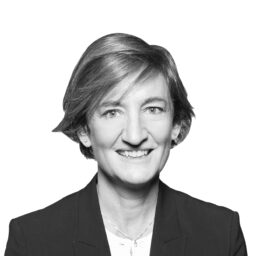
María José Esteruelas
Degree in Industrial Electrical Engineering from ICAI (Comillas Pontifical University, Madrid), Master’s Degree in Operations Management from IE Business School and a PDG from IESE Business School. She joined Ferrovial in 2021 as Managing Director of Energy Solutions.
Previously, she developed her career in Abengoa, where she has held various positions in different areas, including Director of Concessions, Director of Latin America, Director of the Energy Division, Director of the Americas Region and member of the Executive Committee.
She was a member of the Board of Directors of Applus+, from February 2019 to June 2024.
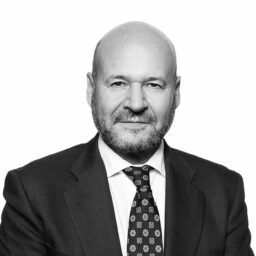
Juan Ignacio Gastón
Civil Engineer from the University of Cantabria and MBA from the London Business School. He joined Ferrovial in 1995, and during his professional career, he has held various high-level positions in the divisions of Construction and Services. In 2003, he joined Amey, and he went on to take the position of Construction Manager at Ferrovial Construction in the United Kingdom in 2007. In 2013, he was named Managing Director at Ferrovial Services Spain, a position that he held until being chosen as Chief Executive Officer at Ferrovial Construction in November 2018.
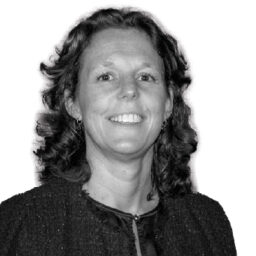
Geerte Gudule Hesen
PhD in Economics and Law from the University of Maastricht, with visiting scholarships at the Scandinavian Consortium for Organisational Research (SCANCOR) Stanford University, UC Berkeley School of Law, and Columbia Law School. She holds master degrees in both International Economics and Law from Maastricht University. Chief Legal and Compliance Officer and Secretary of the Board of Directors of Ferrovial SE since 2024. She is a member of the Supervisory Board and Audit Committee of CARE Netherlands. She previously held the position of General Counsel at Lumicks, Deputy General Counsel at ASML, and Head of Legal at Philips Personal Health, and was a senior associate at the law firm of De Brauw Blackstone Westbroek.
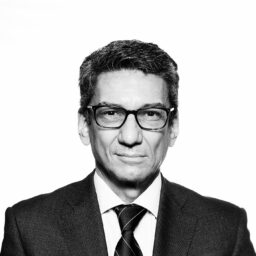
Ernesto López Mozo
Civil Engineer (Polytechnical University of Madrid) and holds an MBA from The Wharton School of The University of Pennsylvania. In October 2009 he was appointed Chief Financial Officer of Ferrovial. Previously, he held various management positions at Telefónica Group, JP Morgan and Banco Santander. He worked in Civil Engineering before obtaining the MBA degree. Member of the IFRS Advisory Council (2013-2015). Appointed Chairman of the Board of Directors of Aegon España, S.A. in 2023 (member of the board during 2016-2023), where he is also member of the Audit Committee.
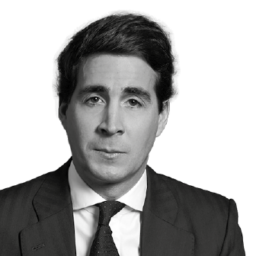
Ignacio del Pino
Degree in Mechanical Engineering from the Massachusetts Institute of Technology (MIT) and an MBA from the Stanford Graduate School of Business. He began his professional career working in investment banking and private equity at JP Morgan and Oaktree Capital Management.
He joined Ferrovial in 2017 and was appointed Corporate Finance Director in January 2023. In November 2024, Mr. del Pino was appointed Chief Investment Officer of Ferrovial. As Chief Investment Officer, he is responsible for the implementation of the company’s capital allocation strategy.
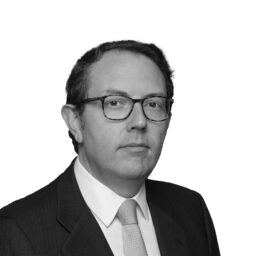
Andrés Sacristán
Civil Engineer from the Polytechnical University of Madrid. He began his career with Cintra in 2001 holding several positions in the car parks division, including Head of Development, before moving on to the Toll Roads division where he served as Head of Operations at Eurolink M4 (Ireland) and Managing Director of Radial 4 (Madrid). In 2010, he was appointed Country Manager for Spain and a member of the Executive Committee. In 2013, he became Head of Europe and also took charge of the Australian and Colombian markets in 2015. In 2017, he was appointed Director for Canada and CEO of 407 ETR. In 2020, Andrés Sacristán took over the management of Cintra US, where the company built and operates five innovative managed lanes projects. He was appointed CEO of Cintra in 2021.
BIOGRAPHIES OF OTHER MEMBERS OF SENIOR MANAGEMENT

Valentín Alfaya
Ph.D. cum laude in Biology (Complutense University, Madrid), and a M.Sc. in Environmental Engineering (EOI Business School, Madrid). Professional career in various sectors extends over 30 years, currently as Sustainability Director at Ferrovial. Between 2004 and 2008 he performed also as Group Risk Manager. Founder and former Chairman of the Spanish Green Growth Group, he has been member of the Governing Board of the EIT Climate-KIC, the Advisory Board at the Biodiversity Foundation (Spanish Ministry for Ecological Transition), and the Advisory Board at REDS (Spanish chapter of the UN-SDSN), among other institutions. Author of several books and scientific papers, also serves as Research Scientist at the Global
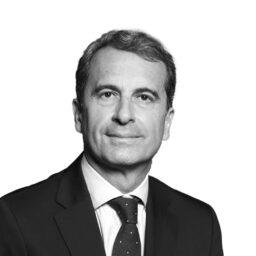
Alberto Ferreiro
Business degree from ICADE, Master in Finance from CUNEF, AMP from IESE and GSMP from the University of Chicago Booth School. In May 2008 he joined Ferrovial when he was appointed Chief Audit Executive. All his professional life has been devoted to internal audit in leading international and diversified groups. He started in Banco Santander in 1991, moved to Union Fenosa (now Naturgy) in 2000, before joining Ferrovial in 2008. He actively works with the internal audit industry in promoting its value to the organizations.
In 2024 additionally assumed responsibility for the Risk function in order to enhance its scope to serve as a useful tool for management decision-making and adapt it to the best international standards.

Patricia Leiva
Degree in Communications from the Complutense University of Madrid and a PDD from the IESE Business School.
She has more than 25 years of experience in Communication and Corporate Reputation Management. As a journalist, she worked at ABC, Cadena COPE and Europa Press, where she specialized in economic information. In corporate communications, she was head of External Communications and Media Relations at KPMG and executive vice president of Communications, Corporate Responsibility and Institutional Relations at ING DIRECT. Until her appointment at Ferrovial, she held the position of director of Communication, Institutional Relations and Sustainability for Mahou San Miguel.

Miguel Verde
Civil Engineer from the Polytechnical University of Madrid and AMP at the Chicago Booth School of Business. Miguel began his career at Ferrovial in 2003 holding different positions across the construction division in Spain. In 2010, he moved to the United States to work at LBJ Express Highway as segment manager. He subsequently joined Webber LLC in 2014, where he held different roles including VP of project controls. In 2018 he was appointed President of the Heavy Civil Division. He returned to Spain in 2023 as Ferrovial’s Director of Rail Works and Civil works. On December 2025 he was appointed CEO of Ferrovial Digital Infrastructure.
4. GENERAL MEETING, SHARE CAPITAL AND VOTING RIGHTS
4.1 GENERAL MEETING AND ITS POWERS
4.1.1 Place and Time of the General Meeting
General Meetings, unless held fully electronically to the extent permitted by law, are usually held in the municipality where Ferrovial has its seat (Amsterdam), or may be held in Rotterdam, The Hague or Utrecht, in the Netherlands. Each year, the Board convenes at least one General Meeting to be held within six months after the end of Ferrovial’s financial year. Extraordinary General Meetings may be held as often as the Board deems desirable. In addition, subject to applicable law, one or more persons with the right under Dutch law to attend a general meeting (“Meeting Rights”) individually or jointly representing at least 10% of the outstanding share capital may request the Board in writing to convene a General Meeting.
4.1.2 Calling and Agenda of the Meeting
The notice calling a General Meeting is issued by an announcement, which is published electronically and must be given at least 42 days prior to the day of the meeting.
The agenda for the annual General Meeting, among other things, typically includes the annual report and the adoption of the Annual Accounts, discharge of the Directors and certain authorizations to the Board. At least every four years, the adoption of the remuneration policy for the Board is included in the agenda.
Subject to applicable law, items requested to be added to the agenda by one or more persons with Meeting Rights in writing, individually or jointly representing at least 3% of the outstanding share capital, will be included in the notice calling the General Meeting or announced in the same manner if Ferrovial has received the substantiated request no later than 60 days before the day of the General Meeting.
4.1.3 Conduct of the General Meeting
General Meetings are chaired by the Chairman or such other person as determined in accordance with the Articles of Association.
Each shareholder (as well as other persons with voting rights or Meeting Rights) may attend the General Meeting, address the General Meeting and exercise voting rights pro rata to his or her shareholding, either in person or by proxy.
Shareholders may exercise these rights, if they are the holders of shares on the record date, i.e., the 28th day before the day of the General Meeting and they have registered to attend the General Meeting in a timely manner.
4.1.4 Resolutions of the General Meeting and amendments to the Articles of Association
Resolutions are adopted by a simple majority of votes cast without a quorum requirement being applicable, subject to certain exceptions provided by Dutch law or the Articles of Association. Pursuant to Dutch law, no vote may be cast at the General Meeting on a share held by Ferrovial or a subsidiary. If there is a tie in voting, the proposal will be rejected.
The Articles of Association stipulate that certain resolutions require a majority exceeding a simple majority of votes cast. Specifically, the limit and exclusion of pre-emptive rights, the reduction of share capital, and amendments to the Articles of Association require a majority of at least two-thirds of votes cast if less than one-half of the issued share capital is represented at the meeting. The Articles of Association stipulate that certain resolutions may only be adopted upon a proposal thereto by the Board. These include resolutions on the amendment of the Articles of Association, on legal mergers and legal demergers, the appointment of Directors, the issue of shares, limitation or exclusion of pre-emptive rights, the reduction of share capital, distributions in kind, the remuneration policy, and dissolution.
4.1.5 General Meeting in 2025
The Annual General Meeting of Ferrovial was held on April 24, 2025 in Amsterdam, the Netherlands, with an attendance of 70.43% of the issued and outstanding share capital. All the resolutions on the agenda were approved and are available on Ferrovial’s website.
4.2 SHARE CAPITAL
Pursuant to the Articles of Association, Ferrovial’s authorized share capital amounts to EUR 30,000,000 representing 3,000,000,000 shares with a nominal value of EUR 0.01 each.
The issued share capital as of December 31, 2025 was:
| Issued share capital (€) | Number of shares | Number of voting rights |
|---|---|---|
| 7,337,553.72 | 7,337,553.72 | 7,337,553.72 |
13,129,191 shares were held in treasury as of December 31, 2025. All issued shares are fully paid-up.
Each share gives the right to cast one vote at the General Meetings. All shareholders have the same voting rights. There are no different types of shares with different associated rights.
4.3 TRANSFER OF SHARES, SPECIAL VOTING RIGHTS AND RESTRICTIONS VOTING RIGHTS
The transfer of shares (which, for the avoidance of doubt, is not a beneficial entitlement to a share held through the systems of the Depository Trust Company (“DTC”), Iberclear, Euroclear Bank or Euroclear Nederland) requires a deed executed for that purpose and, save in the event that Ferrovial itself is a party to the transaction, written acknowledgement of that transfer by Ferrovial.
Serving of the deed of transfer or of a certified notarial copy or extract of that deed, on Ferrovial, will be the equivalent of acknowledgement. This applies equally to the creation of a right of pledge or a right of usufruct on a share, provided that a right of pledge may also be established without acknowledgement by, or service on Ferrovial, with due observance of section 2:86c(4) BW.
There are no restrictions on the transferability of shares in the Articles of Association or under Dutch law. However, the transfer of the shares into jurisdictions other than the Netherlands and Spain may be subject to specific regulations or restrictions.
There are no agreements between shareholders which are known to Ferrovial that may result in restrictions on transfer of shares or the exercise of voting rights.
4.4 ISSUE AND REPURCHASE OF (RIGHTS TO) SHARES
4.4.1 Issuance of shares and exclusion of pre-emptive rights
Pursuant to the Articles of Association and with due observance of the applicable statutory provisions, the Board resolves on the issuance of shares and determines the issue price, as well as the other terms and conditions of the issuance, if and insofar as the Board has been authorized by the General Meeting to issue shares. Unless otherwise stipulated at its granting, the authorization cannot be withdrawn without a proposal thereto by the Board. The Board’s authorization may be extended by specific consecutive periods. If and insofar as the Board has not been authorized, the General Meeting, pursuant to a proposal thereto by the Board, resolves on the issuance of shares and determines the issuance price, as well as the other terms and conditions of the issuance. The above equally applies to the granting of rights to subscribe for shares, such as options, but is not required for an issuance of shares pursuant to the exercise of a previously acquired right to subscribe for shares. Ferrovial may not subscribe for its own shares on issuance.
The Board was authorized by the General Meeting, for a period of 18 months from the date of the 2025 annual General Meeting that was held on April 24, 2025, i.e., up to and including October 23, 2026, to issue shares, or grant rights to subscribe for shares, up to a maximum of 10% of Ferrovial’s issued share capital for general purposes. In addition, the Board was authorized, for a period of 18 months from April 24, 2025, i.e., up to and including October 23, 2026, up to a maximum of 5% of Ferrovial ‘s issued share capital to issue shares in relation to one or more scrip dividends. The Board was also authorized by the General Meeting for the same period to exclude pre-emptive rights for any issuance under these authorizations.
4.4.2 Acquisition of its shares by the Ferrovial
Ferrovial may acquire fully paid-up shares if and insofar the General Meeting has authorized the Board to do so with due observance of statutory provisions. No authorization from the General Meeting is required if Ferrovial repurchases fully paid-up shares for the purpose of transferring these shares to Ferrovial or Ferrovial Group employees pursuant to any applicable equity plan, provided that the shares are quoted on an official list of a stock exchange.
The Board was authorized by the General Meeting, for a period of 18 months from the date of the 2025 annual General Meeting held on April 24, 2025, i.e., up to and including October 23, 2026, to acquire shares provided that Ferrovial and Ferrovial Group companies do not hold more than 10% of Ferrovial’s issued share capital, and against a price of up to 110% of their quoted price on a market on which the shares are listed, as determined by the Board, on the date of repurchase. For more information on Ferrovial ‘s share buy-back programs pursuant to this authorization, see Note 5.1 of the Consolidated Financial Statements.
4.4.3 Capital reduction
Pursuant to a proposal of the Board, the General Meeting may decide to reduce the issued share capital with due observance of article 2:99 BW. The issued share capital may be reduced by reducing the nominal value of shares by means of an amendment to the Articles of Association or by cancelling shares.
A resolution of the General Meeting to reduce the share capital requires a majority of at least two-thirds of the votes cast, if less than one-half of the issued share capital is present or represented at the General Meeting or a simple majority if one-half or more of the issued share capital is present or represented at the General Meeting.
The General Meeting resolved to cancel shares as these may be held by Ferrovial from time to time. The number of shares that will be cancelled will be determined by the Board. The cancellation may be implemented by the Board in one or more tranches. This resolution will lapse 18 months after the date of the 2025 annual General Meeting which took place on April 24, 2025, i.e., up to and including October 23, 2026.
4.5 MAJOR SHAREHOLDERS AND RELATED PARTY TRANSACTIONS
4.5.1 Major Shareholders
The following table sets out the shareholders (either directly or indirectly) holding a substantial interest (substantiële deelneming) (i.e., a holding of at least 3% of the share capital or voting rights) in Ferrovial (the “Major Shareholders”). This list of Major Shareholders is based on the information published on the website of the Dutch Authority for the Financial Markets (Stichting Autoriteit Financiële Markten, AFM) on major shareholders in Ferrovial as of December 31, 2025.
| Amount of Share Capital Owned | |||
|---|---|---|---|
| Shareholder | Number / class of shares | Percentage of share capital | Percentage of voting rights |
| Rafael del Pino Calvo-Sotelo*1 | 157,986,603 | 21.53 % | 21.53 % |
| TCI Fund Management Ltd*2 | 72,970,294 | 10.03 % | 10.03 % |
| María del Pino y Calvo-Sotelo | 63,430,056 | 8.64 % | 8.64 % |
| Blackrock Inc.*3 | 31,807,990 | 4.33% | 5.06% |
*1Mr. Rafael del Pino has also holds 122,379 Restricted Stock Units.
*2This figure also includes swaps.
*3This figure also includes contracts for difference.
Ferrovial is not directly or indirectly controlled. Ferrovial is not aware of any arrangement that may, at a subsequent date, result in a change of control.
4.5.2 Related-Party Transactions
The information on related-party transactions is included in the note 6.8 of the Consolidated Financial Statements.
5. CHANGE OF CONTROL ARRANGEMENTS AND SPECIAL RIGHT OF CONTROL
5.1 SIGNIFICANT AGREEMENTS WITH CHANGE OF CONTROL CLAUSES
Significant agreements of the Company that incorporate change of control clauses include:
- In November 2025, Ferrovial issued non-dilutive cash settled convertible bonds, maturing in 2031, admitted to trading on the open market (Freiverkehr) of the Frankfurt Stock Exchange. Section 9 (c) of the Terms and Conditions of the bonds, establishes as an event of partial early redemption at the option of the bondholders, the occurrence of a change of control of Ferrovial, that also results in loss or downgrading of Ferrovial´s rating.
- In January 2025, Ferrovial issued bonds admitted to trading on Euronext Dublin, maturing in 2030. Section 6 (c) of the Terms and Conditions included in the issue prospectus, establishes as an event of total or partial early redemption, at the option of the bondholders, the occurrence of a change of control of Ferrovial, that also results in the loss or downgrading of Ferrovial’s rating.
- In January 2025, Ferrovial entered into a new multi-currency sustainability-linked revolving credit facility agreement with certain financial institutions that replaced the existing revolving credit facility from April 2014 that was prepaid and cancelled. This stipulates early repayment in the event of a change in control at Ferrovial that also results in the loss or downgrading of its rating, authorizing each of these institutions to withdraw the financing given on an individual basis for 90 days thereafter.
- In May, June and November 2020, Ferrovial Emisiones, S.A. (a subsidiary of Ferrovial) issued bonds admitted to trading on the AIAF fixed income market, guaranteed by Ferrovial and maturing, 2026, 2026 and 2028, respectively. Section 7(c) of the Terms and Conditions included in the issue prospectuses establishes as an event of total or partial early redemption, at the option of the bondholders, the occurrence of a change of control of Ferrovial that also results in the loss or downgrading of Ferrovial’s rating.
- In September 2023, Ferrovial issued sustainability-linked bonds admitted to trading on Euronext Dublin, maturing in 2030. Section 6 (c) of the Terms and Conditions included in the issue prospectus, establishes as an event of total or partial early redemption, at the option of the bondholders, the occurrence of a change of control of Ferrovial SE, that also results in the loss or downgrading of Ferrovial’s rating.
- In December 2016 and November 2017, Ferrovial and several of its subsidiaries entered into counter-guarantee contracts with several insurance companies for the issuance of bonding guarantees on behalf of Ferrovial Group companies. The contracts include the ability of insurers to request counter-guarantees in cash if there is a change of control at Ferrovial.
- Ferrovial and the Ferrovial Group are also party to less significant contracts, mainly of a financial nature, that require authorizations or set conditions for a change of control or corporate transactions such as a merger or spin-off. These include a change of control in Ferrovial among the grounds for early termination.
- There are also contracts with suppliers of IT services, among others, that include a change of control in Ferrovial among the grounds for early termination.
5.2 EMPLOYMENT, SERVICE AND SEVERANCE AGREEMENTS
There are no agreements between Ferrovial and its Directors or senior managers that provide for indemnities, guarantees or golden parachute clauses when they resign or are dismissed without just cause or if the contractual relationship comes to an end as a result of a takeover bid.
6. COMPLIANCE AND OTHER POLICIES OF FERROVIAL
The management report contains specific sections regarding sustainability and environment; human rights; health, safety and well-being; integrity; and tax management. Please see the relevant sections for detailed information on these matters.
6.1 CODE OF ETHICS AND BUSINESS CONDUCT AND SUPPLIERS’ CODE OF ETHICS
The Code of Ethics and Business Conduct (the “Code of Ethics”) is the most important internal regulation of Ferrovial and it is the cornerstone of its compliance program, whose aim is to promote a culture of integrity and establish a common process for monitoring and controlling Ferrovial’s compliance risks under the principle of “zero tolerance” for the commission of irregularities or criminal acts. The Code is available on Ferrovial’s website.
The Code of Ethics is applicable to all Ferrovial Group companies and establishes the basic principles to which its Directors, managers and employees must adhere. Pursuant to the Code of Ethics, the key principles of Ferrovial business conduct are:
- Compliance with the Law: Ferrovial seeks to conduct its activities in compliance with applicable laws and regulations.
- Respect for Human Rights: Ferrovial strives of its actions and those from its employees to be conducted in alignment with the human rights included in the Universal Declaration of Human Rights.
- Integrity: The business and professional activities of Ferrovial shall be based on integrity, honesty, preventing corruption and maintaining respect for the individual circumstances and needs of persons involved.
Compliance with its Code of Ethics is monitored through the development of its Compliance Program (for more information on the effectiveness of and compliance with the Code of Ethics, please see the section ESRS G1-1 BUSINESS CONDUCT (ETHICS AND TRANSPARENCY AND CORPORATE GOVERNANCE) in the Statement of Consolidated Non-financial and Sustainability Information. The Compliance Program is supervised by the Board directly and through the ACC and each Director has signed a certificate of compliance regarding the Code of Ethics. The Chief Compliance Officer reports periodically to the ACC and at least once a year to the Board on the effectiveness of the Compliance Program.
The Chief Compliance Officer also reports at each meeting of the ACC on the performance of the Ethics Channel, which is the mechanism established by Ferrovial to facilitate the reporting of any possible irregularity, non-compliance or behavior contrary to ethics, legality and Ferrovial internal rules by Ferrovial employees or third parties. Please see the ESRS G1-1 BUSINESS CONDUCT (ETHICS AND TRANSPARENCY AND CORPORTATE GOVERNANCE – Ethics Channel) in the Statement of Consolidated Non-financial and Sustainability information section of the management report for further information on the Ethics Channel.
Ferrovial also adopted a Suppliers’ Code of Ethics, which establishes the basic principles that govern the actions of suppliers in their commercial relationship with Ferrovial. Ferrovial encourages and expects zero tolerance from its suppliers toward any act that may be considered corruption or bribery of any kind and requires strict compliance with the anti-corruption legislation applicable at all times in the countries in which we operate. Ferrovial also encourages and expects these principles to be shared by its suppliers, to take them on and, in turn, transfer them to their own suppliers and subcontractors in connection with their commercial relations with Ferrovial.
For more information on the application in practice of these policies, see ESRS G1-1 Business Conduct (Ethics, Transparency And Corporate Governance) in the chapter Statement of Consolidated Non-financial and sustainability information.
6.2 ANTICORRUPTION POLICY
Ferrovial has an Anti-Corruption Policy, available on Ferrovial’s website.
The Anti-Corruption Policy governs the behavior of all Directors, officers and employees of the Ferrovial Group , as well as their collaborators in the conduct of business, in the conduct of business, bearing in mind that Ferrovial has implemented a policy of “zero tolerance” of any practice that may be classified as corruption or the giving or receipt of bribes. The Anti-Corruption Policy will govern the interactions between Ferrovial or any companies that comprise the Ferrovial Group and any person, including but not limited to public officials.
In addition to the voluntary commitments to integrity and business ethics, the Anti-Corruption Policy mandates strict compliance with applicable anticorruption laws worldwide, including any laws prohibiting the giving or receiving of bribes and corrupt practices, including but not limited to the Dutch Criminal Code, the Spanish Criminal Code, the U.S. Foreign Corrupt Practices Act, the U.K. 2015 Bribery Act, the United Nations Convention against Corruption and the OECD Anti-Bribery Convention.
6.3 INSIDER TRADING COMPLIANCE POLICY AND PROCEDURES
Ferrovial has an Insider Trading Compliance Policy and Procedures, also available on Ferrovial’s website. The policy sets forth the guidelines and prohibitions for Directors, managers and other employees (and persons closely associated to them) regarding the legal and regulatory duties and sanctions applicable to insider trading and unlawful disclosure of inside information/material nonpublic information. In addition, the Policy regulates other matters, such as the blackout periods, insiders lists, trading preclearance, prohibited transactions, and notification obligations that must be fulfilled by Board members or other Persons Discharging Managerial Responsibilities when dealing in securities of Ferrovial.
6.4 REGULATION FAIR DISCLOSURE POLICY
Ferrovial also has a Fair Disclosure Policy, which is published on Ferrovial’s website.
Regulation fair disclosure prohibits the selective disclosure of material nonpublic information to certain enumerated persons and is intended to eliminate situations where a company may disclose material nonpublic information to securities analysts or selected institutional investors, before disclosing this information to the general public.
The policy contain a set of guidelines to avoid selective disclosure of material nonpublic information and concerning the disclosure of insider information. These include who is authorized to communicate on behalf of Ferrovial to securities markets participants, how Ferrovial manages quarterly earnings release conference calls and updates, Ferrovial’s policy regarding rumors, inadvertent disclosures, delay on the disclosure of inside information and list of insiders.
6.5 DISCLOSURE COMMITTEE
Ferrovial has a Disclosure Committee with its own charter which addresses its powers, responsibilities and organization. The Disclosure Committee aims to facilitate Ferrovial ‘s objective that public disclosures made by Ferrovial to its security holders, the investment community and other stakeholders should (i) be accurate, complete and timely; (ii) fairly present Ferrovial’s financial condition and results of operations in all material respects; and (iii) meet any applicable laws and stock exchange requirements.
7. FINANCIAL REPORTING AND AUDIT
7.1 INTRODUCTION
On May 9, 2024, Ferrovial was listed on the Nasdaq Stock Exchange. Being listed on an American Stock Exchange requires the organization to adhere to several regulatory requirements, among them, the Sarbanes-Oxley Act (“SOX”). This law, enacted on July 30, 2002, mandates public companies to define, implement and monitor internal controls to ensure financial information is free from material errors and fraud, thus protecting investors and those relying on public financial information.
Ferrovial, as a company already listed in Spain and later in the Netherlands, has had an Internal Control over Financial Reporting (hereinafter “ICFR”) system in place since 2010, when the Spanish Stock Exchange regulator (CNMV) recommended listed companies to follow the COSO framework (Committee of Sponsoring Organizations of the Treadway Commission), which includes a series of best practices and operating principles related with aspects of the System of Internal Control over Financial Reporting.
As part of the work done for the listing of Ferrovial’s ordinary shares on Nasdaq, three material weaknesses were identified as defined under the Exchange Act and by the U.S. Public Company Accounting Oversight Board, or PCAOB, in Ferrovial’s internal control over financial reporting, as controls in Ferrovial’s previous ICFR system were not designed at the level required by SOX. A material weakness is a deficiency, or a combination of deficiencies, in internal control over financial reporting, such that there is a reasonable possibility that a material misstatement of Ferrovial’s annual financial statements will not be prevented or detected on a timely basis.
The material weaknesses identified related specifically to: (i) lack of evidence of management review controls pertaining to control attributes, the precision level applied and documentation of matters resolved, and over the completeness and accuracy of reports used in the controls, (ii) lack of designed, implemented and operating effectiveness testing internal controls over information technology general controls impacting systems and applications used in significant processes, and (iii) lack of control design to ensure appropriate segregation of duties as maintained in recording transactions.
During 2024, Ferrovial completed the definition and implementation of its overall SOX model, based on the COSO framework; also started generating evidence for all controls applicable under Ferrovial’s new framework on a recurring basis and commenced a recurring testing program performed by the Internal Audit Department to assess (i) whether the controls were designed properly to address the risks, and (ii) whether the controls were implemented as designed.
Also, during 2024, Ferrovial implemented changes in Ferrovial’s internal control over financial reporting to remediate the three material weaknesses identified. At the end of 2024, Ferrovial reviewed the testing results of the Internal Audit Department, focusing on design and implementation of controls in key business processes and in IT applications addressing risks of material misstatements, to assess whether any deficiency or a combination of deficiencies could be qualified as material weaknesses. Following that assessment, Ferrovial concluded that the material weaknesses identified in the listing process had been remediated as of December 31, 2024, except for the insufficient monitoring controls in relation to the activity of privileged users of IT applications, a subset of the previously identified material weakness related to information technology general controls referenced above.
In 2025, Ferrovial continued to work to enhance its internal control over financial reporting, particularly those controls related to the material weakness on the insufficient monitoring of the activity of privileged users of IT applications. Also, Ferrovial’s organization has been enhanced, with the creation of an IT Compliance Department which works closely with the Internal Control Department, devoting attention to all the IT General Controls. Finally, a test of effectiveness of Ferrovial’s internal controls has been completed by the Internal Audit Department and also by the external auditor.
7.2 MAIN CHARACTERISTICS OF THE INTERNAL CONTROL SYSTEM OVER FINANCIAL REPORTING
Ferrovial’s ICFR system is based on the model outlined by the Committee of Sponsoring Organizations of the Treadway Commission, known as the Internal Control Framework for Financial Reporting (ICFR). This framework delineates the internal control system as a set of rules, procedures and tools designed to reasonably ensure that financial information (i) fairly depicts, in all material respects, the financial condition, cash- flows and results of the Ferrovial’s operations and (ii) it is free from material errors. The reliability, accuracy, completeness and timeliness of information significantly contribute to meeting this objective. The periodic evaluation of the internal control system is essential to ensure it remains effective.
The subsequent paragraphs delve into the specifics of the ICFRS framework currently in place.
7.3 RESPONSIBILITIES
- The Board of Directors is responsible for supervising internal control over the financial reporting system and monitoring, at least quarterly, the preparation of the interim financial statements of Ferrovial, and approving the information which must be provided periodically to the markets or supervisory authorities, safeguarding that the information is prepared observing the same principles as for the annual accounts. In addition, “The Board shall monitor the operation of the internal risk management and control systems and carries out a systematic assessment of their design and effectiveness at least once a year. Attention shall be paid to observed weaknesses, instances of misconduct and irregularities, indications from whistleblowers, lessons learned, and findings from the Internal Audit Department and the external auditor. Where necessary, improvements are made to internal risk management and control systems”.
- The Audit and Control Committee (the “ACC”) Charter indicates the following: “The main purpose of the Audit and Control Committee (the “Committee”) of the Board of Directors (the “Board”) of Ferrovial SE (the “Company”) is to oversee the Company’s accounting and financial reporting processes and the audits of the financial statements of the Company, and to assist the Board in its decision-making process in relation to the supervision of the integrity and quality of the Company’s financial and sustainability reporting and the effectiveness of the Company’s internal risk management and control systems.
- The practical design, implementation and maintenance of the ICFRs are responsibilities assigned to the members of the Management Committee, who rely on the Corporate Finance Department to globally lead and oversee all phases of the process, as outlined in the “ICFR Framework Procedure in SOX for the Operation of the Internal Control over Financial Reporting System.” This framework is available to all employees on Ferrovial’s intranet. Notably, this responsibility extends beyond the Finance Department, encompassing the entire organization, including Human Resources, Legal Advisory, Information Systems, and all the business divisions, since the financial information is compiled from the activity, information, judgments and estimates made by all of them.
- The Internal Control Department, within the Financial Compliance Department, is responsible for monitoring all phases of the process and reporting to the ACC on the progress of its implementation and operation. Its main tasks are:
- Definition of Scope: Determining the legal entities, processes and IT applications for which internal controls are essential to ensure reliability of the consolidated financial statements.
- Process and Control Updates: Annually inspecting process and IT documentation together with the owners, to ensure it reflects the actual situation, updating all the required information and facilitating the design of controls.
- Monitoring the evidence uploaded in Ferrovial’s Internal Control tool (ARCHER) to ensure control owners are complying with the frequency defined in their controls.
- Monitoring the progress of remediation actions identified either by Ferrovial, the business, Internal Audit or external audit, to ensure they are finalized at year-end or mitigation actions are in place.
- Assessment of the ineffectiveness identified by the Internal Audit Department to determine the overall impact on the Ferrovial Group’s Consolidated Financial Statements.
- Related to the previous point, providing an annual certification to the ACC of the assessment of the status of the ICFR and coordinating the preparation of certifications in the organization.
- Coordination, together with Internal Audit, with the external auditor.
- Providing SOX training to the organization.
- The IT Compliance Department is another key player in the ICFR process, whose main functions are:
- Contributing to the definition of the business applications together with the Internal Control Department and identification of the relevant IT tools in scope.
- It also plays a very active role in the identification of risks, in the definition and implementation of consistent and homogeneous controls, and in the implementation of the remediations of control gaps that may be identified during each year.
- IT also provides an annual certification to the ACC of the assessment of the status of the ICFR.
- Provide SOX training to the IT organization.
- Coordination, together with Internal Control and Internal Audit, with the external auditor.
- The Internal Audit Department also plays a very significant role in the ICFR process, as it is responsible for testing the design and effectiveness of the key controls implemented for all business processes, IT applications and general entity level controls, and also for assessing the governance of the SOX model. This testing process is essential to the early identification of any potential control gaps and to define corrective actions before year-end, and support management in their overall ICFR assessment under Section 404a of the SOX Act.
Other tasks undertaken by the Internal Audit Department in connection with ICFR include:- Devise, execute and coordinate the timing and extent of the testing plan with external auditors.
- Communicate results to control owners/reviewers and the Internal Control and IT Compliance Departments.
- Maintain a register (Summary of Control Deficiencies or SOCD) of all deficiencies found and monitor their status in coordination with the Internal Control and IT Compliance Departments, who will oversee the design and completion of the corresponding remediation plans.
- Assess the deficient controls identified to determine the overall impact on the Ferrovial Group’s Consolidated Financial Statements.
- Provide an annual certification to the ACC of the assessment of the status of the ICFR.
- Report regularly to the ACC and to the Management Committee.
7.4 FERROVIAL FRAMEWORK COMPONENTS
As indicated in Section 7.1, Ferrovial’s ICFR process is aligned with the COSO III Enterprise Risk Management Framework, which provides a structured approach to manage internal controls systematically throughout the year, ensuring reliability in financial reporting and compliance with accounting regulations. The process comprises the following 5 blocks, which are described in following sections:
7.4.1 Control Environment
The control environment refers to the policies, rules, processes and structures that form the basis on which the Ferrovial’s internal control system is deployed. The Board of Directors and the ACC establish guidelines regarding the importance of internal control and the expected standards of conduct. All these are considered Entity Level Controls.
7.4.2 Risk Assessment and Scope Definition
Identifying risks of material misstatement due to fraud and error in financial reporting is one of the most important stages within the ICFR process. It is a dynamic and iterative process based on which the scope of components (processes, applications and legal entities) and identification of key controls are done.
Each year, the Internal Control Department, together with the IT Compliance Department, will assess the business processes in scope for that year. It will identify the processes that are material both from a quantitative point of view, considering the prior year’s Financial Statements’ lines associated with each process, and also attending to qualitative factors (nature of account/ disclosure, exposure to contingent liabilities, transaction volume, complexity and homogeneity, existence of related party transactions, segregation of duties issues, fraud risk, etc.). This qualitative assessment helps us to determine which financial statement assertions are relevant for each Financial Statement’s business line:
- Existence (assets & liabilities) and occurrence (transactions – Profit & Loss Account)
- Completeness
- Valuation or Allocation (transactions – Profit & Loss Account)
- Presentation and Disclosure
- Rights and Obligations
As stated, on a yearly basis and in line with the business processes identified within the scope, two types of systems and applications are considered:
- Those systems and applications that are involved in key business process controls, specifically, those which produce reports for key business process controls (IPES) or provide application controls in processes (ITACS).
- Also, IT service applications (IT tools) used in the day-to-day IT activities (access, changes, et) must be considered when defining the scope.
To complete the scope definition, management must understand the IT layers (application, operating system and database) within the entity’s IT system and then identify the relevant risks arising from IT.
Once the scope has been established, adequacy of coverage is checked. The scope is shared with the Internal Audit Department, which also reviews it.
Any major changes to the business environment such as new acquisitions, divestments, major macro-economic changes (inflation), regulatory changes which may include major modifications to IFRS, and major IT changes/transformations will need to be assessed to determine the corresponding changes in the SOX scope.
The annual scope is reviewed with figures from the Ferrovial Group Interim Financial Statements.
7.4.3 Control Activities
Documentation of business processes and it controls
As part of the SOX implementation project, a detailed analysis of the main risks in each business process and application was conducted and documented in (i) flowcharts supplemented by a brief narrative, and (ii) which identify the specific risks for each business process /IT application and the controls defined to mitigate said risks.
Once the scope was defined for 2025, the prior year flowcharts and Risk and controls matrices (RCM), were reviewed and updated to ensure they represent the actual business/IT process and to ensure that changes in the organization, procedures or systems had been captured. Both documents, flowcharts and RCM, are uploaded in the tool used for the SOX process (ARCHER).
For new business processes and IT applications, an understanding has been carried out to identify main risks of material misstatements and to prepare the initial flow charts and RCM.
Types of controls
Within the control activities, there are three main groups of controls:
- Entity Level Controls: As mentioned above, at the top of the organization the ACC and senior management of Ferrovial have created a set of Entity Level Controls, which are activities that reside on top of the organizational structure and therefore have an extensive impact on a company. These include policies, procedures and the organizational structure.
- Businesses Process Controls: Ferrovial allocated all the Balance Sheet and Income Statement Financial Statements’ lines into the following 10 business processes: Closing, Consolidation, and Reporting; Treasury; Derivatives; Borrowings; Human Resources; Fixed Assets / Intangible Assets; Taxes; Revenue and Accounts Receivable; Purchases and Accounts Payable; and Legal.
- Information Technology General Controls (ITGCs) provide assurance that systems and applications are developed, maintained and operated to provide the functionality required to process transactions, ensuring that the information is complete, and available to those with approved access. They also assure the proper operation of the applications and the protection of both data and programs from unauthorized changes. The main blocks covered within IT General Controls are:
- Access Management (access to applications and infrastructure).
- Change Management (changes to applications and infrastructure).
- Program Development Management (migrations and implementation of new tools/applications)
- Computer Operations (g., back-ups, etc.).
- Cybersecurity
Ferrovial defined an IT control framework that comprises all potential risks coming from IT with the corresponding controls. Through an individual assessment of the risks posed by each system/application, the corresponding controls are defined for each application.
Special control attributes: MRC and IPE
- MRC – Management Review Controls
- Some controls are considered “MRCs”. MRCs are reviews performed by Ferrovial’s senior management about the reasonableness of financial information to reach or evaluate a conclusion impacting an entity’s financial reporting.
- An MRC is a review control that (i) requires significant judgement and expertise about the organization or industry knowledge; (ii) requires a meeting between members of management to reach a conclusion; and/or (iii) relates to the value of an entry/adjustment based on an estimate not provided from an objective transaction.
- These controls always require: (i) Including a threshold for review; (ii) clarity required on exactly “What did the reviewer do?” and “What was the follow-up / resolution?” and (iii) sufficient documentation to evidence the conclusion of the control.
- Standard templates have to be filled in for controls with MRC.
- IPEs
- An IPE is either a document prepared by a control owner with relevant information for the control performance or an IT application report that supports the control execution. IPE is any relevant information that is used by the entity or created by the entity.
- The main goal in relation to this information used in the control execution is to ensure its completeness and accuracy, as otherwise the conclusion of the control could be incorrect.
- Ferrovial has defined standard templates that have to be filled in for controls with IPEs for process and applications.
Control execution
Control owners are responsible for executing the controls defined in the Risk Control Matrices with the established frequency (monthly, annually, etc.) and for producing the appropriate evidence of control performance each time. The evidence has to be uploaded to Ferrovial’s ICFR tool (ARCHER).
Also, control reviewers are responsible for reviewing the evidence prepared to support control execution and to provide supporting evidence of the review they have performed (email with conclusions, follow-up questions, meetings on the calendar, documents versions, etc.).
The key task of control owners and reviewers is to ensure that every control meets the control objective and that the corresponding risk is actually addressed or mitigated.
7.4.4 Information and communication
Internal communication.
- Related to internal control. To reinforce internal communication in the SOX compliance environment, the Financial and IT Compliance Departments promotes ongoing training and awareness campaigns to the employees regarding internal control over financial reporting. Guides and a SOX mailbox for questions are also available on the corporate intranet.
- Related to financial reporting. The Financial Department is responsible for defining, establishing, keeping updated and formally communicating through the established channels to all people involved in the preparation of Ferrovial’s financial information, the policies, criteria, and General Ledger accounts necessary to ensure that the capture procedures and preparation of financial reporting is carried out with homogeneous formats for individual and consolidated financial statements, notes and disclosures.
External communication.
- The Financial Department is responsible for identifying the financial information to be reported to different external parties and formally defining and establishing the required processes to capture the information to be publicly disclosed, their sources, those responsible for its preparation and distribution, destination and frequency.
- Ferrovial has established a Disclosure Committee, which oversees the preparation and review of annual financial statements. Amongst other things, the Disclosure Committee supervise the preparation and review of Ferrovial’s reports and other information to be filed with the SEC, including the annual report on Form 20-F, considers the materiality of the information to be disclosed in the documents indicated before, and supervises the controls and procedures designed to ensure that information required to be disclosed in the financial statements is recorded, processed, summarized and reported accurately and on a timely basis.
7.4.5 Monitoring
The Internal Control system needs to be monitored to ensure it functions properly over time. At Ferrovial, monitoring activities are conducted at several levels:
- The Internal Audit Department will annually test the design of all the controls implemented for all business processes, applications and entity level controls and their operating effectiveness based on representative samples.
The scope of the Internal Audit Department’s work includes all companies in the Ferrovial Group and goes beyond internal control testing, including audits of:- financial statements.
- business plans, budgets and financial models.
- compliance with applicable internal and external regulations.
- integrity and functional sufficiency of information systems, and
- the adequacy of organizational responsibilities.
The Internal Audit Department provides regular updates to both the Management Committee and the ACC.
- The Internal Control and IT Compliance Departments also monitor that control evidence is regularly uploaded to the tool. It also reviews testing results and the progress of remediations for control failures. Once remedial actions for control failures are resolved, this will be communicated to Internal Audit, which will again test the corresponding control to ensure it works properly.
- Finally, Management also develops various monitoring activities by, for example, monitoring SOC reports provided by service providers. Management monitors service organizations and subservice organizations by establishing consistent and ongoing communications and by reviewing the organizations’ SOC reports.
All these five blocks are supported by ARCHER, facilitating comprehensive management of the process and enabling the clear assignment of responsibilities for executing and documenting controls.
7.5 PROCESS OF PREPARING THE ANNUAL ACCOUNTS
The preparation of the Annual Accounts starts with the creation of the annual closing calendar by the Finance Department, which includes the main tasks to be performed to prepare the Ferrovial’s Consolidated Annual Accounts. It is a bottom-up process where controls are defined for key activities: all the key risks within the closing activities carried out at business level (contracts, concessions, etc.) and at corporate level, such as the full consolidation process, the breakdown of the notes to the financial statements and the preparation of the cash flow statement, have their own controls.
At a transactional system level, Ferrovial implemented SAP in most of the Ferrovial Group companies as the corporate ERP. The companies outside this “corporate” SAP have their own transactional systems. The mechanism for capturing and preparing the information that supports Ferrovial’ s consolidated financial statements is mainly based on a consolidation tool known as SAP BPC. The companies and subgroups not included in the corporate SAP application upload their end-of-period financial information into this application. A large part of the information supporting the breakdowns and notes to the financial statements is included in the consolidation tool, with the remainder being captured using standard-format spreadsheets, called Reporting Packages, which are prepared for half-yearly and annual closes.
To support the CEO and CFO in relation to the public certifications they have to sign in relation to financial statements, the following INTERNAL CERTIFICATIONS are prepared:
- Internal Audit reports the results for the annual work regarding the design and operation of the internal control framework, providing an overall assessment of the internal control status.
- The Internal Control Department, based on the Internal Audit and external audit testing results, assesses the severity of the deficiencies identified and determines if there are material weaknesses and/or significant deficiencies that need to be reported, and, based on the above, proposes the assessment to be made by the CEO and CFO in relation to the ICFR.
- The IT Department also provides a certification of the status of the applications within the SOX scope.
- Finally, there is a bottom-up internal certification process, by which business areas’ CEOs and CFOs and also the Corporate Finance Department sign a certificate.
These certifications include an explicit mention of their responsibility for maintaining a system of internal control that enables the financial information to be free from material error or fraud.
The financial statements are submitted to the Board for their formulation. In addition, prior to publication and formulation by the Board, the Corporate Finance Department submits to the abovementioned Disclosure Committee, and afterwards to the ACC, a draft of the annual financial statements, highlighting the main judgements and estimates made in the most complex areas or those with the most significant accounting impact.
7.6 THE GROUP EXTERNAL AUDITOR
PricewaterhouseCoopers Accountants N.V. (“PwC”), appointed as the external auditor of Ferrovial, initially for a term of three years, on April 24, 2025, has participated in all ACC meetings presenting its scope or work (annual audit, limited review, etc.), planning, identification of key risks, conclusions of interim work and final conclusions of the audit. Such final conclusions are also presented to the Board by the external auditor.
In addition, and with the aim of providing an integrated audit opinion for the Annual Report to be filed with the SEC (Form 20-F), to comply with requirements of Section 404b of the SOX Act, PwC also conducts an audit of the internal control over financial reporting. Hence, they have also presented to the ACC their plans, interim and final results and a summary of control deficiencies. These deficiencies are incorporated into the ICFR action plan; the Corporate Finance Department is responsible for designing an action plan to correct such shortcomings and for reporting progress to the ACC for supervising its completion.
7.7 CURRENT STATUS OF THE MATERIAL WEAKNESS IDENTIFIED AS OF 2024
In connection with the material weakness related to the insufficient monitoring controls of the activity of privileged users of IT applications, starting in 2025, Ferrovial has focused the work in the following three core financial applications:
- SAP R3, which is the primary financial application (ERP).
- SAP BPC, the consolidation tool.
- Insite, the accounting and cost accounting tool used in Construction.
For each of these applications, IT Compliance and Financial Compliance Departments have worked closely with the applications owners to review the following:
- The existence of logs, and if so, the information contained in them. Substantial work has been done to (i) extract logs (especially in SAP, where due to the volume of logs this has represented a challenge), (ii) enriched the logs to add useful information to allow a meaningful review and (iii) undertake a review of them.
- In parallel, for each of the systems, IT users’ activity was classified in (i) key risk activity and (ii) non-key risk activity to ensure adequate oversight took place for the first group.
- Finally, a review of the enriched logs was done to be able to conclude about the activities performed by the privileged users and also to ensure that no other users have performed IT privileged activities. It is worth noting that activities were split into two buckets:
- Financial activities: These activities were supervised not just by IT personnel but also by finance staff when they were assessed as critical from financial perspective (posting journals or modifying vendor master data).
- Non-financial activities: These activities have been reviewed by IT personnel.
- Although the control was initially semiannual, it was moved to a monthly control from July onwards to facilitate the review process.
The need for this control has also been assessed for the rest of Business Application and IT tools and has been deployed in 31 business applications and 26 IT tools. Internal Audit and PwC tested the design of these controls and later the effectiveness. [No significant issues have been identified. Considering the above information, Ferrovial believes the material weakness existing as of December 31, 2024 related to the insufficient monitoring of activity of privileged users of IT applications has now, as of December 31, 2025, been remediated.]
7. 8 CONCLUSION
Ferrovial believes that, based on the work performed, none of the control deficiencies identified qualify as material weaknesses and that the Material Weakness reported in 2024, related to the “insufficient monitoring controls in relation to the activity of privileged users of IT applications” has now been fully remediated. This is in line with the Management Assessment of the effectiveness of the Internal Control over Financial Reporting included in the Financial Statements filed with the SEC for 2025 (the “2025 20-F”) and with the External Audit opinion included in the 2025 20F.
Some control deficiencies have been identified and work will be required to improve Ferrovial’s internal controls and keep them at the level required for effectiveness according to the SOX Act.
8. COMPLIANCE WITH CORPORATE GOVERNANCE REQUIREMENTS
The Dutch Corporate Governance Code (as most recently amended in May 2025 and available at: The Dutch Corporate Governance Code | Monitoring Commissie Corporate Governance) applies to all Dutch companies with shares listed on a government-recognized stock exchange, whether in the Netherlands or elsewhere, and therefore also applies to Ferrovial.
Ferrovial acknowledges the importance of good governance, both as set out in the Dutch Corporate Governance Code as well as in the Spanish and U.S. context and international market practice. Ferrovial complies with the majority of the best practice provisions of the Dutch Corporate Governance Code, except for those listed below:
Best practice provision 2.2.2 – Including the period that they served on the board of Ferrovial S.A., Non-Executive Directors Ms. María del Pino and Mr. José Fernando Sánchez-Junco, who were reappointed at Ferrovial’s 2025 annual General Meeting, have been on the Board for more than twelve years. In addition, including the period that he served on the board of Ferrovial S.A., Non-Executive Director Mr. Óscar Fanjul Martín, who was reappointed at Ferrovial’s 2025 annual General Meeting for a term of three years, was on the Board for more than eight years at the time of his reappointment. All have a deep knowledge of the Ferrovial Group, having contributed to its important development and internationalization and to its consolidation as a global operator in the infrastructure sector. Likewise, the resumes of these Non-Executive Directors also show their extensive training with a solid knowledge of business, ESG and commercial strategy. The Board believes that, in addition to their qualifications, it is advisable to have on the Board a mix of experienced members and members more recently appointed, in order to enrich the debate, provide a plurality of views, and allow for a better exercise of the Board’s and the Committees functioning.
Best practice provision 2.3.7 – The Dutch Corporate Governance Code recommends that a vice-chairperson is appointed that deputizes for the chairman of the Board. Ferrovial implemented an executive chairman governance model. This means that one of Ferrovial’s Non-Executive Directors, with the title Lead Director, serves as “chairperson” as contemplated under the Dutch Corporate Governance Code, and that one of Ferrovial’s Executive Directors holds the title of Chairman. Ferrovial’s Vice-Chairman deputizes for Ferrovial’s Chairman, and not for Ferrovial’s Lead Director. A number of duties contemplated under the Dutch Corporate Governance Code for the “chairperson” are exercised by Ferrovial’s Chairman (where applicable, together with Ferrovial’s Lead Director) and, accordingly, having the Vice-Chairman deputize for the Chairman (and not the Lead Director) is consistent with Ferrovial’s choice for an executive chairman governance model.
Best practice provision 2.4.2 – The Board Rules provide for a limitation to the number of boards outside Ferrovial in which Directors may sit (five listed companies other than Ferrovial and its subsidiaries, counting as one any positions in the same group of companies). Ferrovial considers that this limitation sufficiently ensures an adequate level of involvement of Ferrovial’s Directors. Furthermore, and with the same purpose, each year the Nomination and Remuneration Committee oversees the positions outside Ferrovial in which Non-Executive Directors sit.
Best practice provision 2.6.2 – The Policy of the Ethics Channel states that reports involving the actual or suspected misconduct of a Board member shall be managed under the direct oversight of the Chairman of the Audit and Control Committee. Ferrovial believes this to be the most appropriate, considering Ferrovial’s overall governance, given that the Audit and Control Committee, which is composed solely of independent Non-Executive Directors, among its duties, is responsible for the establishment of procedures for the receipt, retention and treatment of complaints, concerns and questions of employees and third parties. In addition, the Chief Compliance Officer, who is responsible for the whistleblowing system, reports to the Chairman of the Audit and Control Committee, who is therefore familiar with the complaint investigation procedures.
Best practice provision 3.1.2 vi) – Ferrovial’s Remuneration Policy states that once the shares corresponding to the remuneration systems have been attributed, the Executive Directors may not transfer their ownership or exercise them until after a period of at least three years. An exception is made if an Executive Director maintains, at the time of the transfer or exercise, a net economic exposure to the variation in the share price for a market value equivalent to an amount of at least twice their annual fixed remuneration through the ownership of shares, options or other financial instruments. The objective of the holding period of the shares delivered by Ferrovial is to align its interests and those of its shareholders. Ferrovial understands that these interests are aligned when an amount equivalent to at least twice the fixed remuneration is reached, as it represents a relevant exposure to the value of Ferrovial.
Best practice provision 3.2.3 – Pursuant to the Remuneration Policy, the contract with the CEO states that he will be entitled to receive gross compensation equal to the greater of the following two amounts, in some cases upon termination of his contract: (i) the amount resulting from adding the annual amount of the fixed remuneration and the annual variable target remuneration corresponding to the year in which the contract is terminated; or (ii) the amounts accumulated on the date on which the contract is terminated in the extraordinary deferred remuneration plan referred to in the Long-Term Savings System with the limit of two annual payments of total annual remuneration. This arrangement was agreed to when the ultimate parent company of the Ferrovial Group was still Ferrovial S.A. and is in line with Spanish good governance recommendations.
Best practice provision 3.3.2 – Pursuant to the Remuneration Policy, Non-Executive Directors receive part of their remuneration in shares. The shares are not subject to any performance conditions, but rather are determined each year as a fixed percentage of the total cash value of the remuneration for such year. The shares are granted as long-term investments and are subject to a holding period of the earlier of three years or the end of their term as Director. The rationale for the remuneration in shares is to better align the remuneration of Directors with the practices of U.S. companies in Ferrovial’s benchmark group, enhancing attractiveness for Directors with a focus on North America, a key market for Ferrovial, while maintaining alignment with European best practices.
Best practice provision 5.1.2 – Pursuant to the Board Rules, the Chairman of Ferrovial has ultimate responsibility for the effective operation of the Board, having the ordinary power to call the Board, set the agenda for the meetings and to lead the discussions and deliberations. As explained with respect to best practice provision 2.3.7, Ferrovial has an executive chairman governance model and the allocation of these duties is consistent with this model.
9. CORPORATE GOVERNANCE STATEMENT
The Dutch Corporate Governance Code prescribes Dutch companies to issue a statement outlining their approach to corporate governance and compliance with the Dutch Corporate Governance Code, referenced in article 2a of the Decree Management Report. Details required for inclusion in this corporate governance statement, described in Section 3 of the Decree Management Report, are incorporated and reiterated herein by reference. This information is located in the following sections of the Annual Report:
- Section 8 includes details pertaining to compliance with the Dutch Corporate Governance Code, as required by article 3 of the Decree Management Report.
- Section 7 contains information pertaining to Ferrovial’s risk management and control framework concerning the financial reporting process, as required by article 3a sub a of the Decree Management Report.
- For details on the functioning of the General Meeting and the authority and rights of its shareholders, as mandated by article 3a sub b of the Decree Management Report, please refer to Section 4.1.
- Section 2 covers details about the composition and functioning of the Board and its Committees, adjusted for a one-tier governance structure to comply with article 3a sub c of the Decree Management Report.
- Ferrovial’s Belonging and Inclusion Policy, a requirement per article 3a sub d of the Decree Management Report, is documented in Section 2.8.1.
- Details concerning the number of men and women on the Board, management positions below the Board, corresponding goals, and plans to achieve these goals, mandated by article 3d of the Decree Management Report, can be found in Sections 2.3, 2.8.1 and 3.
- Sections 4.2 through 4.4 and Section 5 include information regarding the inclusion of data required by the Dutch Decree on public takeover bids (Besluit openbare biedingen), implementing European Directive 2004/25/EC, as stipulated by Article 3b of the Decree Management Report.
STATEMENTS BY THE BOARD ON RISK MANAGEMENT
The Board, which is responsible for establishing and maintaining the internal risk management and control systems and assessing their effectiveness, recognizes the inherent limitations of these systems which are influenced by, among other things, inherent limitations to risk management, business considerations such as Ferrovial’s risk appetite, the complexity of Ferrovial’s operations and the dynamic nature of the business environment, and also recognizes that certain risks remain outside of Ferrovial’s direct control, as they depend on third parties or external circumstances. As such, the statements below do not imply that the internal risk management and control systems provide absolute certainty as to the realization of strategic, operations, compliance and reporting objectives, nor that they can prevent all misstatements, inaccuracies, fraud, operational issues, and non-compliance with laws and regulations. The principal risks Ferrovial faces, its risk management framework and its risk appetite are described in the Section Risk Report of this management report. The statements below are made pursuant to best practice provision 1.4.3 of the Dutch Corporate Governance only and accordingly should not be construed to relate to Ferrovial’s obligations under U.S. Sarbanes-Oxley Act (SOX).
The Board, based on the internal control procedures carried out during 2025 described in Section 7.3, on the internal risk management and control systems as described in the chapter Risk Report and on the going concern assessment included in Note 1.2.1 “Going concern assessment” of the Consolidated Financial Statements, hereby states that, to the best of its knowledge at the balance sheet date:
- the management report of Ferrovial provides sufficient insights into any deficiencies in the effectiveness of the internal risk management and control systems with regard to the risks as referred to in best practice provision 1.2.1 of the Dutch Corporate Code;
- the aforementioned systems provide reasonable assurance that Ferrovial’s financial reporting does not contain any material inaccuracies;
- the aforementioned systems provide limited assurance that the sustainability reporting included in the Statement Of Consolidated Non-Financial And Sustainability Information is free from material misstatements;
- is not aware that, considering Ferrovial’s risk appetite, the aforementioned systems do not provide sufficient comfort that the operational and compliance risks identified in the Risk Report chapter of the management report are effectively managed, where “sufficient comfort” is to be read as comfort considering Ferrovial’s risk appetite, the complexity of its enterprise, inherent limitations to these systems and other disclosures on these systems in the management report;
- based on the current state of affairs, it is justified that the financial reporting is prepared on a going concern basis; and
- the management report states the material risks, as referred to in best practice provision 1.2.1 of the Dutch Corporate Governance Code and the uncertainties, to the extent that they are relevant to the expectation of Ferrovial’s continuity for the period of twelve months after the preparation of the report.
RESPONSIBILITY STATEMENT
As required by Section 5:25c (2) of the Dutch Financial Supervision Act (Wet op het financieel toezicht), the members of the Board of Directors of Ferrovial SE hereby state that, to the best of their knowledge:
- the consolidated financial statements and the stand-alone financial statements of Ferrovial SE and the consolidated financial statements of Ferrovial SE for the financial year ended December 31, 2025 give a true and fair view of the assets, liabilities, financial position and profit or loss of Ferrovial SE and the entities included in the consolidation taken as a whole; and
- the management report of Ferrovial SE for the financial year ended December 31, 2025 gave a true and fair view of the state of affairs on the balance sheet date, the course of business during the financial year of Ferrovial SE and of the enterprises affiliated to it whose data are included in its financial statements, and that the management report describes the substantial risks with which Ferrovial SE is confronted and, to the extent implemented into Dutch law, has been prepared in accordance with the standards referred to in article 29b of Directive 2013/34/EU (the “Accounting Directive”) for sustainability reporting (as defined in article 2(18) of the Accounting Directive), as well as the requirements set out in article 8(4) of Regulation 2020/852/EU (the Taxonomy Regulation).
Amsterdam, February 25, 2026
BOARD OF DIRECTORS
Mr. Rafael del Pino y Calvo-Sotelo, Executive Director (Chairman)
Mr. Óscar Fanjul Martín, Non-Executive Director (Vice-Chairman)
Mr. Ignacio Madridejos Fernández, Executive Director (Chief Executive Officer)
Ms. María del Pino y Calvo-Sotelo, Non-Executive Director
Mr. José Fernando Sánchez-Junco Mans, Non-Executive Director
Mr. Philip Bowman, Non-Executive Director
Ms. Hanne Birgitte Breinbjerg Sørensen, Non-Executive Director
Mr. Bruno Di Leo, Non-Executive Director
Mr. Juan Hoyos Martínez de Irujo, Non-Executive Director (Lead Director)
Mr. Gonzalo Urquijo Fernández de Araoz, Non-Executive Director
Ms. Hildegard Wortmann, Non-Executive Director