
STATEMENT OF CONSOLIDATED NON-FINANCIAL AND SUSTAINABILITY INFORMATION
ESRS 2 General information
GROUP DESCRIPTION
Ferrovial was founded as a construction group focusing on railway infrastructure and later expanded its business into other activities including, among others, highways, airport management, and energy. The Company has been active internationally for over 40 years and operates across five core geographic markets comprising Spain, the United States, Canada, Poland, and India, with over 22,609 employees1 and 9,627 million euros in revenues (see note 2.1 Operating Income of the Consolidated Annual Accounts for further information).
Over time, the Company has developed into a global infrastructure group in terms of managed investment with operations in a range of sectors including development, construction, and operation of highways and airports. Since its inception, the Company has invested in diversifying its business and expanding internationally.
Ferrovial’s experience in, and portfolio of infrastructure assets has enabled the Company to develop specialized knowledge in the field of urban congestion management that it believes differentiates Ferrovial from its competitors. This distinctive knowledge is particularly advantageous in connection with Managed Lanes projects (i.e., the development of highways with dynamic pricing schemes, where users pay variable rates depending on congestion levels at any given time).
The Company currently carries out its activities through the following four operating divisions, or lines of business, which also correspond to its reporting segments (the “Business units”):
| Ferrovial’s business units 2 | ||
|---|---|---|
 |
Highways | Highways has a distinctive infra-asset base that focuses on developing congestion relief solutions, particularly in the US and Canada through dynamic pricing schemes (Managed Lanes, “ML”). The business will continue to develop MLs and highways in US, as well as strengthening its solid project pipeline and pursuing selected projects in other countries such as India (i.e., the IRB partnership). |
 |
Airports | With more than 25 years of experience, Airport’s value proposition is based on facilitating air transport growth to improve people’s connectivity as air-traffic increases. The business unit will focus on terminal-related opportunities in the US, airport expansion projects in Europe, and other growth opportunities where Ferrovial’s capabilities represent an advantage. |
 |
Energy | This division focuses on developing projects for the energy transition, including transmission lines and renewable projects in selected markets. |
 |
Construction | Construction is key to supporting other divisions on complex infrastructure projects with end-to-end technical, engineering and production capabilities. The business unit has strong local bases in Texas, Spain and Poland that support other geographies and manage risks from bidding and design to project delivery. |
1 Number of employees by geographical area is disclosed in the S1-6.
2 Ferrovial confirms that it is not engaged in any of the following activities: the production of chemicals listed in Division 20.2 of Annex I to Regulation (EC) No. 1893/2006; the manufacture of controversial weapons, such as anti-personnel mines, cluster munitions, chemical weapons, and biological weapons; or the cultivation and production of tobacco. Similarly, the Company confirms that it does not produce, offer, or exploit products or services that are prohibited in any of the markets in which it operates.
The Company generally uses the “Other” category to reflect those results of companies not assigned to any Business Division, the most significant being Ferrovial SE, the Group’s parent company, as well as the new business line Ferrovial Digital Infrastructure (created in 2024 with the aim of identifying investment opportunities to develop high-value projects in the data center market), and some minor subsidiaries, including the mobility business and remaining services businesses, (i.e. the waste management plants in the United Kingdom).
UPSTREAM VALUE CHAIN
|
DOWNSTREAM VALUE CHAIN
|
| MAIN TYPES OF SUPPLIERS | MAIN TYPES OF CUSTOMERS / USERS |
| Purchasing: All suppliers operate pursuant to corporate policies aligned with sustainability standards. In addition, 94.8% of purchases are from local suppliers and a majority are made in developed markets such as the United States, Canada, the United Kingdom, Poland, and Spain, thus ensuring both quality and regulatory compliance. The main types of suppliers are classified according to a number of criteria such as their nature, family, group, and activity. |
|
| INPUT RECEIVED TO CARRY OUT OPERATIONS | PRODUCTS AND SERVICES OFFERED BY FERROVIAL |
The main materials purchased, based on the volume of purchases, fall within the Construction Division, given the significant percentage that this division’s purchases represent compared to the rest:
|
Main benefits generated by the Company for its stakeholders across its 4 business units:
In 2024, Ferrovial created the Digital Infrastructure division, which targets investments in the high-growth data center market, building on a decade of construction of successful projects for industry leaders. |
To address and reduce the impact of potential disruptions in the supply chain, the Company implements strict preventive and management measures, including constant monitoring of critical suppliers. This monitoring allows for the early identification of any risks that may threaten supply and facilitates timely decision-making. Likewise, an analysis of alternatives is carried out for each strategic supplier, thereby ensuring the existence of backup options in the event of unforeseen circumstances and strengthening the resilience of the supply chain. All these actions, taken together, provide a swift and effective response to disruptions, contributing to operational continuity and protecting the interests of the Company.
This model allows Ferrovial to maintain a high degree of control and compliance across all phases of its activity, in accordance with the highest standards of sustainability and corporate responsibility, although some processes depend on third parties.
BUSINESS STRATEGY
Ferrovial is devoted to the development and operation of innovative, efficient and sustainable infrastructure that creates value for its stakeholders. The Company’s global integrated business model oversees the entire lifecycle of a project, from conceptualization to design, and including the funding, construction, and operation of critical infrastructure such as highways and airports.
Ferrovial’s strategy is built on four key pillars:
- People: ensuring the highest standards for health and safety in its operations and implementing innovative technologies to prevent accidents involving users and employees. Ferrovial will continue to attract, develop and deploy the best talent for each position, foster diversity, and actively manage employee engagement.
- Sustainable growth: developing infrastructure projects with high concessional value in Ferrovial’s core markets, rotating mature assets to realize the value of investments, funding future opportunities, and ensuring maximum return to shareholders.
- Operational excellence: optimizing cash generation while maintaining the highest level of operating performance, while improving efficiency, reinforcing risk management, strengthening financial discipline and keeping sustainability at the core.
- Innovation: supporting Ferrovial’s core business, accelerating its digital transformation, fostering an appropriate innovation and cybersecurity culture and embedding AI within core processes.
RISK MANAGEMENT AND CONTROL
Risk management is an essential pillar of business management practices, aimed at ensuring the achievement of strategic objectives. It is a shared responsibility among all Ferrovial members, from the Board of Directors to every employee.
The Board of Directors has defined and adopted a Risk Control and Management Policy, in line with the COSO ERM and the ‘Three Lines Model’ as international reference standards. Its purpose is to provide Ferrovial employees with a general framework for controlling and managing risks of any nature, including strategic, financial and sustainability reporting, operational and compliance risks, that they may face in fulfilling business objectives and Ferrovial’s overall strategy. It is reviewed and updated at least once every three years; the latest update having taken place in 2025.
The Risk Control and Management Policy is complemented by other corporate policies and internal regulations and is implemented through Ferrovial’s Risk Management Procedure (FRM), as well as procedures related to specific risk domains (risk areas or activities) aligned with COSO ERM global methodology.
The objective is to prioritize and allocate Ferrovial’s resources correctly, identifying risks (including ESG risks – CSRD and entity-specific topics), with the greatest impact and deviation from the defined appetite.
Furthermore, the identification and assessment of emerging risks are carried out annually and are a fundamental part of the function’s forward-looking vision. This process involves multidisciplinary teams within the Ferrovial Group and is complemented by information from external sources such as Gartner, World Economic Forum or the CRO Forum.
RISK APPETITE
The Board of Directors sets the risk appetite Ferrovial is willing to assume in achieving its strategic objectives, including both qualitative statements of appetite and quantified tracking metrics. This process involves Senior Management, which, after analysing potential impacts on the strategic plan, proposes revisions to existing metrics and the inclusion of new ones to facilitate organizational alignment. Risk appetite is a key element of risk management, being part of the Risk Control and Management Policy, and was reassessed in 2025.
Ferrovial has defined a risk appetite scale ranging from aversion to a high willingness to assume risks. For the main critical areas – Regulatory Compliance, Growth, Operational Performance, Financial Management, Environment, and Health and Safety – qualitative statements have been defined to reflect the level of risk accepted within the framework of strategic objectives. Additionally, specific metrics have been incorporated for the most relevant factors, allowing appetite to be quantified and monitored. Compliance with the approved appetite is monitored and periodically reported to the Audit and Control Committee, which in turn reports to the Board. The goal is to align the Company using appetite as a management and decision-making tool.
As a result, risk appetite is fully embedded across the risk management system, the Company’s strategy, and the Double Materiality Matrix.
Scope and components of the system
- Risk Control and Management Policy: Approved by the Board of Directors, the policy establishes a general framework for risk management, including those risks related to sustainability, and defines the risk appetite the Company is willing to assume in achieving its strategic objectives.
- Governance:
a. The Board of Directors is responsible for establishing the level of risk the Company is willing to assume in the course of its activities (Ferrovial’s risk appetite), as well as for designing, implementing, and maintaining appropriate internal risk management and control systems that enable the achievement of its strategic objectives.
b. The Audit and Control Committee assists the Board of Directors in fulfilling its responsibilities. Among its functions is supervising and evaluating effectiveness of Ferrovial Group’s risk management and control systems, which include strategic, financial and sustainability reporting, operational, and compliance risks.
c. The Chief Executive Officer and members of the Management Committee are responsible for implementing the Policy throughout the Group.
d. Enterprise Risks reports directly to the Audit and Control Committee of the Board of It is independent of business lines and is responsible for developing the risk management process (FRM). Additionally, it reports quarterly to the Management Committee, semi-annually to the Audit and Control Committee, and at least annually to the Board of Directors.
e. Aligned with the ‘Three Lines Model’:
i. The first line includes all business managers, responsible for identifying and managing risks associated with achieving objectives in their area of activity.
ii. The second line, composed of certain divisional and corporate departments, including Enterprise Risks, is responsible for establishing policies and strategies regarding their specific risks and overseeing them across the organization.
iii. Internal Audit acts as an independent third line, providing assurance to senior management and the Audit and Control Committee on the proper functioning of the Risk Management and Control System.
Risk assessment methodology
The Risk Management process, defined in FRM, includes the identification, valuation, management, monitoring, control, and reporting of risks within the Ferrovial Group. Identification and assessment are carried out twice a year and involve all business divisions and geographic areas of the Group. The approach is bottom-up, starting at the project level and ascending through Ferrovial’s hierarchical structure via validation exercises up to the Management Committee. Using corporate scales, inherent risk—prior to specific control measures applied to mitigate risk—and residual risk—considering specific control measures—are assessed, analyzing in both cases the likelihood of occurrence and potential impact on the Ferrovial Group through two different dimensions: economic and reputational.
Main risks identified and mitigation strategies
1. Climate risks:
- Identification: Ferrovial is exposed to risks arising from climate change. On one hand, there are physical risks, such as extreme weather events, which can affect In addition, there are transition risks, such as global trends aimed at reducing the causes and consequences of climate change, which may lead to economic effects (such as increased raw material costs), as well as regulatory, technological, and/or reputational impacts.
- Mitigation: Use of the ADAPTARE methodology based on IPCC projections to assess climate impacts, as well as the proposal and implementation of adaptation measures to mitigate climate risks.
2. Strategic risks:
- Identification: Design, construction, and operation of projects, availability of value-generating projects, geopolitical instability, and regulatory.
- Mitigation: Analysis of new markets, review of risk profiles by project type, protective contractual clauses, transfer of certain risks to the insurance market, introduction of price review mechanisms in contracts, early supply planning and monitoring market trends, and development of the internal control process compliant with the U.S. SOX legislation.
3. Operational risks:
- Identification: Risks associated with cyberthreats, Health and Safety, and challenges related to talent retention and attraction.
- Mitigation: Implementation of cybersecurity and IT security control systems and models, development of occupational health and safety models and strategies, and implementation of talent identification and development plans within the organization, strengthening local talent attraction and defining specific plans for key personnel.
4. Ethical and compliance risks:
- Identification: Risks arising from non-compliance with ethical and integrity policies, with potential legal and reputational consequences.
- Mitigation: Compliance program aimed at preventing acts contrary to ethics and integrity, following DOJ guidelines, certified criminal compliance and anti-bribery management system (UNE-ISO 19601 and ISO 37001), training and communication plan to promote an ethical culture and prevent corruption.
Related controls and monitoring
For all risks exceeding a certain threshold on the scale, the process requires action plan identification and implementation. Additionally, during 2025, a risk alert system was developed through Key Risk Indicators (KRIs) for all risks (including ESG risks) with critical or high impact. Enterprise Risks periodically monitors this information, reporting quarterly to the Management Committee and twice a year to the Audit and Control Committee. The risk management process is periodically reviewed with the aim of continuous improvement. During 2025, Ferrovial launched a project to update the FRM model, including the implementation of a new GRC (Governance, Risk, and Compliance) system, which will be operational in 2026 and will further develop the valuation, control, monitoring and management of Ferrovial’s risk system. Furthermore, the GRC will serve as a unified platform for other areas that manage or oversee specific risks; where applicable, these domains will be integrated with the FRM.
Sustainability reports
The sustainability area provides regular reporting to the Board of Directors on the progress of the sustainability strategy and the achievement of objectives, ensuring that sustainability is an integral part of risk management and internal controls.
Ferrovial regularly monitors its regulatory, strategic, operational, and financial risks, both from a business perspective and in relation to governance, environmental management, and social issues. These risks are assessed and the most relevant ones are reported to the Audit and Control Committee.
The company policies for each ESRS standard are presented below:
| ESRS Category | ESRS Standard | Corporate Policies / Strategies | Additional Environmental & Quality Policies | ||
| Environmental | ESRS E1: Climate change | 2030 Climate Strategy | Quality and Environment Policy | Sustainability Policy | |
| ESRS E3: Water and marine resources | Water Policy | ||||
| ESRS E4: Biodiversity and ecosystems | Biodiversity Policy | ||||
| ESRS E5: Resource use and circular economy | Circular Economy Plan | ||||
| Social | ESRS S1: Own workforce |
Flexibility and Work-Life Balance Policy | Global Anti-Harassment and Anti-Discrimination Policy | Belonging and Inclusion Policy | |
| Health and Safety Policy | |||||
| Work Disconnection Policy | |||||
| Compensation Policy | |||||
| Human Rights Policy | |||||
| ESRS S2: Workers in the value chain | Suppliers’ Code of Ethics | ||||
| ESRS S3: Affected communities | |||||
| Governance | ESRS G1: Business conduct | Risk Control and Management Policy | |||
| Anti-Corruption Policy | |||||
| Competition Policy | |||||
| Compliance Policy | |||||
| Ethics channel and management of inquiries, reports, and complaints | |||||
| Global Purchasing Policy | |||||
| Suppliers’ Code of Ethics | |||||
| Stakeholder engagement policy | |||||
| Code of Ethics and Business Conduct | |||||
| Cybersecurity Policy | |||||
| Clawback Policy | |||||
| Insider Trading Compliance Policy and Procedures | |||||
| Fair Disclosure Policy | |||||
| Director Compensation Policy | |||||
| Share Ownership Policy | |||||
| Innovation Policy | |||||
| Ferrovial Construction Innovation Policy | |||||
The Group’s sustainability strategy aims to take advantage of environmental, social, and governance opportunities and to manage and mitigate risks, as well as to minimize the negative impacts of Ferrovial’s activities. The strategy therefore considers lines of action, objectives, and measures that enable the implementation of these practices from the strategic level down to operational management.
The design of each of the Group’s strategic sustainability plans takes into account impacts, risks, and opportunities, in addition to confirming their suitability after each Double Materiality update.
If issues arise in subsequent years relating to sustainability information, double materiality, or internal controls over non-financial information, they will be submitted to the Audit and Control Committee within the scope of its responsibilities.
RISK MANAGEMENT AND INTERNAL CONTROLS IN THE DISCLOSURE OF SUSTAINABILITY INFORMATION
Ferrovial has developed a robust risk management and internal control system to ensure the transparency, reliability, and accuracy of sustainability information. This system is designed to address both financial and non-financial risks, complying with the most stringent sustainability standards and fostering stakeholder confidence.
Regarding the Taxonomy assessment, the Sustainability Department, together with the Finance Department and the Quality and Environment functions of the businesses, perform internal controls to ensure that contracts are analyzed correctly. The Finance Department is responsible for ensuring the appropriate definition of the scope. An analysis is carried out of all active contracts within the scope of the Group. For these purposes, active contracts are defined as those with associated revenues or CapEx in the financial year.
The analysis is performed on a third-quarter sample, carried out on the lowest control unit, which is the CEBE. The Sustainability Department records the eligibility of each contract, and the business units review the information and adjust it according to their needs. This exercise is performed at the end of the first half of the year and again at the end of the third quarter.
The alignment exercise is carried out by the site managers or contract managers. The Quality and Environment Departments of each business unit review the alignment information, and then the relevant responsible department reviews the recorded information.
To support this process, the Company has developed a dedicated IT application to facilitate the analysis.
SUSTAINABILITY MANAGEMENT
Sustainability Policy
The Sustainability Policy, accessible through the Company’s website, is inspired by internationally accepted agreements and resolutions and seeks to create value to the business and its stakeholders. This Policy, which applies to all Group companies and is approved and supervised by the Board of Directors, together with the Sustainability Strategy and the monitoring of implemented initiatives, establishes Ferrovial’s core values and the principles applied within the Company in environmental, social, and corporate governance matters.
The principles and values of the Sustainability Policy underpin the rest of the Company’s existing policies with sustainability implications, ensuring that these principles are complied with across the companies in which the Group holds interests. Both the Sustainability Policy and the Sustainability Strategy provide an integrated and consistent framework, guaranteeing the coordinated deployment of the different areas of action.
Sustainability Strategy
Infrastructure is a cornerstone of progress, enabling the development of people and communities. For more than 70 years, Ferrovial has been designing, building, financing and operating infrastructure that connects people and meets the needs of an interconnected world in constant movement, creating value for all its stakeholders.
Ferrovial embeds sustainability into daily business to enhance productivity, operational efficiency and excellence, while reducing costs, aiding compliance and mitigating risks.
This strategy also enhances the positive impact of its infrastructure, promoting economic development, encouraging community participation in each project, and reinforcing its ability to attract and retain talent. It strengthens its relationship with customers and public administrations and helps to facilitate compliance with essential requirements, audits, and qualifications — thereby supporting the basis on which Ferrovial operates in the communities where it is present. Sustainability also expands its financing opportunities through access to alternative instruments, including green and sustainable financing frameworks. All of this drives its dedicated response to the expectations of its shareholders and the investment community, as well as the demands of analysts and indices specialized in ESG criteria.
This strategy is overseen at the highest level in the company. At least once a year, the Sustainability Department reports to the Board of Directors on its progress towards the fulfillment of the Sustainability Strategy objectives. Moreover, the Management Committee reviews progress every four months, ensuring that sustainability issues are continuously monitored throughout the year. Ferrovial has a Sustainability Steering Committee, chaired by the Sustainability Director and composed of representatives from the company’s business units and key corporate functions that are each responsible for deploying sustainability programs and overseeing performance across their areas.
The principles and values, set forth in its Sustainability Policy, underpin the enterprise approach and commitments. Both the Sustainability Policy and the Sustainability Strategy are integrated and enable cohesive action.
This sustainability strategy threads throughout its businesses along three fundamental areas: environment, people and governance, all of them focused on creating positive impacts.
- Respect: Ferrovial strives to minimize its environmental footprint by using resources efficiently, lowering carbon emissions, reducing water use, and limiting waste through operational excellence. The Company also evaluates severe climate risks to enhance the resilience of its assets in the long term. Beyond risk management, environmental challenges can open new business opportunities, giving the Company the potential to innovate and deliver solutions that support resource efficiency and competitiveness.
- People: Ferrovial develops infrastructure to help communities grow and thrive. The Company engages local communities to create shared value and mutual success. It invests in employees’ growth and well-being by prioritizing health and safety and fostering a culture of belonging, which the Company believes improves talent attraction and retention and strengthens competitiveness.
- Right: Ferrovial manages its business committed to the values of respect, collaboration, excellence, innovation, and integrity, adhering to local regulations and respecting human rights. By consistently addressing its customers’ needs, it aims to be a reliable long-term partner. The Company innovates to enhance competitiveness, drive progress, and help to deliver sustainable value to its stakeholders.
In summary, Ferrovial’s Sustainability Strategy assists the company in creating value for its business, the communities where it operates and its stakeholders:
| FERROVIAL’S COMMITMENTS TO SUSTAINABILITY | |
| RESPECT |
|
| PEOPLE |
|
| RIGHT |
|
The Sustainability Strategy has a set of key performance indicators that are used to assess progress and the level of implementation of the strategy, as well as the degree to which the objectives set have been achieved. The results obtained in 2025 and the deadline set for each objective are as follows:
| RESULT INDICATORS | 2024 RESULTS | 2025 RESULTS | TARGET | HORIZON | |
|---|---|---|---|---|---|
| E | 1. GHG emissions: Scope 1&2 absolute emissions (tCO₂) | -35.7% | -45.6% | 42% (vs. 2020) |
2030 |
| 2. GHG emissions: Scope 3 absolute emissions (tCO₂)* | -19.8% | -17.5% | 25% (vs. 2020) |
2030 | |
| 3. Renewable electricity consumption | 72.8% | 100.0% | 100% | Annual (from 2025) |
|
| 4. Operational efficiency: annual valorization of Construction & Demolition waste | 74.9% | 76.2% | >70% | Annual | |
| 5. Water consumption (Business Water Index Reduction) | -22.4% | -25.1% | 20% (vs. 2017) |
2030 | |
| S | 6. H&S: Serious injury and fatality frequency rate (incl. subcontractors: [Number x 1M] / Hours worked) | -26.0% | -17.8% | -31.8% (vs. 2022) |
2026 |
| 7. Road safety (fewer crashes compared to an alternative or similar network) | -50.2% | -53.5% | -30% | Annual | |
| 8. Congestion relief: Monetized annual time savings of the Managed Lanes vs the General-Purpose Lanes in the Workday Peak | 28.0% | 62.0% | 50%
(vs. 2022) |
2030 | |
| G | 9. Road safety (fewer crashes compared to an alternative or similar network) | 34.0% | 33.7% | 60% | 2027 |
* Scope 3: Including purchased and transport of goods and services; waste generated in operations and fuel and energy.
Presence in the main sustainability indices
Ferrovial undergoes periodic evaluations by analysts who take into account the Company’s ESG performance. In 2025, the Company was included in the main sustainability indices:
- Dow Jones Best-in-Class Index, compiled by S&P Global: Ferrovial achieved a score of 83/100, marking an improvement of +2 points compared to 2024.
- FTSE4Good: the Company has been included in the index for the 22nd consecutive year.
- CDP: 16th consecutive year on CDP Climate Change A List.
- MSCI: “A” Rating.
- Morningstar Sustainalytics: Ferrovial received an ESG Risk Rating of 17.8, being assessed by Sustainalytics as a low- risk company with respect to potential material financial impacts from ESG factors, compared to medium risk in 2024.
- ISS ESG: ISS ESG Corporate Rating: C+ (Prime status). ISS Governance QualityScore: Governance: 2 – E&S: 1 (the lowest risk category).
- ECOVADIS: Renewal of the prestigious international platform.
INTERACTION WITH STAKEHOLDERS
Ferrovial actively incorporates the interests and opinions of its stakeholders into its corporate strategy and business model. This approach ensures alignment with stakeholder expectations, strengthens mutual trust, and promotes a sustainable impact on the communities and markets in which it operates.
The Company has identified its main stakeholders, who play a key role in the execution of its business and sustainability strategy, and who are described below:
- Customers /users: Companies, organizations and users of Ferrovial’s infrastructures that demand innovative and sustainable solutions for their infrastructure needs.
- Employees: Human talent is essential to projects and organizational culture.
- Suppliers: Key allies in the supply chain, ensuring sustainable materials and services.
- Shareholders: Investors interested in financial results and sustainability commitments.
- Local communities: Beneficiaries of infrastructure projects, whose well-being and development are priorities.
- Governments and regulators: Authorities responsible for establishing and overseeing the regulatory frameworks applicable to operations.
Ferrovial therefore prioritizes clear, accessible, and continuous communication with all stakeholders, including relevant financial, social, and environmental matters, based on the conviction that transparency in objectives, progress, and results strengthen trust and fosters collaboration. To this end, the Company is committed to using digital tools to facilitate two-way dialogue that allows stakeholders to actively participate in strategic decision-making, while regular consultations, surveys, and meetings ensure that their needs and expectations are understood.
The following section outlines the established communication channels, the purpose of communication, and the internal managers responsible for each of the Company’s stakeholder groups:
| PURPOSE OF COMMUNICATION | COMMUNICATION CHANNELS | RESPONSIBLE PARTY | |
|---|---|---|---|
| Customers / users | To ensure that customer concerns and expectations are identified through open channels of communication. | Specific mailbox, corporate website, in person and virtual meetings. | Business units |
| Employees | To foster employee commitment and pride of belonging, contributing to the attraction and retention of talent. |
|
Communications Department (internal communications management) |
| Suppliers | To contribute to the success of the business by fostering a transparent, efficient and responsible relationship between the Company and its suppliers, supporting its monitoring and performance. To ensure compliance with regulations, adherence to established standards, and alignment with organizational objectives. |
|
|
| Shareholders | To maintain an active and open dialogue with shareholders, sell-side analysts, and investors to ensure transparency and foster long-term trust. To provide timely, accurate, and financial and strategic information that reflects the Company’s performance, vision, and priorities. This approach does not only ensure compliance with regulatory requirements but also supports fair market valuation, strengthens corporate reputation, and enhances investor confidence. | Specific mailbox, corporate website, investors conferences, webcast platforms, in person and virtual meetings, and roadshows. | Investor Relations Department |
| Local communities | To understand the needs of communities and tailor activities to maximize positive impacts and reduce negative impacts. | Specific mailboxes, signage, construction site booths, meetings, among others. | There is a designated person at each construction site or asset responsible for promoting dialogue with local communities. |
| Governments and regulators | To communicate the Company’s concerns or position on institutional and regulatory issues. | Responses to public consultations by the authorities, as well as participation in industry associations, and in person and virtual meetings. | Business units and Corporate Departments. |
Ferrovial embeds sustainability into daily business to enhance productivity, operational efficiency and excellence, while reducing costs, aiding compliance and mitigating risks. This strategy threads throughout its businesses along three fundamental areas: environment, people and governance, all of them focused on creating positive impacts.
This plan includes measures that will be implemented in the coming years and covers the Company’s entire value chain. These initiatives are expected to strengthen stakeholder confidence and improve the Company’s market perception. By proactively addressing regulatory changes and social demands, Ferrovial aims to consolidate its reputation and strengthen its competitive position in the sector.
Ferrovial’s strategy and business model are reviewed periodically to incorporate feedback and adjust to market and societal trends. This dynamic approach ensures the relevance and sustainability of operations.
Sustainability oversight is integrated into Ferrovial’s corporate governance structure. The Audit and Risk Committee is responsible for monitoring ESG risks and ensuring their alignment with the Company’s strategy. In addition, the Sustainability Committee, chaired by the Sustainability Director and composed of representatives from different business areas, acts as a liaison between operations and senior management. This committee reports regularly on progress and results in sustainability matters, proposes strategic actions to the Management Committee, and ensures that corporate decisions reflect the interests and expectations of stakeholders. In addition, the Board of Directors, through its Audit and Control Committee, is informed annually of the results of the double materiality analysis that includes the consultation process to several internal and external stakeholders.
Each year, the Chairman of the Sustainability Committee submits a report to the Board of Directors, ensuring that the governing bodies are informed about sustainability challenges and opportunities. Through these monitoring mechanisms, Ferrovial ensures informed decision-making and the effective integration of sustainability into its business model.
STAKEHOLDER INTERESTS AND OPINIONS ON HEALTH AND SAFETY
In 2025, following the 2024 results and at the request of the Board of Directors, a survey on the existing Health, Safety and Wellbeing (HSW hereafter) culture at Ferrovial was launched among all employees and contractor personnel. A total of 27,857 responses were received, indicating that the prevailing culture at Ferrovial is primarily compliance-based. As a result, Ferrovial is transforming the way Ferrovial approaches HSW. For many years, its efforts focused on compliance: following rules, following procedures, and ensuring that protocols were applied. While this foundation is essential, the world in which the Company operates today demands more. It demands greater resilience, which represents exactly where Ferrovial wants to be.
STAKEHOLDER INTERESTS AND OPINIONS ON CYBERSECURITY
During 2025, Ferrovial continued to strengthen its cybersecurity culture with a people-centered approach. Phishing drills are conducted on a biweekly basis, complemented by smishing, QRishing, and vishing exercises.
User response improved significantly, both in terms of threat detection and reporting of suspicious messages. In fact, there was an increase in the percentage of emails reported as suspicious during phishing exercises compared to the previous year.
In 2025, user behavior remained stable, both in terms of risk level and predisposition to fall prey to these types of threats.
Users can check their risk level, calculated based on their daily actions and their behavior in phishing drills and training activities. This feedback allows them to understand their current performance, and to improve their ability to detect and manage threats and encourages them to voluntarily participate in new training activities to improve their personal score.3
After each simulation, the individual risk of falling victim to these attacks is assessed, and based on the results, the following training, awareness, and coaching cycles are tailored to the specific needs identified.
Among the training activities promoted this year the series “The Inside Man” and “Reality Bytes” were included, whose episodes were distributed weekly to the entire workforce. Each episode offers practical recommendations for protecting against cybersecurity threats such as social engineering, phishing, and cyberattacks.
Ferrovial also delivers specific training for different groups with specially selected content. This includes training in Secure Application Development for developers and digital product architects, and a course on Industrial Control Systems Security for personnel involved in Operational Technologies (OT).
In 2025, the biannual Congratulations/Reinforcement campaigns continued, recognizing employees who demonstrated strong engagement with the awareness activities promoted by the Cybersecurity Department and supporting the most vulnerable users with additional educational resources.
In 2025, Ferrovial implemented for the first time an automated process to assign specific training on cybersecurity threats to users who have been involved in potential incidents. This personalized training addresses risks such as account compromise, ransomware, social engineering, and unauthorized access to information, among other threats. The main objective of this initiative is to reinforce the knowledge of affected users and contribute to the prevention of similar situations in the future, by aligning the training response with the needs detected in each case.
Legal, regulatory, and contractual compliance
The Cybersecurity Department includes the Cybersecurity Compliance function, which is responsible for translating the requirements applicable to the Company in the course of its business activities into the various cybersecurity models and processes. The process of identifying applicable regulations is carried out with the support of the Legal and Compliance Departments, both of which belong to Ferrovial’s General Secretariat, with a view to the main geographical areas in which it operates.
The most relevant regulations covered by the cybersecurity models and processes include: (I) Data Protection (EU GDPR and LOPDGDD), (II) Sarbanes-Oxley Act (SOX), (III) SEC Rules on Cybersecurity, (IV) TX-Ramp, (V) SWIFT (Society for Worldwide Interbank Financial Telecommunication) Regulations, (VI) NIS2 Directive, (VII) PCI DSS Regulations, (VIII) Crime Prevention Model included in the Criminal Code, (IX) National Security Scheme (ENS), (X) ISO 27001 Standard, and different local regulations relating to the protection of Essential Services and Critical Infrastructure in the aforementioned geographical areas.
It should be noted that throughout 2025, several key cybersecurity processes and controls were incorporated into the SOX compliance model.
The Cybersecurity Department ensures compliance with the security requirements defined in the specifications, tenders, and contracts of the different business units. This is due to its active participation in the teams responsible for analyzing and preparing these documents, as well as the fact that, once awarded, these contracts become business assets that must be integrated into Ferrovial’s Cybersecurity Model.
STAKEHOLDER INTERESTS AND OPINIONS ON INNOVATION
Ferrovial’s digitalization strategy goes way beyond internal transformation and takes into account the interests of key stakeholders, such as employees, customers, business partners and regulators. The Company ensures that its digital business initiatives (associated with the direct digital transformation of the Highways, Construction, Airports and Energy Divisions) align with the needs of the various stakeholders by improving operational efficiency, enhancing data-driven decision-making and strengthening cybersecurity compliance in response to increasing regulatory demands.
The portfolio of initiatives is structured into strategic programs that include business platforms, asset management and digitalization of operations, exploration of new technologies and business lines, optimization of cost control, ESG, growth and development of new businesses, connected works, data solutions, smart highways and design of technical quotation solutions.
The Digital Corporation program ensures that corporate support areas such as Finance, Human Resources, Communications, Audit, Legal, Quality, Health and Safety benefit from digital transformation, improving the efficiency and transparency of services. Digital initiatives also align with the expectations of customers and regulatory authorities, particularly in terms of cybersecurity, data management, and regulatory compliance.
Additionally, Digital Enablers facilitate collaboration across departments, ensuring that digital transformation supports business needs while maintaining operational resilience. Programs such as Artificial Intelligence and Journey to Cloud are structured to drive cross-functional innovation and deliver digital solutions that meet stakeholder expectations. Ferrovial’s Venture Capital and Startup Engagement initiatives also involve the development of strategic agreements with industrial partners and emerging technology companies, ensuring ongoing improvement and alignment with market innovations. The Company also plans to develop new investment theses to grow current businesses and create new business units.
Each cross-cutting program or practice has specific objectives:
- Artificial Intelligence: Maximize the value of AI and GenAI at Ferrovial, improve employee experience and productivity, identify and explore new early-stage technologies, accelerate the development of technological capabilities and industrialize the application of AI.
- Journey to Cloud: Migration of corporate applications and functions to the cloud, reducing reliance on physical platforms such as data centers, and taking advantage of automation, scalability, data integration, and the acceleration of critical processes. This program also includes Ferrovial’s transition plan to SAP S/4HANA, ensuring that core enterprise-resource planning capabilities evolve toward a modern, cloud-ready architecture aligned with industry standards and future operational needs.
- Cyber: Ensure compliance with cybersecurity regulations and customer and business unit requirements. Provide cybersecurity coverage for all technological processes, assets, and operations.
- Data: Promote data-driven decision-making, systems integration, process automation, and robust data platforms for AI. Develop workforce capabilities around data and analytics and support the development of new digital products.
- Compliance: Strengthen adherence to digital-regulation frameworks across all business units, ensuring that Ferrovial’s digital initiatives meet evolving legal and ethical requirements. This includes the Company’s plans to comply with the EU AI Act, incorporating risk-based governance, transparency obligations and lifecycle monitoring of AI systems. Ferrovial is also deploying internal AI guidance and governance policies that establish standards for responsible AI development and use, covering areas such as model validation, data quality, accountability, and human oversight. These measures ensure that innovation evolves in parallel with regulatory expectations while safeguarding users, stakeholders and operational integrity.
- Digital Products and Process Automation: Build capabilities and advance business-agnostic technologies for operational efficiency and new revenue streams. Develop user-centric initiatives and lead change management.
- IT Operations & Tech: Develop core technology services, IT monitoring and governance. Create development frameworks, update outdated software, and orchestrate system migration to ensure business continuity.
In addition, research capacities are reinforced through agreements with leading academic institutions in innovation and digitalization. In the cultural field, the Company promotes internal entrepreneurship initiatives and programs, as well as the pursuit of public funding to complement internal resources in areas such as sustainability.
3 KnowBe4 doesn´t include Budimex users as Budimex manages its own awareness campaigns and cyberculture activities.
DOUBLE MATERIALITY
METHODOLOGY
Ferrovial uses a double materiality assessment as a tool to identify and prioritize relevant impacts, risks, and opportunities, including:
- The Company’s impacts on the environment and society.
- Risks and opportunities that may have an impact on the Company’s strategy and financial and operating performance.
This process ensures that Ferrovial makes informed decisions, prioritizing risk mitigation to improve the sustainability of its operations and business relationships, while complying with international standards and stakeholder expectations.
Ferrovial’s double materiality assessment is based on various data sources, applicable sustainability reporting standards (ESRS, GRI, SASB), benchmarks with competitors, and analysis of trends in the media and among investors. Its scope covers all business lines (Energy, Construction, Highways, and Airports) and the main geographical areas (Europe, the Americas, Asia, and Australia), taking into account the entire value chain. Hypotheses are constructed based on historical data, stakeholder consultations, and semi-qualitative assessment models, ensuring a comprehensive view of impacts, risks, and opportunities.
Ferrovial follows a structured approach based on EFRAG guidelines to identify, assess, prioritize, and monitor sustainability-related impacts, risks, and opportunities. This process, which integrates both impact materiality and financial materiality, is structured into the phases described below.
Identification of impacts, risks, and opportunities (IRO)
The assessment was based on Application Requirement (AR) 16 of ESRS 1, which was used as the fundamental basis for carrying out the double materiality analysis, serving as a reference framework for identifying the main issues and, subsequently, the impacts, risks, and opportunities (IRO). This gives the Company the certainty that all the issues covered by the CSRD regulations have been addressed comprehensively.
In addition, Ferrovial has developed a comprehensive analysis of the sectoral context, based on:
- International ESG standards: GRI, SASB, ESRS, Global Compact, among others.
- Legislation: CSRD, Green Deal, EU Taxonomy, Climate Change Act, among other relevant regulations.
- Requirements of analysts and investors: Dow Jones Best-in-Class Index, MSCI, Sustainalytics, Blackrock.
Internal meetings were also held with corporate and business area teams to identify the most relevant IROs for each topic.
The IRO identification process emphasizes the identification and prioritization of activities, business relationships, and geographic areas with the highest risk of adverse impacts. The identification of IROs is integrated with the internal risk management and the due diligence process. These include:
- Geographical areas: The assessment focuses on the regions where Ferrovial operates, such as North America, Europe, and other specific areas with significant environmental and social challenges. In Ferrovial’s double materiality assessment, for impacts, risks, and opportunities (IRO) related to the environment, different geographies and locations within the same IRO were considered. The methodology applied establishes that the final score assigned always corresponds to the highest severity or likelihood rating obtained within the same sustainability matter. This approach avoids averaging the assessment of IROs, with the aim of preventing the severity of any impact, risk, or opportunity from being diluted. By selecting the maximum value, the analysis ensures that no aspect is underestimated, providing a more robust assessment that is aligned with the reality of the business and its impact.
- Activities: The analysis covers both direct operations and the impacts derived from commercial relationships:
– Direct operations: The process assesses the environmental and social consequences generated by infrastructure projects, from their design to their execution and maintenance. The impacts related to Ferrovial’s main sectors, such as Highways, Airports, Construction, and Energy, have been assessed, taking into account the complexity and specific challenges of each division.
– Business relationships: This extends to suppliers and partners, ensuring compliance with sustainability and human rights standards throughout the value chain, with a particular focus on those operating in high-risk sectors or regions.
As a result of the process, a list of 67 impacts, 42 risks, and 35 opportunities were identified, considering positive and negative, actual and potential impacts, classified by sustainability matters (environmental, social, and governance), in line with the ESRS and previous materiality exercises.
Similarly, the connections between negative impacts and dependencies with the risks and opportunities that may arise have been considered. For example, negative impacts can lead to legal non-compliance, operational risks, and damage to reputation, while dependencies relate to the availability of key resources, such as raw materials, and strategic relationships with business partners.
IRO assessment
Ferrovial used a methodology to assess impacts, risks, and opportunities, based on EFRAG guidelines and adapted to capture the specific characteristics of IROs.
- Impact materiality
- Assessed as the product of severity and likelihood.
- Regarding negative impacts, severity includes scale, scope and irremediability. Regarding positive impacts, irremediability does not apply.
- Financial materiality (risks and opportunities)
- Assessed as the product of magnitude and likelihood.
- Regarding risks, severity is based on negative effects on the Company or legal non-compliance.
- For opportunities, severity reflects the positive effect on reputation, financial statements, or the value of assets and liabilities.
The assessment process was structured using a five-point scale (Critical, Significant, Important, Informative, Minimal) to evaluate the relevance of each topic. IROs classified within the two highest categories were considered material and prioritized accordingly. This framework ensures that the most relevant topics are prioritized and that the assessment complies with the standards established by current regulations, providing a solid and transparent basis for decision-making.
When defining the variables used, magnitude, and likelihood were based on Ferrovial’s risk map, ensuring alignment between the materiality assessment and risk management. In addition, the interaction between the risk map and the double materiality assessment allows for the incorporation of trends, regulatory changes, and operational challenges.
Ferrovial’s double materiality process includes consultations with stakeholders to understand how they may be impacted. The Company conducts a double materiality assessment that involves the active participation of employees, local communities, NGOs, investors, customers, suppliers, public administrations, and business partners. These consultations help to identify the areas of greatest impact and risk.
IRO management process
IROs are integrated into the overall risk management process, which allows the risk profile to be assessed from both a financial and non-financial perspective. This integration guides strategic and operational decisions, maximizing opportunities and mitigating negative impacts.
In terms of control and monitoring processes, continuous assessments are carried out to update the risk profile in line with the environment and emerging needs.
Ferrovial considers the double materiality assessment process to be a key element influencing the Company’s strategy. Accordingly, the process of identifying and assessing IROs allows for the following:
- Proactive mitigation: Addressing regulatory, operational, and reputational risks.
- Seizing opportunities: Identifying areas for improvement, such as energy efficiency, the circular economy, and climate resilience.
- Informed decision-making: Aligning strategic actions with sustainability objectives and stakeholder expectations.
Ferrovial uses digital tools and internal processes to ensure continuous monitoring of sustainability-related risks and opportunities. These tools enable:
- Monitoring key metrics: Impact on revenue, operating costs, and invested capital.
- Periodic control: Review of mitigation measures and real-time adjustments.
In addition, the results are reported periodically to the Board of Directors through the Audit and Risk Committee, ensuring adequate and transparent oversight.
In 2025, the double materiality assessment methodology remained broadly consistent with that applied in 2024, the last year in which the methodology was modified in depth. Both the methodology and the IRO assessments are reviewed annually to ensure regulatory compliance and that they cover all aspects relevant to the business. In 2026, the methodology is expected to be reviewed again to adapt it as necessary to updates in the relevant regulations.
IMPACT ON ITS BUSINESS MODEL, VALUE CHAIN & GOVERNANCE: RESULTS
Based on the methodology described above, Ferrovial identified ESG-related impacts, risks, and opportunities associated with its activities. These are described at the beginning of each of the relevant topical chapters detailed below. The Group addresses critical risks and negative impacts related to environmental sustainability, social responsibility, and governance integrity, while promoting positive outcomes and identifying opportunities. The main risks, opportunities and impacts are monitored, and the Company establishes processes and procedures to ensure that action plans are put in place and properly managed, involving the Management Committee in their supervision, in line with corporate strategy.
The material risks, impacts and opportunities arising in Ferrovial’s activities are the basis for the definition and implementation of the Company’s ESG strategy and are closely linked to its business model. The IROs arise from Ferrovial’s B2B model and stem from the construction and asset operation activities it performs for its clients. This strategy is adapted to each of the Group’s different lines of business and takes into account its own operations and the value chain, mostly concentrated in its own operations and upstream value chain.
| ESRS E1 – CLIMATE CHANGE | |
| ESRS S1 – OWN WORKFORCE | |
|
|
|
|
| ESRS E3 – WATER AND MARINE RESOURCES | |
|
|
| ESRS E4 – BIODIVERSITY AND ECOSYSTEMS | |
|
|
| ESRS E5 – RESOURCE INFLOWS, INCLUDING RESOURCE USE | |
| ESRS S2 – WORKERS IN THE VALUE CHAIN | |
|
|
|
|
| ESRS G1 – BUSINESS CONDUCT | |
|
|
| ENTITY SPECIFIC | |
|
|
| ESRSS3 – AFFECTED COMMUNITIES | |
|
Ferrovial periodically assesses the risks associated with its key sectors and value chain, ensuring that they are aligned with its business model and sustainability objectives. This approach allows the Company to identify opportunities, mitigate negative impacts, and promote a sustainable transition across all its operations.
Below, a double materiality matrix (financial and impact) visually presents the outcomes of the materiality assessment, structured across environmental, social, and governance matters. The topics displayed are internally identified material matters, consistent with and mapped to the topics required by AR 16 of the ESRS standards listed above.
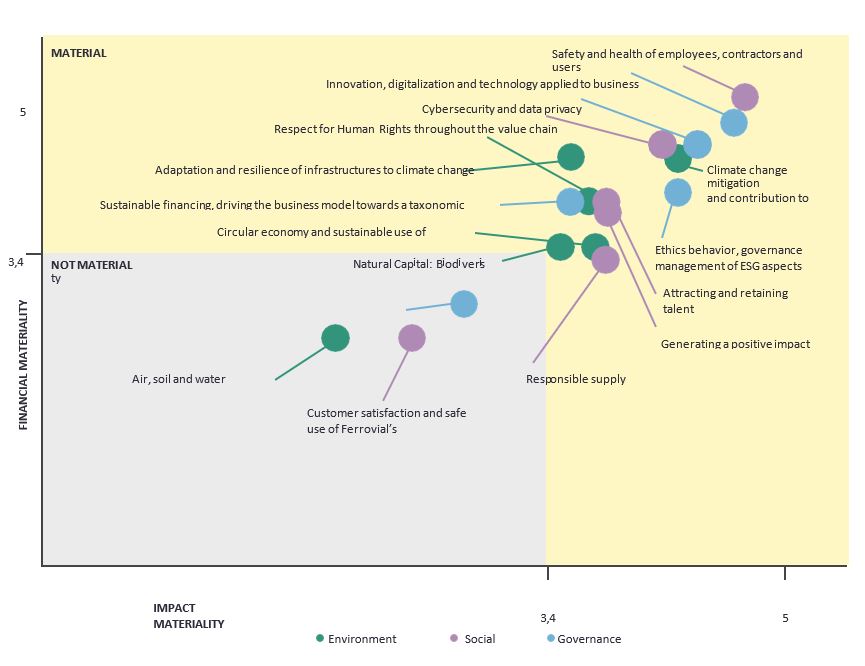
In 2025, the payment practices datapoints were not reported because no material IRO related to this topic was identified. However, this change is not considered significant compared to the information reported in the 2024 sustainability report.
SBM – 3: MATERIAL IMPACTS, RISKS AND OPPORTUNITIES AND THEIR INTERACTION WITH STRATEGY AND BUSINESS MODEL(S)
Ferrovial identified material impacts arising exclusively from its own activities, stemming directly from its business model and operations in sectors such as construction, infrastructure management and energy. These impacts do not depend on external business relationships. The Company addresses these issues independently through internal strategies, digital transformation programs and policies designed to maximize efficiency and minimize negative impacts.
All of Ferrovial’s impacts, both positive and negative, occur across the short, medium and long term, i.e. ranging from last year to over 5 years from the current moment, as they stem from core activities and are largely inherent to them, such as health and safety issues, equality and diversity in a workforce that operates in a STEM sector and global geographies, carbon emissions, etc. Ferrovial has established clear time horizons for assessing impacts (incidents) related to double materiality, which are deemed reasonably foreseeable based on their likelihood of occurrence. These time horizons are categorized as follows:
Short term:
Impacts whose likelihood of occurrence is particularly associated with the next year. This horizon allows for the evaluation of risks and impacts requiring immediate attention and short-term operational planning.
Medium term:
Includes impacts whose likelihood of occurrence is associated with a timeframe covering the next five years. This horizon is fundamental for strategic planning and adapting to regulatory, technological, and market changes.
Long term:
Evaluates impacts whose likelihood of occurrence is associated with a timeframe starting beyond five years. This horizon is used to anticipate structural and strategic transformations that may affect operations or business sustainability in the long term.
Effects of IROs on the business model:
Actual:
Impact on its Business Model, Value Chain & Governance:
- The increasing emphasis on low-carbon and resilient infrastructure has led Ferrovial to integrate green building technologies and enhance the circular economy within its supply chain.
- The shift toward renewable energy and sustainable transportation affects its procurement strategies, pushing for increased resource efficiency and emissions reduction.
- The development of resilient infrastructures is becoming a competitive factor, requiring investment in climate-adaptive projects.
- The formation of the Sustainability Steering Committee, reporting to the Board of Directors, ensures that ESG considerations are embedded in corporate decision-making.
- The integration of ESG performance indicators into executive remuneration aligns leadership incentives with sustainability goals.
Risks for Ferrovial’s business:
- GHG emission regulations pose transition risks, increasing compliance costs and requiring additional investments in the field of clean technologies.
- Social and regulatory expectations for reducing greenhouse gas emissions may require a swift adaptation of operating practices.
- Non-compliance with climate-related legislation could lead to legal and financial penalties, impacting project feasibility.
- Maintenance and repairs due to weather events pose physical risks, as extreme weather conditions can damage critical infrastructure and disrupt operations.
ESG related business opportunities:
- The transition toward net-zero infrastructure opens new revenue streams in the field of sustainable mobility, including the development of electric vehicle (EV) charging networks and urban air mobility (UAM) solutions.
- New opportunities in the field of resilient solutions provide a competitive advantage in delivering climate-adaptive infrastructure projects.
- Circular economy principles create cost-saving opportunities by promoting waste reduction, recycling, and efficient resource use within projects.
- The development of energy solutions enables technological advancements in sustainable energy, strengthening Ferrovial’s market positioning.
Potential:
Impacts:
- Ferrovial’s commitment to the Science-Based Targets initiative (SBTi) and the Paris Agreement influences capital allocation toward sustainable infrastructure projects.
- Investment in smart and resilient urban development aligns with the increasing global demand for sustainable cities and green transportation.
- The push for climate-adaptive solutions is influencing Ferrovial’s approach to infrastructure design and risk mitigation.
Risks:
- Risk of stricter ESG regulations in the European Union, United States, and Latin America may impose compliance costs and require adjustments in risk management frameworks.
- Market fluctuations and supply chain disruptions related to geopolitical tensions and raw material shortages could pose risks for meeting project timelines and cost efficiency.
- Failure to keep pace with technological demands for sustainable energy may limit Ferrovial’s competitiveness in the evolving energy sector.
- Reputational risks associated with greenwashing concerns require transparent sustainability reporting and alignment with European regulations.
- Potential backlash from investors if sustainability goals are not met or if there are delays in achieving climate commitments.
- Failure to comply with evolving climate-related legislation could lead to regulatory scrutiny and financial penalties.
- Inability to access sustainable funding due to ESG performance below market expectations.
Opportunities:
- Expansion into green infrastructure financing and public-private partnerships (PPPs) offers strategic growth avenues.
- Digital transformation, including AI-driven asset management and predictive maintenance, enhances operational efficiency and long-term asset resilience.
- A focus on climate-resilient infrastructure development enables Ferrovial to differentiate itself in the market and secure long-term contracts.
- Increased stakeholder engagement through transparent sustainability disclosures enhances corporate reputation and investor confidence.
- Adoption of ESG-driven innovation strategies fosters resilience and market leadership in the global infrastructure sector.
- A proactive approach to climate legislation compliance positions Ferrovial as an industry leader in sustainable infrastructure.
Ferrovial identified material impacts arising exclusively from its own activities, stemming directly from its business model and operations in sectors such as construction, infrastructure management and energy. These impacts do not depend on external business relationships. The Company addresses these issues independently through internal strategies, digital transformation programs and policies designed to maximize efficiency and minimize negative impacts. The materiality assessment conducted in the 2023 NFIS (Non-Financial Information Statement) report focused solely on impact materiality, as required by Spanish Law 11/2018. Unlike the current approach under the CSRD framework, the previous assessment did not include an analysis of the financial materiality and did not apply the concept of double materiality. This represents a significant methodological shift, aligning the new assessment with broader sustainability reporting standards. In 2025, there have been no significant changes in the level of material sustainability matters compared to last year’s sustainability report. However, previous years’ reporting contents (2023 and previous) were regulated by the Spanish regulation transposing the EU’s Non-Financial Reporting Directive, meaning that financial materiality was not required and the mandatory contents of the report were not as extensive as those of the ESRS standards.
As to the current and anticipated effects of the Group’s material IROs, Ferrovial’s 2030 Sustainability Strategy is both a risk mitigation and value creation framework. By proactively addressing material ESG IROs, the Company is positioning itself to navigate the complex sustainability landscape, enhance its business resilience, and capitalize on emerging green infrastructure opportunities. The continuous evolution of regulatory requirements, market expectations, and technological advancements will shape Ferrovial’s decision-making processes and strategic outlook in the years to come. In particular, during 2024 Ferrovial detected the following effects of climate change: In North Carolina the Helene Hurricane caused the I-77 highway not to be charged dynamic pricing for 5 weeks, the economic impact of which amounted to $2.4M. In addition, the consequences suffered by the DANA floods in Valencia generated an impact on its financial accounts of €0.87M as a result of Ferrovial workers and machinery offered for the emergency situation. In 2025, all identified financial effects are anticipated, and no specific information or estimates are available to quantify these effects, which is acceptable given that this requirement is subject to phased-in application.
IRO 1 – IMPACT, RISK, AND OPPORTUNITY MANAGEMENT
Climate change
Ferrovial has implemented a robust process for identifying and assessing climate-related impacts, risks, and opportunities in order to align the Company with global sustainability goals. This process incorporates assessments across all of its operations and the value chain, taking into account physical and transition risks, as well as opportunities related to climate resilience and mitigation strategies. The Company assesses its impact on climate change by monitoring and managing its greenhouse gas (GHG) emissions. This includes focusing on minimizing emissions from its activities and offsetting unavoidable emissions through compensation mechanisms, while comprehensive monitoring and reporting of GHG emissions in accordance with the ESRS E1-6 standard ensures accountability and transparency.
Ferrovial addresses the physical risks associated with climate change through scenario-based assessments of potential hazards and their impact on operations and assets (taking into account the location of these assets based on geospatial coordinates). The Company considers high-emission climate scenarios to identify potential hazards, such as extreme weather events or sea level rise, that could impact infrastructure and services. By analyzing the exposure and sensitivity of its infrastructure, Ferrovial identifies risks to business continuity and physical assets. Sustainable and resilient infrastructure projects are designed to mitigate these risks and ensure long-term operational stability.
The Company also assesses the risks and opportunities arising from the global shift towards a low-carbon economy. Ferrovial evaluates transition risks and opportunities in scenarios aligned with the requirement of limiting global warming to 1.5°C. These include potential events such as regulatory changes, market shifts, and technological advances that could affect its operations or create new opportunities. It identifies areas where its business activities could face challenges due to decarbonization requirements but also recognizes significant opportunities. To assess climate transition risks, the Company considers a combination of three variables: the likelihood of occurrence, the magnitude of impact (financial and/or reputational in nature), and the exposure or duration of the impact (frequent or continuous and infrequent or one-off). For example, the development of energy infrastructure, energy efficiency services, and renewable energy solutions positions Ferrovial as a leader in climate change adaptation and mitigation. Opportunities also include the creation of sustainable and resilient infrastructure to meet climate adaptation needs, which can generate competitive advantages and differentiation in the market.
To support the assessment of physical and transition risks and opportunities, Ferrovial uses climate scenario analysis. This analysis includes a range of climate scenarios, from high-emission pathways to those aligned with limiting warming to 1.5°C, providing information on short-, medium- and long-term risks and offering a comprehensive view of potential impacts. Through this scenario analysis, Ferrovial ensures that its strategy and business model are resilient and adaptable to future climate conditions. This structured and forward-looking process demonstrates Ferrovial’s commitment to addressing climate challenges while seizing opportunities to drive sustainable growth and innovation.
Ferrovial applies the recommendations of the Task Force on Climate-related Financial Disclosures (TCFD) in the process of identifying, analyzing, and managing risks and opportunities related to the climate change. The Company periodically assesses and quantifies risks across all its business units and geographies for different climate scenarios recommended by the IPCC (Intergovernmental Panel on Climate Change) and the International Energy Agency and time horizons (short, medium, and long term): 2025, 2030 and 2050; which are linked to Ferrovial’s long-term infrastructure concessions and those owned by Ferrovial.
The physical climate scenarios consider anthropogenic changes through greenhouse gas concentration pathways, known as Representative Concentration Pathways (RCPs), taking into account global temperature increases of 2.6°C and 4.4°C in 2100. In the case of physical scenario analysis, the main limitations and uncertainties are linked to climate projections and the choice of certain climate variables that may be difficult to predict.
To analyze climate-related transition risks, Ferrovial considers transition scenarios based on the degree of implementation of climate change policies, which are presented annually by the International Energy Agency in the World Energy Outlook: Stated Policies Scenario (implying a global temperature increase of 2.4/2.8°C in 2100), the Announced Commitments Scenario (global temperature increase of 1.9/2.3°C in 2100), and the Net Zero Emissions by 2050 Scenario (global temperature increase of 1.3/1.5°C in 2100). The main limitations and uncertainties associated with the analysis of climate transition scenarios may stem from variability in the pace of decarbonization, as this depends on the different policies implemented in each context. Ferrovial will continue to conduct climate risk analyses throughout its value chain.
No assets or business activities were identified that are incompatible with the transition to a climate-neutral economy or that require significant efforts to become compatible with it, as Ferrovial’s infrastructure is already prepared for this path, through the implementation of a number of adaptation and mitigation measures. There are no critical climate-related assumptions made in the financial statements.
For more information, see section “SBM-3: Material impacts, risks, and opportunities and their interaction with strategy and business model.”
Pollution
Ferrovial has established a comprehensive process to identify, assess, and manage the impacts, risks, and opportunities related to pollution across all its operations. This process ensures that Ferrovial makes informed decisions, prioritizing risk mitigation to improve the sustainability of its operations and business relationships, while complying with international standards and stakeholder expectations.
This approach includes the policies and actions taken to prevent, mitigate or remedy direct and indirect pollution of air (excluding GHG), soil and water into its projects. The assessment focuses on the regions where Ferrovial operates and areas with significant environmental and social challenges.
To see how IROs have been identified and assessed, see ESRS 2 IRO-1, section “IRO assessment”, as well as for details on how IROs have been assessed and how consultations with local communities were held.
Water and marine resources
Ferrovial uses a systematic process to identify and assess the impacts, risks, and opportunities associated with water resources and the marine environment, particularly through the activities of its subsidiary Cadagua, which designs, builds, operates, and maintains water treatment facilities. This approach focuses on increasing water availability, improving water quality, and promoting efficient water consumption, while addressing the challenges posed by climate change and water stress.
Ferrovial assesses its operations to identify how its activities intersect with water resources, especially in areas of significant water stress where surface water and marine resources are limited. Through Cadagua, the Company focuses on the design, construction, operation, and maintenance of water treatment facilities to ensure the availability of water for both human consumption and the natural environment. This includes mitigating water-related risks by improving water quality and promoting efficient water use, especially in areas experiencing high water stress.
The methodologies used in these assessments include the use of data-driven monitoring tools and scenario analyses that evaluate the long-term sustainability of water resources and the potential impacts of operational consumption and discharges. These tools help Ferrovial balance its operational needs with environmental considerations in areas most vulnerable to water stress.
By focusing on availability, efficient consumption, and improving water quality, Ferrovial’s efforts through Cadagua represent a fundamental contribution to addressing the impacts of climate change on water resources. In addition, the Company also addresses the risks associated with severe weather events, which could affect infrastructure and require extraordinary maintenance and repairs. These actions demonstrate Ferrovial’s resilience and adaptability to climate challenges, ensuring sustainable water management while mitigating operational risks. For details on how consultations with local communities were conducted, see ESRS 2 IRO-1, section “IRO assessment”.
This holistic approach underscores Ferrovial’s commitment to integrating water resource management into its broader sustainability strategy, aligning its operations with global and local priorities to create long-term value.
Biodiversity and ecosystems
Ferrovial implemented a detailed process to identify, assess, and manage impacts, dependencies, risks, and opportunities related to biodiversity and ecosystems, following international frameworks (Taskforce on Nature-related Financial Disclosures (TNFD)) and taking into consideration its operations, supply chain, and the broader ecosystem services on which it depends and which it impacts.
The Company systematically identifies and assesses the actual and potential impacts of its operations on biodiversity and ecosystems and follows the principle of “no net loss” with the objective of progressing toward “net positive impact,” This approach aims to minimize and offset negative impacts on biodiversity through comprehensive environmental planning and commitments. Impacts are assessed based on potential habitat degradation and species disturbance, and preventive measures are incorporated into project planning.
The main impacts on biodiversity and ecosystems are related to GHG emissions, land use, and waste generation (for more information, see section “SBM-3: Material impacts, risk and opportunities and their interaction with the strategy and business model”).
Ferrovial recognizes its dependence on ecosystem services, which support its projects and operational resilience, particularly in the field of natural resources, climate regulation, and soil structure (for more information, see section “SBM-3: Material impacts, risk and opportunities and their interaction with the strategy and business model”).
The Company integrates biodiversity-related risks and opportunities into its business strategy by addressing physical risks (such as severe weather events, and ecosystem health) as well as transition risks arising from regulatory changes and reputational issues. To conduct the Company’s resilience analysis, material risks and opportunities are extracted from priority or significant impacts and dependencies.
For more information, see the sections “ESRS E4 SBM-3 Disclosure Requirements: Material issues, risks, and opportunities and their interaction with strategy and business model” and “Disclosure Requirement E4-1: Transition plan and review of biodiversity and ecosystems in the strategy and business model.”
Ferrovial considers how impacts could potentially affect stakeholders, including affected communities, public authorities, and environmental organizations. This includes consultations with communities near sensitive areas to align conservation priorities and define prevention or mitigation strategies. For more information, see sections ESRS 2 – IRO-1 and IRO-2 and ESRS E4- 2: Policies Related To Biodiversity And Ecosystems.
Currently, Ferrovial has no negative impacts on ecosystem services relevant to affected communities (based on the results of the double materiality assessment). However, when unavoidable impacts occur, the Company follows the Environmental Impact Assessments (EIA) of the projects (applying different measures, such as habitat restoration and other compensatory measures) to maintain the functionality and value of the ecosystem.
Scenario analysis is used to anticipate and address biodiversity-related risks and opportunities over short-, medium-, and long-term horizons. This includes selecting scenarios aligned with scientific consensus and intergovernmental frameworks, such as the Convention on Biological Diversity (CBD) and the Intergovernmental Science-Policy Platform on Biodiversity and Ecosystem Services (IPBES), and regularly updating these scenarios to reflect evolving conditions and emerging trends. To address this resilience analysis, and in the absence of relevant standardized scenarios, the guidance provided by the TNFD has been used. The scenario analysis proposed by the framework defines a series of plausible futures shaped by critical uncertainties and based on compliance with the Kunming-Montreal Global Biodiversity Framework.
Ferrovial operates in or near areas that are sensitive from a biodiversity perspective and assesses the potential impact of its activities on habitats and species (for more information, see section “ESRS Disclosure Requirement 4 SBM-3: Material issues, risks, and opportunities and their interaction with strategy and business model”). For projects in these areas, the Company complies with international and regional directives, such as the EU Birds Directive (2009/147/EC), the Habitats Directive (92/43/EEC), Environmental Impact Assessments (EIA) under the EU Directive (2011/92/EU) and international standards. Mitigation measures, such as habitat restoration, invasive species control, and adaptation of work plans, are implemented where necessary to ensure compliance with these regulations. Through its comprehensive processes and adherence to global standards, Ferrovial proves its commitment to minimizing impacts on biodiversity and safeguarding ecosystem services, promoting long-term sustainability and resilience in all its operations.
Ferrovial does not engage in activities related to the production and extraction of raw materials.
Resource use and circular economy
Ferrovial has established a comprehensive process to identify, assess, and manage the impacts, risks, and opportunities related to resource use and the circular economy across all its operations. This approach includes the efficient use of resources, the reduction of raw material consumption, waste management, and the exploration of opportunities, as well as the integration of circular practices into its projects.
Ferrovial prioritizes reduction, reuse, and recycling in construction projects, with the aim of minimizing waste generation and optimizing the use of materials. However, the Company also recognizes that increased raw material consumption and higher levels of waste generation in construction represent key challenges. To this end, it uses data-driven tools to analyze material flows and assess the environmental impact of its operations. These methodologies help identify inefficiencies and opportunities to integrate circular practices into all projects and processes.
Ferrovial is also actively exploring new avenues for developing Ferrovial Construction’s business through authorized waste management. This includes leveraging innovative waste management solutions to strengthen its sustainability credentials and create additional value streams. The identification of risks associated with increased waste generation, particularly in large-scale construction projects, serves as the basis for the development of mitigation strategies, such as improved waste segregation and recycling initiatives.
To see how IROs have been identified and assessed, see ESRS 2 IRO-1, section “IRO assessment”, as well as for details on how IROs have been assessed and how consultations with local communities were held.
Governance
Ferrovial follows a structured process to identify and assess material impacts, risks, and opportunities. This process is based on two key criteria: the location of operations and the nature of the activity.
Geographic location plays a key role in exposure to risks such as corruption, bribery, and irregular business conduct. Regions with weaker regulations or higher levels of corruption pose a greater risk. To this end, Ferrovial conducts detailed analyses of the regulatory and social conditions in each region in which it operates. In high-risk areas, additional measures are applied, such as external audits and stricter compliance controls.
The nature of the activity is another key factor. Sectors related to contract awarding, infrastructure construction, and public procurement are more exposed to potential irregularities. To mitigate these risks, Ferrovial evaluates each phase of the project life cycle, focusing on the contracting and supplier selection processes to ensure transparency and regulatory compliance.
Cybersecurity
Ferrovial adopts a comprehensive and structured approach to managing material Impacts, Risks, and Opportunities (IROs) related to cybersecurity, ensuring alignment with best practices, regulatory requirements, and business priorities. This approach is based on robust governance, proactive risk management, and continuous improvement of cybersecurity capabilities.
The management of material IROs in cybersecurity includes:
- Governance and Organizational Framework: Ferrovial’s Cybersecurity Governance Model is led by the Global Chief Information Security Officer (Global CISO), with the support of CISOs across business units. Regular reporting to the Management Committee, the Audit and Control Committee, and the Board of Directors ensures the oversight of the strategy, key risks, and mitigation measures. The Governance Model also ensures compliance with standards such as ISO 27001, the NIS24 Directive, and SEC cybersecurity rules.
- Risk Management and Threat Assessment: Ferrovial applies a qualified and quantified approach to risks, based on CRQ (Cyber Risk Quantification) market tools and GRC platforms, facilitating risk prioritization to keep thresholds within acceptable limits.
- Threat Prevention, Detection, and Response: Advanced technologies such as SOAR and cyber intelligence tools are used, along with operational capabilities such as the SOC (Security Operations Center) and CSIRT (Computer Security Incident Response Team). Artificial intelligence enhances threat analysis, detection, and response capabilities.
- Incident Management and Resilience: Incident response protocols based on reference frameworks such as ISO/IEC 27035, NIST, and CISA ensure effective mitigation. Where possible, periodic threat preparedness simulations are conducted, and cybersecurity insurance policies are in place to provide various types of coverage in the event of a threat materializing.
- Third-Party Risk Management: The Vendor Risk Management (VRM) process requires vendors to comply with those cybersecurity criteria relevant to the service provided. High-risk vendors are subject to periodic assessments and contractual safeguards.
- Positive Cybersecurity Culture and Awareness: Training programs and phishing drills promote a “security first” mindset among employees, with recognition campaigns that reward those who excel in cybersecurity practices and help those users who need it.
- Continuous Improvement and External and Internal Verification: Regular audits and simulations, security posture capabilities, and cybersecurity rating management processes ensure that the cybersecurity framework remains effective and up to date.
4 European Directive 2022/2555 of the European Parliament and of the Council (NIS 2): Cybersecurity legislation adoption for the entire European Union. Date of entry into force: January 3, 2023. Expected date for national transposition: October 17, 2024 (still pending in several member states). Date of reporting to the Commission of the list of essential and important entities: April 17, 2025.
Innovation
Ferrovial has established a structured process to identify and assess material impacts, risks and opportunities (IROs), in line with its Risk Control and Management Policy. This process, known as Ferrovial Risk Management (FRM), is implemented across all business areas and is regularly supervised by the Audit and Control Committee of the Board of Directors.
IRO identification and evaluation process:
- Identification of risk events: The FRM process is carried out twice a year and allows for the early identification of risk events that could affect business objectives, including corporate reputation.
- Risk assessment: Each identified risk is assessed based on its likelihood of occurrence and its potential Two types of assessments are carried out:
- Inherent assessment: Before applying specific control measures.
- Residual assessment: After applying the mitigation measures.
- Prioritization and mitigation: Risks with the highest assessments are prioritized to take appropriate mitigation measures based on their nature, while taking advantage of opportunities arising from effective risk management.
IROs related to innovation identified by the Company:
- Generation of innovation in society: Creation of research centers and the development of collaborations and partnerships.
- Improvement of the Environmental Impact of projects: Implementation of new technologies in digital management processes and tools to quantify their impact.
- Fostering an innovative and digital culture: Promotion of continuous improvement and a more employee-friendly work environment.
- Increased project safety: Promotion of innovation and digitalization to reduce accidents and occupational risks.
- Challenges related to the maintenance and replacement of machinery: Adaptation to new technologies.
- Impact on the workforce resulting from technological lag: As a consequence of digital transformation.
- Downsizing due to automation: And the integration of new technologies.
- Application of new technologies to support a more resilient asset portfolio.
- Identification of new businesses based on low-emission technologies: Such as photovoltaic plants, nuclear SMRs, offshore wind,
- Operational vulnerability due to service interruptions: As a consequence of exposure to natural disasters.
- Potential penalties and reputational damage arising from non-compliance with AI-related regulations.
These IROs reflect Ferrovial’s commitment to innovation and its ability to adapt to current technological and environmental trends.
Ferrovial discloses information about its risk management process and identified IROs, providing details on its Risk Control and Management Policy, the FRM process and the supervision carried out by the Board of Directors and the Audit and Control Committee.
CORPORATE GOVERNANCE
GOV-1: THE ROLE OF THE ADMINISTRATIVE, MANAGEMENT AND SUPERVISORY BODIES
COMPOSITION AND FUNCTIONS OF THE ADMINISTRATIVE, MANAGEMENT, AND SUPERVISORY BODIES
With regard to sustainability governance at Ferrovial, the role of the Board of Directors and its Committees, as well as the Sustainability Committee, is particularly noteworthy. These bodies aim to ensure the effective integration of environmental, social, and governance (ESG) criteria into corporate strategy, decision-making, and the monitoring of risks and opportunities. Based on this structure, Ferrovial ensures a robust, inclusive, and strategic approach, aligned with international best practices and applicable standards.
Board of Directors
In accordance with the Company’s Articles of Association, Ferrovial has a one-tier Board of Directors structure, which sets up an Audit and Control Committee and a Nominating and Remuneration Committee among its members.
During financial year 2025, as 2024, Ferrovial’s Board of Directors comprised twelve members5: two executive directors (Chairman and CEO) and ten non-executive directors, 75% of whom met the independence criteria of the Dutch Corporate Governance Code. This balance between executive and non-executive functions ensures effective and transparent oversight. Of the twelve members during financial year 2025, 8 were men (66,66%) and 4 were women (33,33%), the same figures as last year. These figures result in a ratio of women to men of 0.5, the same ratio as last year. During 2025, the Board included members across three age ranges: 45-55 years (8.33%), 56–65 years (33.33%), and over 66 years (58.33%), bringing extensive experience and expertise to its governance.
Although they do not have a direct presence on the Board, employees are represented on occupational risk committees, where employees’ participation is recorded in decision-making on the topic of occupational well-being.
On ESG matters, the Board of Directors annually reviews the climate strategy report and presents it to the Annual General Shareholders’ Meeting for an advisory vote, where it also addresses other sustainability issues such as circular economy, water, and biodiversity, among others.
Furthermore, the Board of Directors, directly or through the Audit and Control Committee, reviews the double materiality matrix, the Ferrovial enterprise risk management system, and monitors the management of the ESG indicators included in the sustainability strategy.
Both the Board of Directors and the Audit and Control Committee play an essential role in overseeing the management of sustainability risks and impacts. Their responsibilities, as set out in the Board Rules and the Audit and Control Committee Charter, include the following:
- Supervision of the Risk Management System: Overseeing the effectiveness of internal control, audit and risk management systems in relation to financial and non-financial information.
- Strategic risk assessment: Identifying and analyzing those risks associated with the Company’s strategy, establishing measures to mitigate them.
- Annual assessment: Reviewing and improving, where appropriate, the internal risk management and control systems, and assessing their design and effectiveness at least once a year, addressing irregularities, lessons learned, and recommendations from internal and external audits.
In addition, the Audit and Control Committee oversees the establishment of objectives related to impacts, risks, and opportunities, and monitors their progress. This includes:
- Financial and non-financial reporting processes. On a yearly basis, the Communication and Corporate Responsibility Department reports to the Audit and Control Committee on (i) the annual non-financial (including sustainability) report, which includes the double materiality assessment, and (ii) the progress of the non-financial reporting process.
- Financial, strategic, operational, and compliance risk The Internal Audit and Risk Director reports to the Committee at least twice a year, and to the Board once a year, on the Ferrovial risk map and the enterprise risk management system.
Monitoring the internal control systems to ensure the integrity of reported data. The Committee is regularly informed by the Finance and Internal Audit Departments, and the external auditor on the progress of the SOX internal control. The Board is also informed on this matter by the Finance Department.
Both the Board of Directors and the Audit and Control Committee also include specific roles related to business conduct, ensuring that ethical considerations are integrated into the Company’s strategic and operational decision-making. These roles involve:
- Ensuring compliance with the Code of Ethics and Business Conduct.
- Overseeing the implementation of anti-corruption policies and practices.
- Overseeing compliance with human rights policies and labor standards.
- Promoting a culture of integrity and transparency throughout the organization.
Experience and skills development
The Board of Directors comprises individuals with extensive experience across different areas that are key to the Company, providing the Board with a solid foundation for effectively addressing environmental, social, and governance issues. Its members include former executives from public companies (including IBEX-35 blue chips), executives from international companies, and professionals with over a decade of experience at Ferrovial. This diverse background ensures an in-depth understanding of the challenges and opportunities related to ESG matters. The Board’s sectoral diversity strengthens Ferrovial’s ability to address challenges and opportunities in multiple areas, enriching the Company’s strategic decision-making. The experience of the Board members is outlined below, in addition to their experience in matters of business conduct, which ensures that ethical considerations are consistently incorporated into both the Company’s strategic and operational decisions. Further information on Directors’ experience is available in the Corporate Governance Report of the Management Report.
5 Ms. Alicia Reyes resigned as Non-Executive Director effective as of 19 January 2026.
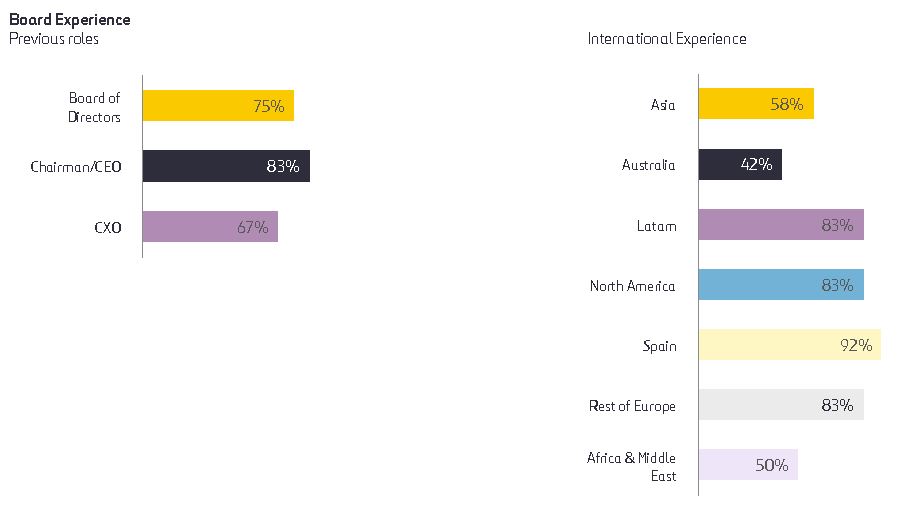
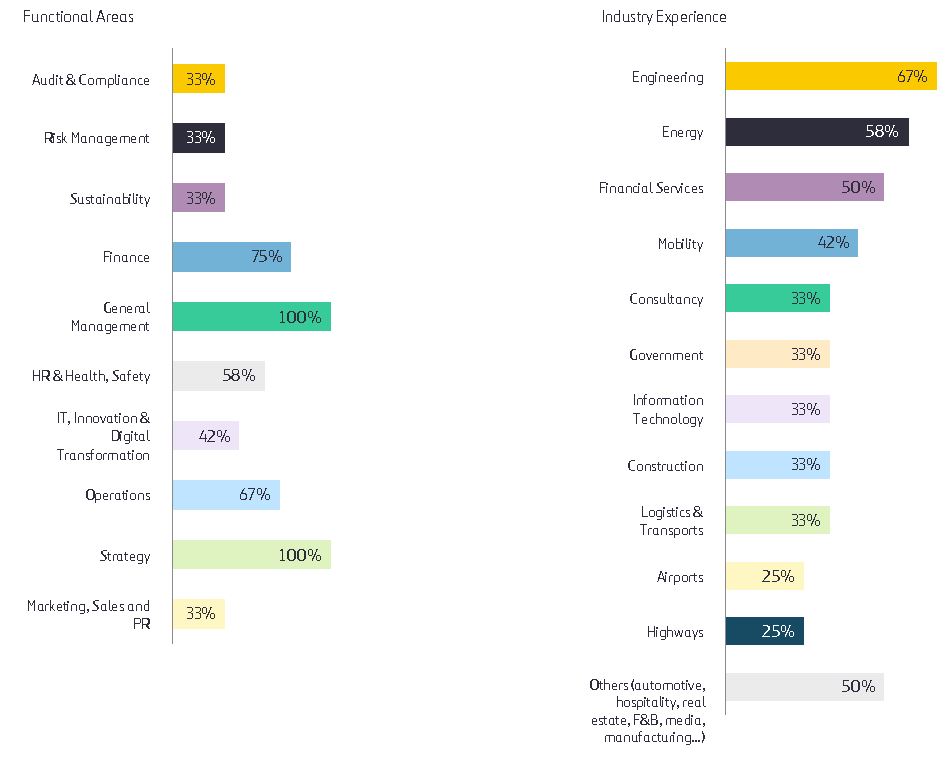
In this regard, Ferrovial seeks to ensure that its management and Board members have the necessary skills to address sustainability issues, either through ongoing training or through access to external experts, including strategic alliances and training programs. The Company’s approach is based on the premise that sustainability expertise not only mitigates regulatory and reputational risks but also identifies opportunities for innovation and enhanced competitiveness. Thus, the Board’s capabilities are integrated into the ESG risk map, which facilitates the identification of material impacts and informed decision-making. Therefore, sustainability expertise within Ferrovial’s governance structure is directly related to the Company’s material impacts, risks, and opportunities (IRO), with the following examples being particularly noteworthy:
- Climate risks and energy transition: The Company has incorporated climate risk assessments into its ESG strategy, ensuring that the Board and management can effectively oversee this area. Through specialized training, the governing bodies reinforce their monitoring of Ferrovial’s transition to a low-carbon economy.
- Human rights and supply chain management: The Board of Directors oversees human rights due diligence measures to avoid negative impacts on the supply chain. The inclusion of ESG clauses in supplier contracts and the use of monitoring tools such as Supplier 360 improve governance in this area.
- Reputation and access to markets with high ESG standards: Sustainability training enables the Board and management to make informed decisions about business opportunities in markets demanding high ESG compliance, reinforcing Ferrovial’s competitive differentiation.
Sustainability Committee
The Sustainability Committee, chaired by the Sustainability Director, is made up of representatives from the business units (Highways, Airports, Energy and Construction) and from the corporate areas (Sustainability -Chair and Secretary-, Health, Safety and Welfare, Compliance and Data Protection, Internal Audits and Risks, Innovation, Human Resources, Communication and CSR, General Secretariat, Corporate Strategy, Investor Relations and Procurement). Serving as the link between the Company and senior management, the Chair of the Committee reports periodically to the Board of Directors, the Management Committee and the Chief Executive Officer on a monthly basis. In this regard, the CEO plays a key role by including in his monthly agenda the monitoring and implementation of initiatives related to climate change.
INFORMATION AND COMMUNICATION STRUCTURE
Ferrovial established several structured mechanisms that ensure a constant flow of information and effective oversight by the administrative, management, and supervisory bodies, based on the following key aspects:
- Periodic reporting: At least once a year, the Sustainability Department reports to the Board of Directors on the progress of the Sustainability Strategy and the fulfillment of the established objectives. These updates include a report on the most relevant projects or actions in the area of sustainability. In addition, the ESRS 2, SBM-3 outlines the IROs that the Board of Directors directs and supervises.
- Management Committee monitoring: The Management Committee monitors progress every four months, ensuring that sustainability issues are continuously monitored throughout the year.
- Sustainability Committee: This Committee reports on progress and results and proposes measures to the Management Committee and other departments. The Committee meets three times a year to review progress, discuss sustainability priorities, and align strategic actions, and its Chair submits an annual report to the Board of Directors.
In 2025, the main ESG issues addressed by the administrative, management, and supervisory bodies were the following lines of action included in Ferrovial’s 2030 Sustainability Strategy:
| ESG TOPICS ADDRESSED IN 2025 | |
| Environmental | 2030 Climate Strategy: monitoring of the emission reduction targets set for 2030 and 2050, aligned with the Science Based Targets initiative (SBTi).
Water footprint: objective to reduce water consumption (Business Water Index) by 20% by 2030 (compared to 2017 as the base year). Biodiversity: addressing the crisis of biodiversity loss and ecosystem degradation in line with the Taskforce on Nature-related Financial Disclosures (TNFD). Circular economy: focusing on waste management and efficient use of materials in the Company’s processes. |
| Social | Equal opportunities: promotion of equal opportunities, culture of belonging and inclusion, in accordance with the applicable laws.
Health, safety and well-being at work: reduction of workplace accidents. |
| Governance | Good governance: oversight of business ethics and compliance.
Supply chain: assessment of ESG performance across the supply chain in terms of ethics and integrity, compliance, transparency, health and safety, the environment, and human rights. |
Information about entity-specific material topics (Innovation, Cybersecurity and Sustainable Finance) follows the same structure and reporting approach.
INCENTIVE SYSTEMS
Incentives and Remuneration Policies Linked to Sustainability
Main Features of the Incentive System:
Ferrovial developed a remuneration system that combines fixed and variable remuneration, with the aim of aligning the interests of executives with the Company’s objectives, including sustainability.
Compensation Structure:
- Fixed compensation
- Variable compensation: Composed of annual and long-term targets.
Annual Variable Remuneration Objectives (AVR):
For the Chairman:
- Target AVR is equivalent to 125% of the fixed remuneration (FR), with a maximum of 190% of the FR.
- Distribution of objectives:
– 80% quantitative goals:
› Net income (55%)
› Cash flow (45%)
– 20% Qualitative and ESG goals (such as corporate governance, succession plan and institutional representation) ESG goals represent 60% of the objectives, evaluating aspects like reduction of greenhouse gas emissions with a total weight for this goal of 6.7%.
For the CEO:
- Target AVR is equivalent to 100% of the fixed remuneration (FR), with a maximum of 150% of the FR.
- Distribution of objectives:
– 70% quantitative goals:
› Net income (55%)
› Cash flow (45%)
– 30% Qualitative and ESG goals (such as health and safety, innovation, sustainability and corporate social responsibility, development of professional teams, risk management, and relations with stakeholders). ESG goals represent 61% of these objectives, evaluating aspects like reduction of greenhouse gas emissions with a total weight for this goal of 2.7%.
Long-Term Incentives (For the Chairman and the CEO):
- Maximum of 150% of fixed compensation, focused on strategic performance metrics.
- For the 2023-2025 period:
– 40% activity cash flow.
– 50% relative TSR.
– 10% ESG metrics, including emissions reduction (5%), belonging and inclusion, and occupational health and safety targets.
- Payments are made in shares, promoting a long-term approach and aligning management’s interests with the Company’s performance.
Protection Clauses:
- Malus and clawback clauses: Allow for review or recovery of incentives in case of underperformance or incorrect results, ensuring the integrity of the the system.
Sustainability-related Performance Evaluation
Incorporation of Sustainability Metrics in the Evaluation:
- AVR:
– Annual variable remuneration targets are linked to ESG metrics and other qualitative metrics (this applies as 20% for the Chairman and 30% for the CEO).
- Long-Term Incentives:
– 10% of the objectives are directly related to sustainability for both, the Chairman and the CEO.
ESG metrics:
Currently, Ferrovial does not have specific associations between IROs and the compensation given to the governing bodies. However, its incentive scheme is related to ESG metrics concerning several material IROs:
- Reduction of greenhouse gas emissions: This includes the GHG emissions generated by the Company’s’ activities, efforts to reduce greenhouse gas emissions and initiatives to offset the carbon footprint, the development of energy infrastructure, energy efficiency services, renewable energy generation and solutions to mitigate emissions associated with mobility, etc.
- Belonging and inclusion: This involves the promotion of equal opportunities through recruitment, selection and training processes that guarantee non-discrimination and no social exclusion for any reason (ethnicity, religion, different abilities, gender, among others). It also includes the promotion of professional development of workers through attractive career guidance programs and services that adapt to their needs, fostering corporate Additionally, the improvement of the work environment through the implementation of a diversity, equality and inclusion complaint and protection mechanism, and the guarantee of freedom of association and collective bargaining.
- Occupational health and safety: This focuses on improving the health and safety of workers by enhancing workplace conditions, including technological support (e.g. digitalization of processes). Prevention of death or disabling injuries; prevention of deterioration of workers’ health, etc.
Terms of Payment and Evaluation:
- The evaluation is carried out annually to ensure alignment with the established objectives.
- Incentives are subject to protection clauses, guaranteeing the correctness of the reported results.
The remuneration policy, which includes the incentive scheme, is proposed and updated by the Nomination and Remuneration Committee and submitted to the Board of Directors for its approval.
ABOUT THIS REPORT
GENERAL BASIS FOR THE PREPARATION OF THE REPORT
The Statement of Consolidated Non-Financial and Sustainability Information (hereinafter, “the report”) has been prepared pursuant to the non-financial reporting requirements established by the following international regulations and standards: the ESRS on a voluntary basis, as the Dutch transposition into national law has not yet taken place, Spanish Law 11/2018, Regulation (EU) 2020/852, CSRD Directive (EU) 2022/2464 and Regulation (EU) 2023/2772. The guidelines of the TCFD, TNFD, and SASB were also taken into account.
Ferrovial SE has commissioned PwC to perform a limited assurance engagement on this Statement of Consolidated Non-Financial and Sustainability Information, taking into account the above ESRS criteria and EU Taxonomy.
This integrated approach ensures that the information presented is in line with regulatory frameworks and international best practices in corporate sustainability.
The report has been prepared in accordance with the financial consolidation perimeter, covering all companies in which Ferrovial exercises economic control with more than 50% of the share capital. In these cases, 100% of the corresponding information is included, ensuring an accurate and consistent representation of the Group’s activities. As a result, all subsidiaries included in the financial consolidation perimeter are exempt from preparing sustainability reports, with the exception of Budimex, S.A., a subsidiary of Ferrovial Construction International SE. In this case, although its information is fully integrated into the report, it is a Public Interest Entity (PIE) listed on the Warsaw Stock Exchange (WSE: BDX) and employs more than 500 people. Therefore, it is subject to separate reporting requirements in Poland. Ferrovial acknowledges this obligation and ensures that Budimex complies with its separate disclosure requirements, while maintaining compliance with the Group’s overall sustainability framework and reporting practices. For more information on the list of entities included in the reporting scope, see section 6.11 Appendices to the Financial Statements, which details the complete list of entities.
On the other hand, companies consolidated using the equity method are considered, for the purposes of this report, as other relationships in the value chain, and therefore their information is not included in the reporting scope.
MINIMUM DISCLOSURE REQUIREMENTS
No metrics have been validated by an external body other than the external assurance provider.
All Minimum Disclosure Requirements (MDR) have been fully addressed in their corresponding chapters, with the exception of the following:
Currently, the Company’s approach to the management and reporting of sustainability-related investments focuses on an aggregate analysis of total CapEx allocated to initiatives aligned with its strategic objectives and sustainability commitments. However, the Company does not yet have a detailed breakdown of CapEx and current and future financial resources at the individual action level. Ferrovial is working to improve its data collection and analysis systems, with the objective of implementing a model that will allow it to calculate and report this indicator in greater detail in future reporting exercises. This development will enable the Company to offer greater transparency and align itself with best practices in sustainability and corporate governance.
VALUE CHAIN COVERAGE
The following sections of the report detail how Ferrovial collects and manages data relevant to sustainability metrics throughout the upstream and downstream stages of its value chain. This approach ensures comprehensive coverage and transparent data management, from the acquisition of materials to interaction with end users of the infrastructure.
Ferrovial recognizes the importance of thoroughly assessing its entire value chain, both upstream and downstream. Accordingly, the double materiality assessment incorporates impacts, risks, and opportunities related to the value chain. Ferrovial is committed to continuous improvement in this regard. Specifically, in the case of suppliers related to Ferrovial Construction (which account for 91% of Ferrovial’s total purchases), a systematic analysis of Tier 1 suppliers, which represent a substantial part of Ferrovial’s supply relationships, is being carried out. Likewise, in specific situations that require it, certain Tier 2 suppliers are also included to ensure a more detailed understanding of the related impacts. There are three criteria for selecting Tier 2 suppliers: non-competition, high purchase volume, and the presence of high risks related to ESG criteria.
The Company is aware that extending this assessment to deeper levels represents an opportunity to further strengthen traceability and risk management across its operations. Ferrovial is therefore working on developing tools and methodologies that enable data to be collected and analyzed more efficiently and at a more granular level, with the aim of improving visibility at subsequent levels and ensuring that impacts, risks, and opportunities are proactively managed throughout the value chain.
In this reporting exercise, the focus has been on the most direct and relevant interactions within the supply chain, ensuring alignment with current strategic objectives and sustainability standards. This approach ensures robust and manageable results, while the Company continues to work towards the gradual integration of a broader assessment into future reports and processes.
In addition, all policies, actions, and objectives reported in this report detail whether they apply to Ferrovial’s upstream and downstream value chain.

INFORMATION OMISSIONS
Sensitive information and innovation
Ferrovial may omit classified or sensitive information related to intellectual property or innovation results if it meets specific criteria of confidentiality and commercial value. However, no omissions affecting the transparency or quality of the information disclosed have been detected in this report.
Exemption from disclosure of events
Ferrovial has not applied exemptions for the disclosure of forward-looking or price-sensitive information, as foreseen by Directive 2013/34/EU. Therefore, all information included is complete and not subject to such restrictions.
Exclusion of non-material human resources data
229 employees from five Budimex companies (BUDIMEX SA in Warsaw, Czech Branch, BUDIMEX SA in Warsaw, Bratislava Branch, BUDIMEX SA in Warsaw, Latvian Branch, BUDIMEX SA in Warsaw, Estonian Branch, and CIRCULAR CONSTRUCTION SA) that represent 1% of the total workforce, have been excluded from the Human Resources metrics report because complete information is not available for them, as there were no systems in place for collecting such information.
INFORMATION RELATING TO SPECIFIC CIRCUMSTANCES
Definition of time horizons
Ferrovial uses different time horizons, established based on the definitions of the ESRS, to address sustainability risks, opportunities, and strategies:
- Short term: The most immediate horizon, with a high probability of materializing within one In this framework, risks and opportunities tend to manifest quickly.
- Medium term: Generally covers the next five years from the reporting year, a key period for strategic planning related to sustainability risks, opportunities, and trends.
- Long term: Beyond five years. This horizon allows for anticipating structural changes and integrating resilient strategies into sustainability plans.
Uncertainty management and estimation sources
With regard to the value chain, the parameter calculated by Ferrovial using indirect sources, such as industry averages and proxy variables, corresponds to Scope 3 emissions, due to the inherent complexity of collecting primary data.This is particularly relevant for Scope 3 Category 1, where Ferrovial applies emission factors to the construction-related purchased materials and services identified as material, while excluding other purchased goods and services considered immaterial due to their lower emissions intensity. A detailed explanation of the methodology used and data sources is provided in the relevant chapter of the report.
In addition, Ferrovial has identified the following quantitative parameters or monetary amounts disclosed, which may be subject to a high degree of uncertainty due to the absence of direct sources of information:
| METRIC |
DESCRIPTION OF ESTIMATES |
| S1-13 Training | The breakdown of health and safety training hours has been estimated based on the percentage of men and women and professional category to provide the breakdown required by S1-13. Cybersecurity hours are not broken down by gender or category and they represent 1% of the total training hours, therefore, are not considered material and have been excluded from this report. |
| S1-16 Remuneration metrics | To calculate the average hourly wage, the number of hours is estimated based on the standard working day established in each country.
To calculate the average hourly wage, the annual number of hours worked by gender has been estimated based on the total actual hours worked and the percentage of the workforce by gender at year-end. |
| S1-14 Health and Safety | The breakdown by gender is estimated based on the proportion of men and women in the workforce at year-end for the following indicators:
|
| E3-4: Water consumption | The water footprint includes the estimates detailed in Ferrovial’s methodological procedure for the water footprint. The calculated discharges are:
Discharge of water used for sanitary purposes. The calculation includes:
Discharge of water used to wash vehicles or machinery. The calculation includes:
|
| E5-4 Resource inflows |
For the weight of materials purchased during the reporting period, the undertaking applies a price to weight conversion when direct weight data are not available. The conversion uses material and country specific unit price benchmarks derived from historical procurement data and supplier information, adjusted to exclude non material invoice components (e.g., logistics, services, surcharges). Assumptions and conversion factors are reviewed periodically; principal sources of measurement uncertainty include price variability, mixed item invoices and currency effects, which the undertaking mitigates through back testing against supplier reported quantities and updates to benchmarks. |
This approach ensures an accurate representation of the information, enabling stakeholders to better understand the risks and limitations of the data presented.
Forward-looking information, such as plans and objectives, involves inherent risks and uncertainties because it relates to future events and circumstances. There are several factors that could cause actual results and developments not to occur or differ materially from those expressed or implied.
Methodological changes in the presentation of information
Ferrovial maintained its reporting methodology, aligned with the Corporate Sustainability Reporting Directive (CSRD) and the ESRS. However, several changes were implemented, as described below:
- Remuneration:
– The methodology for calculating the gender pay gap has been updated, incorporating the actual annual variable compensation data instead of the target variable compensation.
- Other priority locations: The increase in the number of sites classified as “Other Priority Locations” is due to an expansion in the number of contracts executed during the reporting period.
- Resource outflows (waste):
– 2024 waste data has been restated due to the inclusion of Webber’s Construction and Demolition This data has been extrapolated considering Webber’s construction and demolition waste from 2025 and the turnover for the years 2024 and 2025.
– This year Excavation Soils and Construction and Demolition waste have been included in the table of total waste.
– In 2025, compared with the previous year, the indicators related to the occupation of protected natural areas include all projects that affect these areas, and not only those in which operational control is held and/or for which a concession of 20 years or more has been granted.
Reporting errors in previous periods
Biodiversity:
- Number of sites (assets owned, leased or managed) in or near protected or key biodiversity areas: the methodology for reporting information was modified, shifting from the disclosure of protected areas to the number of assets or infrastructure located within or near such areas. Due to methodological changes, it was not possible to obtain accurate data for this indicator for 2024; therefore, the information is not comparable with the previous year.
Resource outflows (Excavation soils, and Construction and demolition waste):
- Waste data for prior periods have been restated to correct the following reporting errors identified during the 2025 review process:
– Excavation soils were not previously included in total waste This omission has been corrected, and prior-year data have been restated accordingly.
– Budimex had historically reported recycled-materials data twice—once within the recycled-materials table and again within the waste tables. This duplication has been identified and eliminated, and the affected prior-year figures have been restated.
– Construction and Demolition Waste from Webber has been incorporated into the 2024 waste data, which has been restated to reflect this correction.
– These errors are not considered material in the sense that they are not expected to influence the decisions of users of the sustainability Nevertheless, Ferrovial has voluntarily adjusted and restated the affected figures to ensure accuracy and consistency in reporting.
Water resources:
- 2024 data has been restated due to necessary corrections to data identified during the reporting This change is not relevant and does not exceed the thresholds of materiality.
Training hours and breakdown by professional category:
- Ferrovial has incorporated health and safety training hours and Ferrovial University training hours into the breakdown by professional category required under Spanish Law 11/2018. These training categories had not been previously included in the breakdown due to limitations in the historical structure and extraction of training data. The distribution for health and safety hours has been estimated using the distribution of the rest of hours.
Health and safety metrics required by Spanish Law 11/2018:
- Ferrovial will report the breakdown by gender of the number of accidents and occupational illnesses, as well as the corresponding frequency and severity rates, in compliance with the disclosure requirements established under Spanish Law 11/2018. Given that this information had not been historically compiled—because it was not considered material for internal management or external reporting—an estimation methodology has been applied for the hours Specifically, the breakdown has been derived using the gender distribution of the total workforce.
Compliance with reporting standards and frameworks
Ferrovial’s sustainability report is aligned with the CSRD and the ESRS, ensuring rigor and compliance with regulatory requirements and stakeholder expectations. It also complies with Spanish Law 11/2018, reinforcing compliance with Spanish legislation on the disclosure of non-financial and diversity information (see Annex of Spanish Law 11/2018 for additional information included in the report).
| INFORMATION REQUIREMENT | REFERENCED DOCUMENT |
| BP-1: Subsidiaries exempt from the obligation to submit a Sustainability Report | 6.11 Appendices to the Financial Statements |
GOV-4 STATEMENT ON DUE DILIGENCE IN SUSTAINABILITY MATTERS
Ferrovial, in compliance with the requirements of the CSRD and the ESRS 1 standard, integrates due diligence into its management model through Ferrovial Risk Management (FRM), which periodically assesses potential risks to human rights in its global operations. The Company uses specific tools to ensure respect for and protection of human rights, identifying risks at different stages of the project life cycle. These efforts are in line with the disclosure requirements set out in the ESRS 1 standard and demonstrate a commitment to transparency in sustainability practices (including cybersecurity and innovation topics).
To further strengthen its due diligence approach, Ferrovial plans to expand this process to include value chain management, commercial transactions, and procurement processes. This expansion will incorporate additional controls aimed at mitigating and preventing such risks at all stages, fostering collaboration with suppliers and business partners to reinforce responsible practices across all its operations.
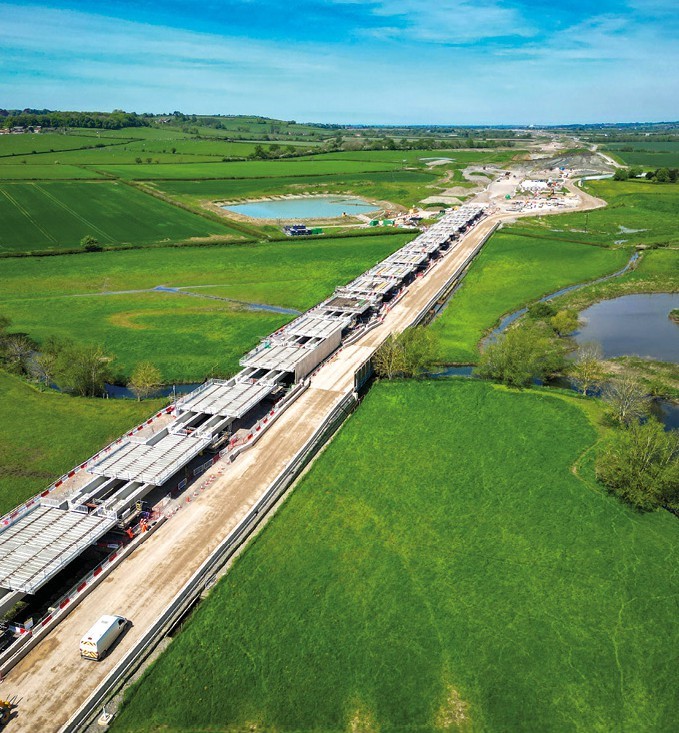
In its Sustainability Report, Ferrovial provides a clear mapping detailing how the key aspects and steps of its due diligence process align with the cross-cutting requirements set out in ESRS 1. This mapping explains how these principles are applied within risk management and operational practices, ensuring that the Company’s actions in the area of human rights and responsible business conduct are accurately reflected. This approach reinforces transparency and traceability, providing stakeholders with a clear and reliable view of Ferrovial’s commitment to sustainability and ethical operations.
The main aspects of due diligence are disclosed in chapter ESRS S3, which also includes information on the Human Rights Policy. References to due diligence processes are also included in standards ESRS E3, E4, and E5.
| CORE ELEMENTS OF DUE DILIGENCE | SECTION IN THE SUSTAINABILITY STATEMENT |
| Integration of due diligence in governance, strategy and business model. | • Business strategy (Risk management and control)
• Corporate governance (ESRS 2) |
| Engagement with affected stakeholders at all key stages of due diligence. | • Business strategy (Interaction with stakeholders)
• Corporate governance (ESRS 2) |
| Identification and assessment of adverse impacts. | • Double materiality
• Material impacts, risks and opportunities and their interaction with strategy and business model – SBM-3 |
| Adoption of measures to address these adverse impacts. | It is developed throughout the topical chapters. Specifically:
• S2-4: Taking action on material impacts on value chain workers, and approaches to managing material risks and pursuing material opportunities related to value chain workers, and effectiveness of those actions • Implementation of Human Rights on due diligence procedures (ESRS 2 GOV-4) • ESRS 2 – SBM – 3: Material impacts, risks and opportunities and their interaction with strategy and business model(s) • G1-2: Management of relationships with suppliers • S3-4: Taking action on material impacts on affected communities, and approaches to managing material risks and pursuing material opportunities related to affected communities, and effectiveness of those actions |
| Monitoring the effectiveness of these efforts and communication. | It is developed throughout the topical chapters (ESRS 2, S2, S3 and G1). |
IRO-2 DISCLOSURE REQUIREMENTS IN THE ESRS COVERED BY THE COMPANY’S SUSTAINABILITY STATEMENT
Annex “ESRS content index” of this document includes a table setting out the ESRS disclosure requirements covered in the Statement, which have been selected based on the results of Ferrovial’s double materiality analysis (for more information on the thresholds established for the identification of material IROs, see section “Double materiality”). It also includes a list of all data requirements included in the Report in response to other applicable European legislation.